A car costing $60,000 now out-accelerates one costing $100,000. That is not a hypothetical — it is the 2026 Hyundai Ioniq 5 N against the Cadillac CT5-V Blackwing, and the cheaper car wins the 0-60 race by more than a tenth of a second. The reason is not a better engine. It is that one of them does not have an engine at all.
This guide lists the quickest cars you can buy under $100,000 with official manufacturer specs, explains why electric motors keep winning the acceleration fight regardless of horsepower on paper, and covers the cost that shows up after the sale that nobody selling you the car brings up first.
Key Takeaways
- The Hyundai Ioniq 5 N hits 60 mph in 3.25 seconds with N Grin Boost, starting at $59,900 — the quickest car on this list and also the cheapest.
- Electric motors deliver near-maximum torque from 0 RPM; gas engines only reach peak torque in a narrow RPM band and lose additional time routing power through a multi-speed transmission. That mechanical difference, not raw horsepower, is why EVs dominate 0-60 rankings.
- The Cadillac CT5-V Blackwing has the most horsepower and torque on this list (668 hp, 659 lb-ft) but the slowest 0-60 time among the top contenders, at 3.4 seconds — a direct illustration of the torque-delivery gap.
- Sports car insurance averages $2,152 a year versus $1,567 for a standard vehicle, and cars with 300+ horsepower are treated as a distinct, higher-risk category by insurers. Budget for that before you budget for the car.
The Fastest Cars Under $100K, Ranked by 0-60 Time
| Car | 0–60 | Power | Starting price | Powertrain |
|---|---|---|---|---|
| Hyundai Ioniq 5 N | 3.25s | 601–641 hp | $59,900 | Dual-motor EV, AWD |
| Cadillac CT5-V Blackwing | 3.4s | 668 hp | $100,695* | 6.2L supercharged V8 |
| BMW M3 | 3.4s | ~500 hp | Under $100K | S58 turbo inline-six |
| Dodge Charger Daytona Scat Pack | 3.3s | 670 hp | $59,995 | Dual-motor EV, AWD |
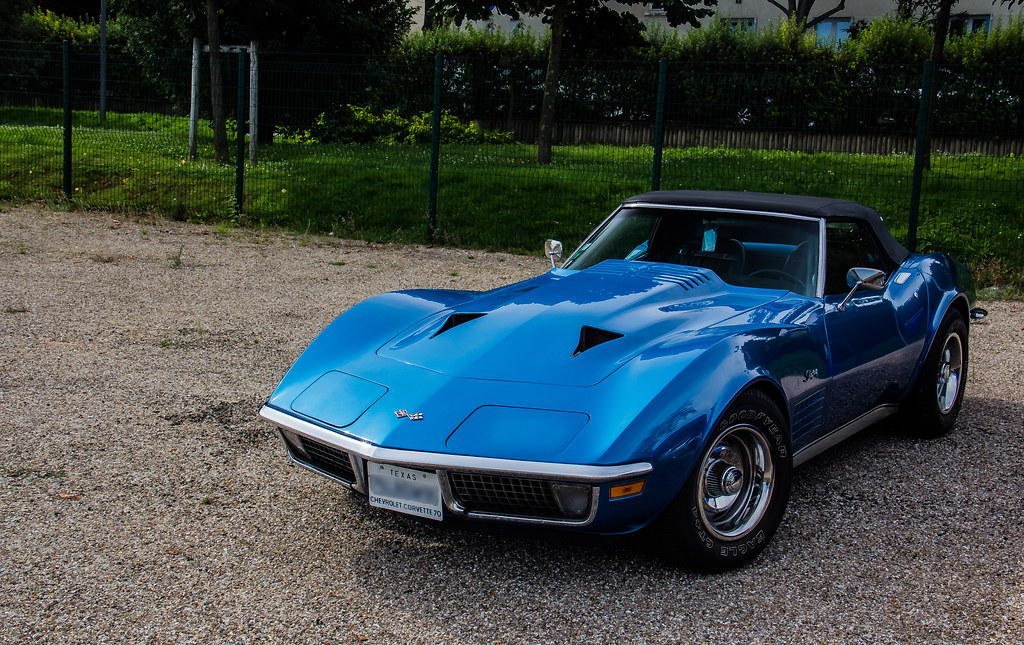
| Chevrolet Corvette Stingray (Z51) | 2.9s | 495 hp | $70,000 | 6.2L V8, DCT |
Note the Corvette’s 2.9-second figure requires the Z51 Performance Package, not the base car — a distinction worth confirming before you assume the sticker price gets you the sticker time.
Why the Cheapest Car on This List Is Also the Quickest
This is not a coincidence, and it is not really about the Ioniq 5 N being unusually good. It is about the physics of how each powertrain type makes torque.
An electric motor delivers near-maximum torque from 0 RPM, then tapers off as speed rises. A gas engine only reaches its best torque in a relatively narrow RPM band; below that band it feels weak, above it the engine runs out of breath, and it takes real time and mechanical work to rev into that band from a standing start (Recharged, retrieved 2026-07-29). Turbocharged engines add another delay on top of that: they rely on exhaust pressure to spin the turbo, which is the mechanical basis of turbo lag — that beat you feel before the power arrives.
There is a drivetrain-routing difference too. In an EV, power goes essentially straight to the wheels. In a gas car, power routes through a multi-speed transmission first, and each shift is time the car is not accelerating at full force. Add that up over a 0-60 run and it is a meaningful chunk of the gap between an EV and an equivalent-power gas car.
The Blackwing makes this concrete. It has more horsepower and more torque than every other car on this list — 668 hp and 659 lb-ft — and yet it posts the slowest 0-60 time among the top four, at 3.4 seconds. The Ioniq 5 N makes roughly 60 fewer peak horsepower and still gets to 60 mph nearly a sixth of a second sooner. Horsepower wins races that last longer than a few seconds. The first three seconds belong to torque delivery.
The Contenders
Hyundai Ioniq 5 N — Quickest and Cheapest
601 horsepower standard, 641 hp with N Grin Boost, 560 lb-ft of torque, dual-motor all-wheel drive, and an 84-kWh battery good for an EPA-estimated 221 miles of range. Hyundai’s N-specific chassis and software tuning targets response and repeatable performance rather than a single peak number — a meaningful distinction for anyone planning to actually track the car rather than just brag about the spec sheet (InsideEVs, retrieved 2026-07-29).
The starting price of $59,900 represents a $6,300 reduction from the prior model year, which makes this the single best acceleration-per-dollar figure on this list by a wide margin.
Cadillac CT5-V Blackwing — Most Power, Only Available with a Manual Anywhere Near This List
A 6.2-liter supercharged V8 making 668 hp and 659 lb-ft, standard 6-speed manual with a 10-speed automatic available, 0-60 in roughly 3.4 seconds. Starting price is $100,695, which technically clears the $100K line by a few hundred dollars — worth noting for anyone shopping strictly under that number, though dealer discounting on this trim is common enough that the effective price often lands under it.
The manual transmission option is the real differentiator here. Nothing else on this list, gas or electric, offers three pedals.
Dodge Charger Daytona Scat Pack — Electrified Muscle Car
630 hp and 627 lb-ft standard, with Drag Mode and Power Shot pushing output to 670 hp for 10-second bursts. Dual motors, all-wheel drive, 3.3-second 0-60. Starting at $59,995 for the two-door, this is Dodge’s answer to the question of what a muscle car becomes once the V8 goes away — and on the numbers, it answers convincingly.
Chevrolet Corvette Stingray — Fastest Gas Car Here, and the Cheapest
490 hp standard, 495 hp with the Z51 package’s performance exhaust, 6.2L LT2 V8, 8-speed dual-clutch transmission, 194 mph top track speed, and a 2.9-second 0-60 with Z51 fitted. Starting at $70,000, it is the only car on this list under $100K that combines a genuinely quick time with a traditional gas V8 and a manual-adjacent driving character via the dual-clutch (Chevrolet, retrieved 2026-07-29).
The Bill Nobody Mentions at the Dealership
Every car on this list falls into a category insurers price aggressively, and it is worth budgeting before you sign rather than discovering after.
Sports car insurance averages $2,152 a year against $1,567 for a standard vehicle. Horsepower is a direct input to that number: engines making 300 hp or more are treated as a distinct high-horsepower category, and a 400-hp car will typically cost more to insure than a 200-hp car even within the same segment (Insure.com, retrieved 2026-07-29).
Every car on this list clears that 300-hp threshold by a wide margin, several by more than double. Insurers also weigh repair cost and theft risk, and cars using specialized materials or unique parts — carbon-ceramic brakes, forged wheels, low-volume electric drive units — cost more to fix after even a modest collision than an equivalent mainstream car.
Get an actual quote for the specific trim before you commit, not a rough estimate. The gap between what you expect and what an insurer quotes on a 600-plus horsepower car is often larger than people plan for.
How to Choose Between Them
| Priority | Best pick |
|---|---|
| Quickest 0-60 for the least money | Hyundai Ioniq 5 N |
| A manual transmission and a V8 soundtrack | Cadillac CT5-V Blackwing |
| Muscle-car character, EV running costs | Dodge Charger Daytona Scat Pack |
| Traditional sports car feel, lowest entry price for a V8 | Chevrolet Corvette Stingray |
| Daily-drivable sports sedan | BMW M3 |
Frequently Asked Questions
What is the fastest car under $100,000 in 2026?
By 0-60 time, the Hyundai Ioniq 5 N at 3.25 seconds with N Grin Boost engaged, starting at $59,900. It is also the cheapest car on this list, which is unusual for a segment where price and speed traditionally track together.
Why do electric cars beat gas cars to 60 mph so consistently?
Electric motors produce near-maximum torque from a standstill, while gas engines need to build RPM into a narrower peak-torque band and route power through a multi-speed transmission. Both factors cost a gas car time that an EV largely skips.
Does more horsepower always mean a faster 0-60 time?
No. The Cadillac CT5-V Blackwing has the most horsepower on this list, 668 hp, and the slowest 0-60 among the top four contenders at 3.4 seconds — torque delivery characteristics matter more than peak horsepower for the first few seconds off the line.
How much more does it cost to insure a fast car?
Sports car insurance averages $2,152 a year versus $1,567 for a standard vehicle, and cars with 300 or more horsepower are treated as a distinct risk category. Get a quote for your specific trim before buying, since the gap between segments can be substantial.
Is the Corvette Stingray’s 2.9-second 0-60 available on the base model?
No, that figure requires the Z51 Performance Package. Confirm which package a quoted time applies to before assuming the base sticker price gets you the quoted performance number.
The Bottom Line
If your goal is the quickest car for the least money, the Hyundai Ioniq 5 N wins outright — cheaper and faster than everything else here, including cars costing $40,000 more. If you want a V8 and a manual, the Blackwing is the only car on this list offering both, at the cost of being the slowest of the top contenders. Whatever you choose, price the insurance before you price the car; every option here clears the horsepower threshold where premiums jump, and that number belongs in your budget from the start, not as a surprise after delivery.
Keeping a Performance Car Running Right — Keyport, NJ
A fast car is only as good as the brakes that stop it and the exhaust behind it. Discount Brakes and Mufflers has served Keyport and Monmouth County for over 40 years as an NJ State Inspection Facility, and we repair rather than replace wherever the part allows.
Get a price in minutes with our instant estimate tool, see what is involved in muffler and exhaust repair, or contact our Keyport shop.
Note: this is a buyer’s guide compiled from manufacturer-published specifications and industry insurance data. Prices, specs and available incentives change frequently — confirm current figures with the manufacturer or a dealer before purchasing. Discount Brakes and Mufflers specializes in brakes, mufflers, catalytic converters and custom exhaust; we do not sell vehicles.