
The automotive bike rack market was valued at roughly $1.25 billion in 2025 and is projected to climb toward $2.15 billion by 2034, according to Verified Market Reports — and within that category, hitch-mounted racks outsell every other style because they load faster, hang lower for easy lifting, and don’t scrape a garage door header the way roof racks do. If your vehicle already has a 1.25-inch or 2-inch receiver, or you’re willing to add one, a hitch rack is almost always the least frustrating way to haul bikes. This guide covers the two dominant hitch rack styles, seven real products worth your money, and the tilt and swing-away features that decide whether you can still open your hatch with bikes loaded.
Key Takeaways
- Platform (tray-style) hitch racks cradle each bike by the wheels, so frame shape and carbon frames aren’t a fitment issue — hanging racks clamp the frame or top tube instead.
- A 2-inch receiver generally supports more bikes and higher total weight than a 1.25-inch receiver; check your factory tow rating before assuming you have one.
- Tilt-away and swing-away features are what actually matter day to day — without one, a loaded rack can block your rear hatch or trunk completely.
- E-bikes routinely weigh 50-70 lbs, which pushes many older 1.25-inch racks past their rated capacity — verify per-bike weight limits, not just total capacity.
- No hitch on your vehicle? See our guide to the best spare tire mount bike racks. Prefer keeping bikes in the bed? See our guide to the best truck bed bike racks.
Platform vs. Hanging/Swing-Away Hitch Racks: Which Style Fits Your Vehicle
Every hitch mount bike rack slides a square shank into your vehicle’s receiver tube and locks with a hitch pin, but the way it holds bikes above that shank splits into two fundamentally different designs — and the difference matters more than brand loyalty once you’re loading a $4,000 mountain bike.
Platform racks (also called tray-style) give each bike its own cradle that grips the front and rear wheels, with a ratcheting arm that clamps down over the tire rather than the frame. Because the bike’s weight sits on its wheels instead of hanging from the top tube, platform racks work with almost any frame geometry — full-suspension mountain bikes, women’s step-through frames, kids’ bikes, and fat tire e-bikes all fit without an adapter bar in most cases. The tradeoff is weight and price: platform racks run $250-$700 and can weigh 40-60 lbs empty, which is enough that some owners leave them on the hitch permanently rather than wrestling them on and off.
Hanging (or “hang-style”) racks use a raised arm that the bike’s top tube rests on, with hook-and-strap or cradle systems holding two to five bikes in a row. They’re lighter, cheaper — often under $150 — and fold flatter for storage, but they’re a poor match for full-suspension bikes, small frames, or anything without a straight top tube, and stacking multiple bikes on one arm means the front bikes take the brunt of road vibration against the rear ones. Hanging racks remain popular for budget buyers with two or three similar-sized bikes and no interest in a heavy platform unit.

Receiver size: 1.25-inch vs. 2-inch. Compact cars, sedans, and crossovers are typically fitted with a Class I or Class II hitch, which uses a 1.25-inch square receiver opening rated for lighter loads — usually two bikes and 100-130 lbs of combined weight. Trucks, full-size SUVs, and many mid-size SUVs with a factory tow package get a Class III or higher 2-inch receiver, which accepts heavier-duty racks rated for four or five bikes and 300+ lbs. Most premium platform racks (Thule, Yakima, Kuat) ship in both 1.25-inch and 2-inch versions of the same model — buy the version matched to your receiver, not just the rack you like the look of. A 2-to-1.25-inch reducer sleeve exists, but it downgrades your capacity to the smaller receiver’s rating regardless of what the rack itself can technically hold.
Tilt and swing-away features. A fully loaded platform rack extends 30-40 inches behind the bumper and completely blocks rear hatch access on most SUVs and hatchbacks. Tilt-down racks solve this by pivoting the loaded platform toward the ground, opening a gap to reach the trunk — most quality platform racks include a foot-pedal tilt release that works even with bikes attached. Swing-away racks go further, pivoting the entire loaded rack 90 degrees to the side on a separate hitch-mounted pivot arm, which fully clears the hatch but adds $150-$300 and several pounds to the setup. If you frequently need trunk access mid-trip — coolers, dog crates, camping gear — pay for tilt or swing-away rather than assuming you’ll just unload the bikes each time.
The Best Hitch Mount Bike Racks Worth Buying
Thule T2 Pro XT 2 — Around $700 (2-inch) / $650 (1.25-inch)
The T2 Pro XT is the platform rack most bike shops recommend without hesitation. Its toolless ratcheting arms adjust for wheelbases up to 50 inches, it tilts with bikes loaded via a foot pedal, and the anti-wobble hitch tightener eliminates the play that makes cheaper racks rattle at highway speed. Rated for 2 bikes at up to 60 lbs each (120 lbs total), with an add-on that extends it to 4.
Best for: Riders who want the most refined platform experience and are willing to pay for it.
Yakima StageTwo — Around $679
Yakima’s flagship platform rack uses a no-tool ZipStrip wheel-hook system that’s faster to load than most ratchet arms, plus a SpeedKnob for tightening the hitch connection by hand. It tilts and the ramp folds down for easier loading of heavy e-bikes without lifting them onto the tray. Base model holds 2 bikes at 67.5 lbs each.
Best for: Owners with heavy e-bikes who want a low-lift ramp instead of hoisting bikes onto a tray.
Kuat NV 2.0 — Around $829
The NV 2.0 is a favorite among mountain bikers for its integrated cable lock, built-in bottle opener, and trail-tested wheel cradles that keep muddy bikes from touching each other. Its telescoping arms fit fat tires up to 5 inches wide without an adapter, and the rack folds down to a compact profile when empty. Rated for 60 lbs per bike, 4-bike version available.
Best for: Mountain bikers hauling muddy, fat-tire, or oddly-shaped frames regularly.
Saris Freedom 2-Bike — Around $429
Saris builds the Freedom in the USA and keeps it lighter than most competitors at around 38 lbs, which matters if you’re taking it on and off the hitch every trip rather than leaving it mounted. It’s a platform design with adjustable arms and a tilt feature, priced below the Thule/Yakima/Kuat tier without giving up the wheel-cradle stability those brands are known for.
Best for: Buyers who want platform-rack stability without the premium-brand price tag.
Rocky Mounts MonoRail Solo — Around $479 (per bike, modular)
The MonoRail is a modular single-bike platform that stacks — buy one arm per bike and add more later as your fleet or budget grows. Each arm independently tilts, so you can drop just one bike’s cradle without disturbing the others, and the whole unit swings away from the vehicle for full hatch access.
Best for: Households that add bikes gradually and don’t want to buy full rack capacity upfront.
Hollywood Racks Sport Rider SE — Around $550
A 2-inch receiver platform rack built specifically around e-bikes, with a lower loading ramp, reinforced cradles rated to 80 lbs per bike, and a wider wheel tray to handle fat tires. It’s heavier than most at 65 lbs, but that mass is what lets it carry loads lighter racks can’t.
Best for: E-bike owners whose bikes exceed the weight rating on standard platform racks.
Allen Sports Deluxe 2-Bike Hitch Rack — Around $110
The budget hanging-style option, using a raised center arm with hook cradles and adjustable straps. It works fine for two similarly-sized bikes with straight top tubes but struggles with full-suspension frames or small kids’ bikes without an add-on bar. At under 20 lbs it’s the easiest rack on this list to remove and store.
Best for: Occasional riders on a tight budget with two conventional-frame bikes.
| Rack | Style | Receiver | Bikes | Approx. Price |
|---|---|---|---|---|
| Thule T2 Pro XT 2 | Platform | 1.25″ / 2″ | 2 (exp. to 4) | $650-$700 |
| Yakima StageTwo | Platform | 2″ | 2 | $679 |
| Kuat NV 2.0 | Platform | 1.25″ / 2″ | 2 (exp. to 4) | $829 |
| Saris Freedom 2-Bike | Platform | 1.25″ / 2″ | 2 | $429 |
| Rocky Mounts MonoRail Solo | Platform (modular) | 2″ | 1 per arm | $479/arm |
| Hollywood Sport Rider SE | Platform (e-bike) | 2″ | 2 | $550 |
| Allen Sports Deluxe 2-Bike | Hanging | 1.25″ / 2″ | 2 | $110 |
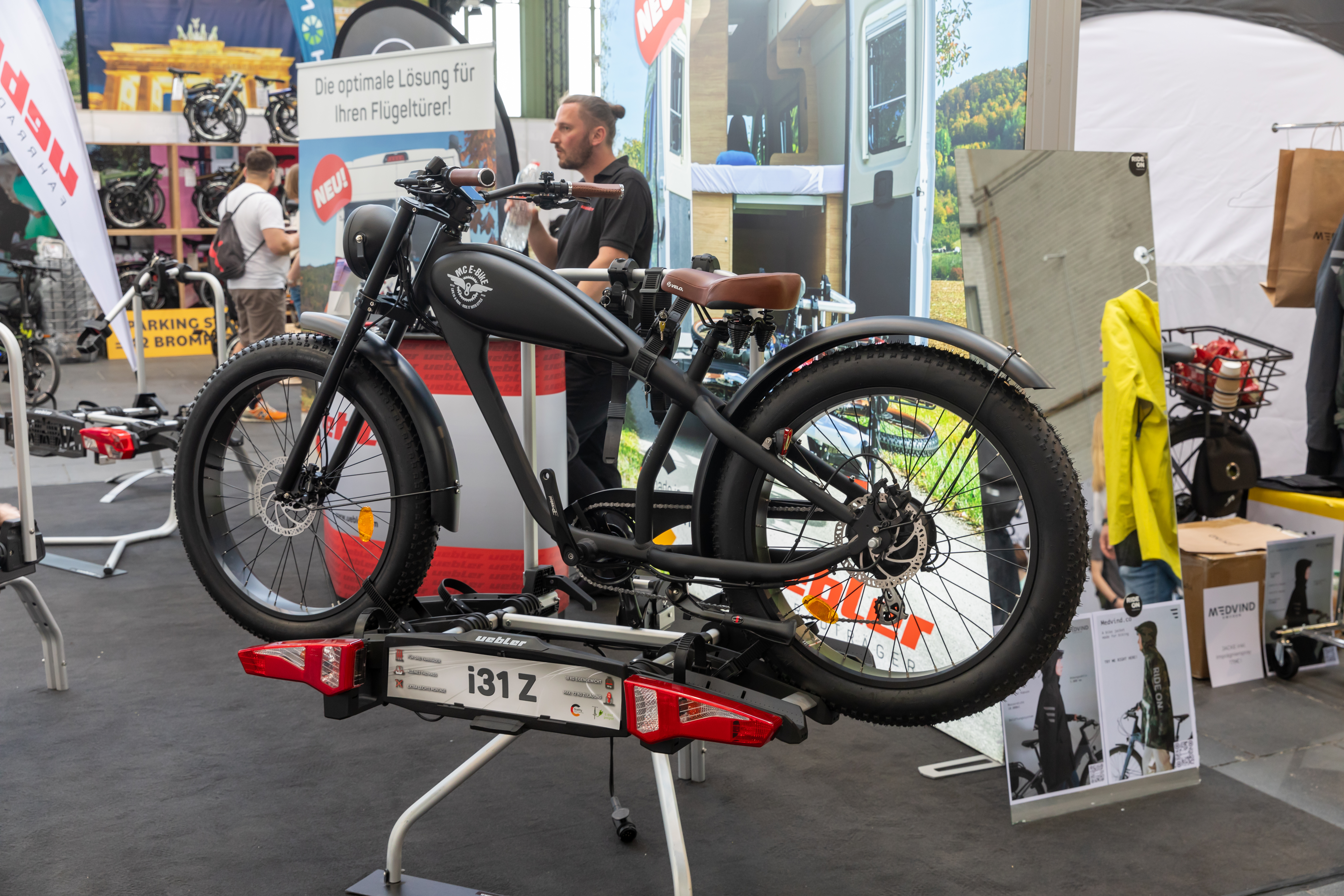
A genuine swing-away hitch carrier — one that pivots the whole loaded rack aside for full hatch access — has been a fixture of hitch-mount design for decades; even older, boxier hitch racks like the Twinny Load system used a similar side-swing pivot to keep a rear hatch usable while bikes stayed mounted.

FAQ
What’s the difference between a Class I, II, and III hitch for bike racks?
Class I and II hitches use a 1.25-inch receiver opening and generally top out around a 3,500 lb tow rating, which limits bike rack capacity to roughly 2 bikes and 100-130 lbs. Class III and above use a 2-inch receiver and support heavier-duty racks rated for 4-5 bikes and 300+ lbs. Check your owner’s manual or the hitch itself for a stamped class rating before buying a rack.
Can I put a hitch bike rack on a car with no hitch installed?
Yes — aftermarket hitch receivers exist for most sedans, hatchbacks, and crossovers and typically cost $150-$350 installed, including wiring if you also want a brake-light-visible rack. If you’d rather skip that expense entirely, a spare tire mount bike rack is a no-hitch-required alternative for Jeeps and SUVs with a rear-mounted spare.
Will a hitch rack fit an e-bike?
Only if the rack’s per-bike weight rating clears your e-bike’s actual weight, which commonly runs 50-70 lbs and sometimes more for cargo e-bikes. Look specifically for racks marketed as e-bike compatible, like the Hollywood Sport Rider SE or Yakima StageTwo, which use reinforced arms and lower loading ramps rather than expecting you to lift the bike onto a tray.
Do hitch racks block my rear camera or license plate?
An empty hitch rack folded up rarely blocks the plate, but a loaded rack usually does — many states require a supplemental light bar with brake lights, turn signals, and a plate mount when the rack obscures the factory ones. Check your state’s specific requirement before a long trip.
Should I get a platform rack instead of a truck bed rack for a pickup?
It depends on what else rides in the bed. A hitch rack keeps the bed empty for cargo, while a bed-mounted rack keeps bikes clear of rear traffic and off the road grime a hitch rack collects. If you’re weighing both for a truck specifically, our best truck bed bike rack guide breaks down the fork-mount vs. tray-style tradeoffs for that setup.
The Bottom Line
For most drivers, a platform hitch rack is worth the extra cost over a hanging rack the first time it saves a carbon frame or an e-bike’s paint from top-tube clamps. The Thule T2 Pro XT and Yakima StageTwo remain the safest all-around picks for two bikes on a 2-inch receiver, the Kuat NV 2.0 earns its price with mountain bikers hauling muddy, fat-tire rigs, and the Saris Freedom or Rocky Mounts MonoRail deliver platform-rack stability without the flagship price tag. If your budget or bike count doesn’t justify a platform rack, the Allen Sports Deluxe still gets two conventional bikes down the highway reliably for a fraction of the cost — just don’t expect it to handle a full-suspension frame gracefully. Whichever style you choose, match the rack to your receiver size first, verify the per-bike weight rating against your actual bikes (especially if any are electric), and don’t skip tilt or swing-away if you need trunk access on the road.