According to J.D. Power, roof-mounted cargo boxes remain one of the top-selling automotive accessories for road-trip season, with hardshell models accounting for the majority of aftermarket cargo carrier sales because they seal out rain, snow, and dust while a wire-mesh basket cannot. If you are hauling ski gear, luggage, or anything that shouldn’t arrive soaked or covered in road grime, a fully enclosed hardshell box is the only cargo carrier style built for the job.
Key Takeaways
- Hardshell roof cargo boxes are fully enclosed and weatherproof, unlike open wire-mesh roof baskets, which leave contents exposed to rain, road spray, and debris.
- Aerodynamic, low-profile boxes (like the Thule Motion XT) cut wind noise and preserve more MPG than boxy basket-style carriers at highway speed.
- Dual-side opening boxes (open from driver and passenger side) load faster for families making frequent stops; single-side openings cost less.
- Cargo volume among today’s top hardshell boxes ranges from roughly 11 to 22 cubic feet, so match the box to your vehicle’s roof length and typical gear load.
- Expect to pay between $270 and $700 for a quality hardshell box, with price scaling to volume, shape, and mounting hardware included.
Hardshell Box vs. Open Basket: What Actually Matters
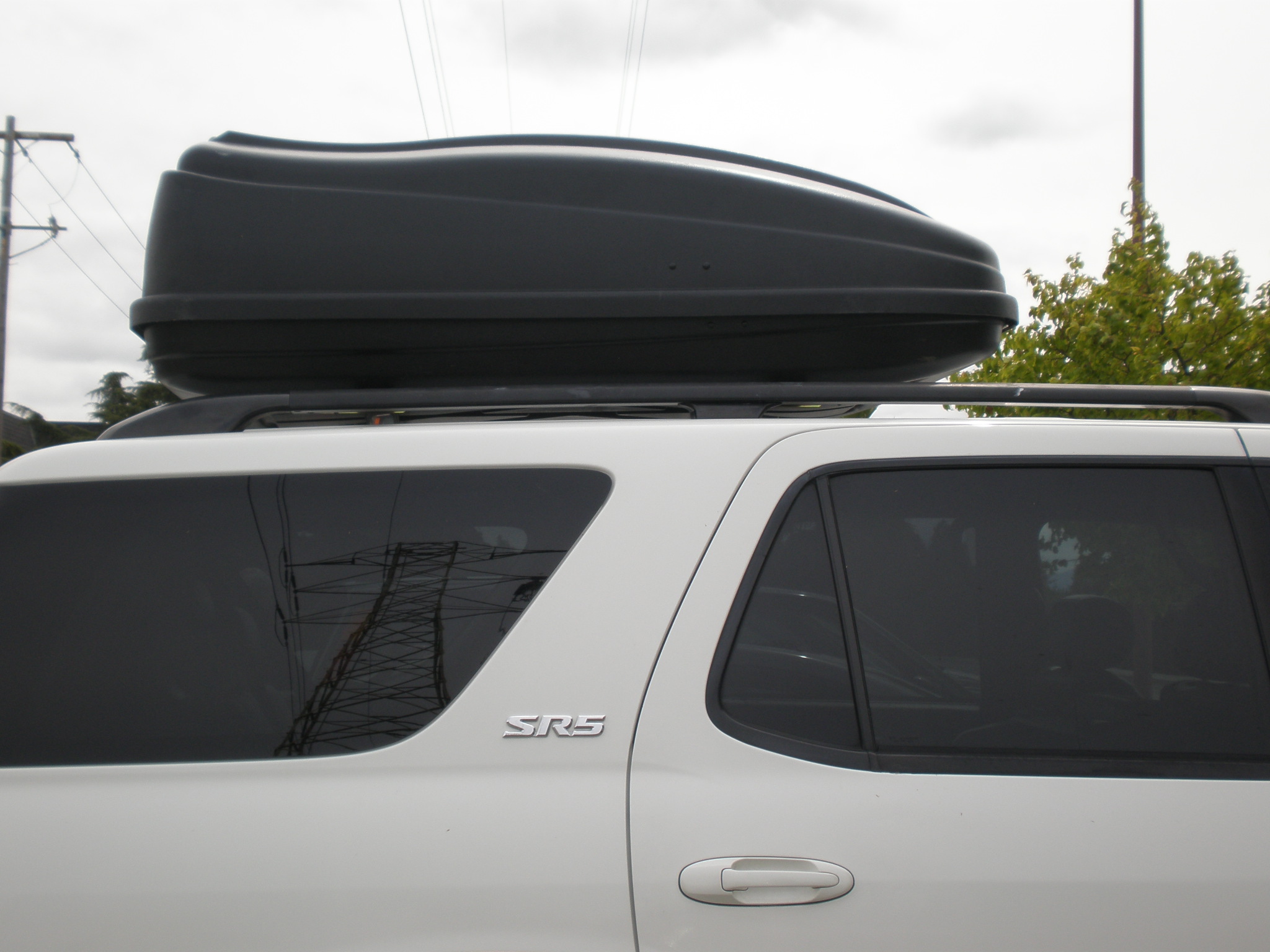
The single biggest difference between a hardshell roof cargo box and an open roof cargo basket is weather protection. A hardshell box is a fully enclosed, molded shell with weatherstripping around the lid seam, so rain, snow, road spray, and dust stay outside. An open basket is essentially a wire-mesh tray bolted to your crossbars; it is excellent for bulky, irregularly shaped items that need to be lashed down with straps, but it offers zero protection from the elements. If you’re packing suitcases, sleeping bags, or ski boots, a basket leaves them soaked within the first rainstorm. If you’re hauling a cooler, firewood, or camping gear that’s already weatherproof or doesn’t mind getting wet, a basket’s open-air versatility can be the better tool.
Because we’ve already covered the open-basket side of this decision in depth, if you need to haul bulky items that won’t fit in a box, like a cooler or firewood, see our guide to the best roof cargo baskets. This article focuses exclusively on the enclosed, weatherproof side of the category.
Beyond weatherproofing, two more decisions shape which hardshell box is right for you:
Dual-side vs. single-side opening. Dual-side boxes open from both the driver and passenger side, which makes loading and unloading dramatically faster, especially if you’re parked nose-in at a trailhead or ski lodge lot and don’t want to walk around the vehicle. Single-side boxes, which open only from the passenger side (to keep you out of traffic when loading curbside), are typically $50 to $100 cheaper and still work fine for most weekend trips.
Aerodynamic shape and MPG impact. A tall, boxy cargo carrier sitting several feet above the roofline creates significant aerodynamic drag. Independent fuel-economy testing by Consumer Reports and various owner forums has found that a bulky roof box can reduce highway fuel economy by roughly 2 to 5 mpg, while a low-profile, teardrop-shaped hardshell box shaves that penalty down considerably by letting air slide over the top instead of slamming into a flat wall. If you’re driving long interstate stretches, the shape of the box is not a cosmetic detail — it’s a real cost difference at the pump.

How to Size and Mount a Hardshell Box Correctly
Before comparing individual models, get three measurements right, because they matter more than brand loyalty. First, measure your roof’s usable length between the front and rear crossbars — most mid-size boxes need at least 40 to 45 inches of clearance, and longer boxes can crowd a sunroof or interfere with a liftgate’s swing arc on hatchbacks and wagons. Second, check your vehicle’s static roof load rating in the owner’s manual; this number, typically 150 to 220 pounds for most crossovers and SUVs, has to cover the box’s own weight (usually 30 to 45 pounds) plus everything you pack inside, plus the weight of the crossbars themselves. Third, confirm crossbar compatibility: round bars, square bars, factory side rails, and aerodynamic bars each use a different clamp style, and most manufacturers publish a fit guide by vehicle make and model rather than a universal mount.
Installation on most hardshell boxes follows the same basic pattern: open the box, position the U-bolt or clamp brackets over your existing crossbars at the width recommended in the manual, torque them to spec (usually hand-tight plus a quarter turn with the included tool, not a wrench), and test for lateral play before loading anything. Skipping the torque check is the single most common reason for a box to shift or rattle at highway speed, and it’s worth rechecking the clamps after the first 50 miles of driving since they can settle.
Weight distribution inside the box matters almost as much as the roof rating. Pack the heaviest items low and centered over the axle line rather than toward the front or rear overhang — a top-heavy, unevenly loaded box raises your vehicle’s center of gravity more than the same weight packed correctly, which is noticeable in crosswinds and tight highway on-ramps.
The Best Roof Cargo Boxes Worth Buying
We compared cargo volume, shape, opening style, mounting hardware, and street price across the hardshell boxes that consistently show up in owner reviews and retailer bestseller lists. Approximate prices reflect typical retail as of 2026 and will vary by retailer and included hardware.
Thule Motion XT (M/L/XL) — $600–$700
The Motion XT is the benchmark hardshell box for a reason: a low-profile aerodynamic shell, dual-side opening, and a one-key locking system that also locks the box to the roof rack. It’s available in three sizes (roughly 16 to 18 cubic feet) so you can size it to your vehicle without buying a separate mounting kit.
Best for: drivers who want the smoothest install and the best resale value.
Yakima SkyBox 18 Carbonite — $550–$630
Yakima’s SkyBox line uses a textured, scratch-resistant Carbonite finish and a wide dual-side opening with a coated aluminum bar for easy loading. At 18 cubic feet it comfortably swallows gear for a family of four on a week-long trip.
Best for: families who load and unload frequently and want a durable, low-maintenance shell.
Thule Force XT Sport — $430–$500
A more budget-conscious Thule option, the Force XT Sport trades some of the Motion XT’s aerodynamic polish for a lower price while keeping the same dual-side SlideLock mounting and weatherproof seal. At around 14 cubic feet it suits smaller vehicles and shorter trips well.
Best for: first-time roof box buyers who still want the Thule mounting ecosystem.
RoofBag Explorer Hardshell — $330–$380
RoofBag is better known for its soft-sided bags, but its hardshell Explorer line offers a genuinely enclosed ABS shell at a noticeably lower price point than the big two brands, with universal crossbar straps instead of a proprietary rail system.
Best for: renters or occasional users who don’t want to invest in a permanent rack-specific mount.
SportRack Vista XL — $270–$320
SportRack’s Vista XL is the value pick of this list: a roughly 18-cubic-foot enclosed box with dual-side opening and a full weatherstrip seal, at a price that undercuts premium brands by 40% or more. Build quality is a step below Thule or Yakima, but the core weatherproofing works.
Best for: budget-focused buyers who still want dual-side loading and real cargo volume.
INNO Wedge Aeroquest — $500–$600
INNO’s Aeroquest line leans hard into the aerodynamic-shape argument, with a wedge profile that’s noticeably shorter at the rear to reduce drag and wind noise at highway speed. It’s a single-side opener, which keeps the price down relative to its aero performance.
Best for: highway-heavy drivers who care most about minimizing the MPG penalty and cabin noise.
Yakima SkyBox 12 Carbonite (Compact) — $450–$500
The compact sibling to the SkyBox 18, this roughly 12-cubic-foot box is sized for smaller SUVs and sedans that can’t accommodate a full-length box without roof or wiper clearance issues, while keeping the same dual-side opening and Carbonite finish.
Best for: compact SUV and sedan owners with limited roof length.

Cargo Volume Comparison
Price Comparison
Spec Comparison at a Glance
| Model | Volume (cu ft) | Opening | Approx. Price | Best For |
|---|---|---|---|---|
| Thule Motion XT | 16–18 | Dual-side | $600–$700 | Best overall |
| Yakima SkyBox 18 | 18 | Dual-side | $550–$630 | Frequent loaders |
| Thule Force XT Sport | 14 | Dual-side | $430–$500 | First-time buyers |
| RoofBag Explorer | 13 | Single-side | $330–$380 | Renters/occasional use |
| SportRack Vista XL | 18 | Dual-side | $270–$320 | Budget buyers |
| INNO Wedge Aeroquest | 15 | Single-side | $500–$600 | Highway driving/MPG |
| Yakima SkyBox 12 Compact | 12 | Dual-side | $450–$500 | Compact SUVs/sedans |
Keeping a Hardshell Box Weatherproof Over Time
A hardshell box’s weatherproofing lives and dies by its lid gasket. UV exposure and repeated opening eventually dry out the rubber weatherstrip, and a compressed or cracked gasket is the most common reason an otherwise sound box starts letting water in after a few seasons. Wipe the seal down with a UV-protectant rubber conditioner once or twice a year, and inspect it closely before any trip where the forecast calls for rain — a five-minute check beats discovering a soaked duffel bag at your destination.
Latches are the second wear point. Most premium boxes use a cam-lock or lever latch that also doubles as the locking mechanism; lightly lubricating the latch pivot with a dry silicone spray (not household oil, which attracts grit) keeps it from binding in cold weather. When the box isn’t in use, store it lid-up in a garage or under cover if possible — constant sun exposure on the same panel accelerates plastic fatigue and can cause the shell to warp slightly at the mounting points over several years, which is the main reason well-maintained boxes from reputable brands often outlast the vehicle they were bought for.
Finally, remove the box entirely during winter storage or long stretches without road trips. Beyond the fuel-economy hit, leaving a box mounted year-round exposes the crossbar clamps to freeze-thaw cycling and road salt, which can seize the hardware and make future adjustments difficult.
FAQ: Roof Cargo Boxes
Do hardshell roof boxes actually reduce gas mileage?
Yes, but the penalty is smaller than most drivers expect from a low-profile, aerodynamic box. Expect a modest reduction at sustained highway speeds; boxy, high-profile boxes lose more mpg than teardrop-shaped ones, and the loss disappears entirely once the box comes off.
What’s the real difference between a roof box and a roof basket?
A roof box is a fully enclosed, weatherproof shell that seals your gear from rain and road spray. A roof basket is an open wire-mesh tray that requires cargo straps and offers no weather protection, but handles oversized or oddly shaped items a box can’t fit.
Can I fit a roof box on any vehicle?
Most hardshell boxes clamp to existing roof rack crossbars (factory or aftermarket). If your vehicle doesn’t have crossbars, you’ll need to add a compatible rack system first — check the manufacturer’s fit guide before buying.
How much weight can a roof cargo box hold?
Most hardshell boxes are rated for 110 to 165 pounds of cargo, but the real limit is usually your vehicle’s roof load rating (often 150–200 lbs including the box itself), listed in the owner’s manual.
Are cheaper roof boxes worth buying?
Budget hardshell boxes like the SportRack Vista XL still deliver real weatherproofing and dual-side loading at a lower price, though fit-and-finish, latch durability, and long-term weatherstripping quality tend to favor premium brands like Thule and Yakima over years of use.
The Bottom Line
If weather protection is your priority — luggage, ski gear, electronics, anything that can’t get wet — a fully enclosed hardshell box beats an open basket every time. For most drivers, the Thule Motion XT and Yakima SkyBox 18 remain the safest picks: proven weatherproof seals, dual-side loading, and strong resale value. Budget-conscious buyers shouldn’t overlook the SportRack Vista XL, which delivers real enclosed cargo volume without the premium price tag. Whichever you choose, measure your roof length first, check your vehicle’s static roof load rating, and make sure the box’s mounting hardware matches your existing crossbars before you buy.