A light bar advertised at 47,520 lumens rarely puts out anywhere near that much usable light — real-world “effective” output typically runs 10-25% below the raw number manufacturers print on the box. That gap, plus a patchwork of state laws governing where and how bright a forward-facing light can be while driving on public roads, are the two things most “best LED light bar” roundups skip entirely. This guide compares the best LED light bars for trucks in 2026 by real output, waterproofing, and price, and covers the legal side most buyers find out about the hard way.
Key Takeaways
- Truck and off-road owners spent more than $15 billion modifying pickups for off-road, utility, and lifestyle use in 2025 (SEMA 2026 Market Report).
- Advertised “raw” lumens and real “effective” lumens typically differ by 10-25% — a bar rated 47,520 raw lumens delivers roughly 33,300 effective lumens in practice.
- Federal law (49 CFR §571.108) and state vehicle codes both regulate forward-facing auxiliary lights — most states require them covered or switched off while driving on public roads.
- The Rigid Industries Adapt/E-Series is the strongest all-around pick for serious off-road use; the Rough Country Spectrum series is the best budget-to-mid value line.
Is It Legal to Run an LED Light Bar on the Road?
Federal law (49 CFR §571.108, also known as FMVSS 108) governs vehicle lighting nationwide, and auxiliary lamps generally can’t impair or be confused with required lighting — but the details of what’s actually allowed vary meaningfully by state. California permits up to two auxiliary front driving lamps mounted 16 to 54 inches off the ground (Cal. Vehicle Code §§24400-24411). Michigan caps forward-facing lamps over 300 candlepower at four lit simultaneously on public highways (MCL 257.685). The practical takeaway across most states: a bright white forward-facing light bar generally needs to stay off or covered while driving on public roads, and is meant for off-road or work-site use — check your specific state’s vehicle code before assuming a bar is street-legal.
The 6 Best LED Light Bars for Trucks in 2026
We compared these on real (not just advertised) output, waterproof rating, row configuration, and price — since the length-to-lumen relationship and the raw-vs-effective lumen gap matter more here than most listicles acknowledge.
1. Rigid Industries Adapt/E-Series — Best Overall
Sizes: 10″–50″ | Row: Single or double row options | Beam: Spot, flood, combo | Price: ~$500–1,200
Rigid’s Hybrid and Specter optics are built to close the raw-vs-effective lumen gap better than most budget bars, and the modular size range means you can match the bar to your bumper or roof rack precisely rather than picking the nearest stock length.
2. Baja Designs OnX6+/S8 — Best for Serious Overlanding
Sizes: Modular 10″–50″ configs | Row: Single or double row | Beam: Spot, flood, combo, sealed “MoistureBlock” design | Price: ~$800–1,500+
Baja Designs backs its lineup with a lifetime warranty and some of the tightest optical engineering in the category, which shows up as genuinely usable beam distance rather than just a high number on the box. It’s priced for buyers who treat lighting as a serious build component, not an afterthought.
3. KC HiLiTES Gravity/C-Series — Best Established Mid-Range
Row: Single or double row | Beam: Spot, flood, combo | Price: ~$300–600
KC HiLiTES has built lighting since 1970, and its 5-year electrical / lifetime housing warranty reflects that track record. It’s a solid middle ground for a daily-driver truck that also sees regular weekend trail use.
4. Rough Country Spectrum Series — Best Budget-to-Mid Value
Sizes: 12″–50″ (5,400 to 24,300 raw lumens) | Row: Single and dual row variants | Beam: Spot/flood combo | Price: ~$80–400 depending on length
The Spectrum line’s clear length-to-lumen scaling makes it easy to size a bar to your bumper or roof rack, and pricing stays reasonable even at the largest 50″ size. It’s the pick for work-truck and weekend-trail owners who want real capability without premium pricing.
5. Auxbeam — Best Budget with Amber/White Switching
Sizes: 22″ single-row, 50″ curved double-row | Beam: Combo, 6-mode including amber/white strobe | Price: ~$70–200
The amber/white color-switching mode is the standout feature here — it lets you run amber for a more road-legal-friendly look and switch to white for off-road use, without buying two separate bars. Expect the raw-vs-effective lumen gap to run wider than premium brands at this price point.
6. Nilight — Best Ultra-Budget First Light Bar
Sizes: 50″ curved bar, 288W | Row: Double row | Beam: Spot/flood combo | Price: ~$80–180
Nilight covers the basics at the lowest price point on this list, making it a reasonable entry point if you’re not sure yet how much you’ll actually use a light bar. Expect the marketing lumen figure to overstate real output more than the premium brands above.
Why the Lumen Number on the Box Isn’t What You’ll Actually See
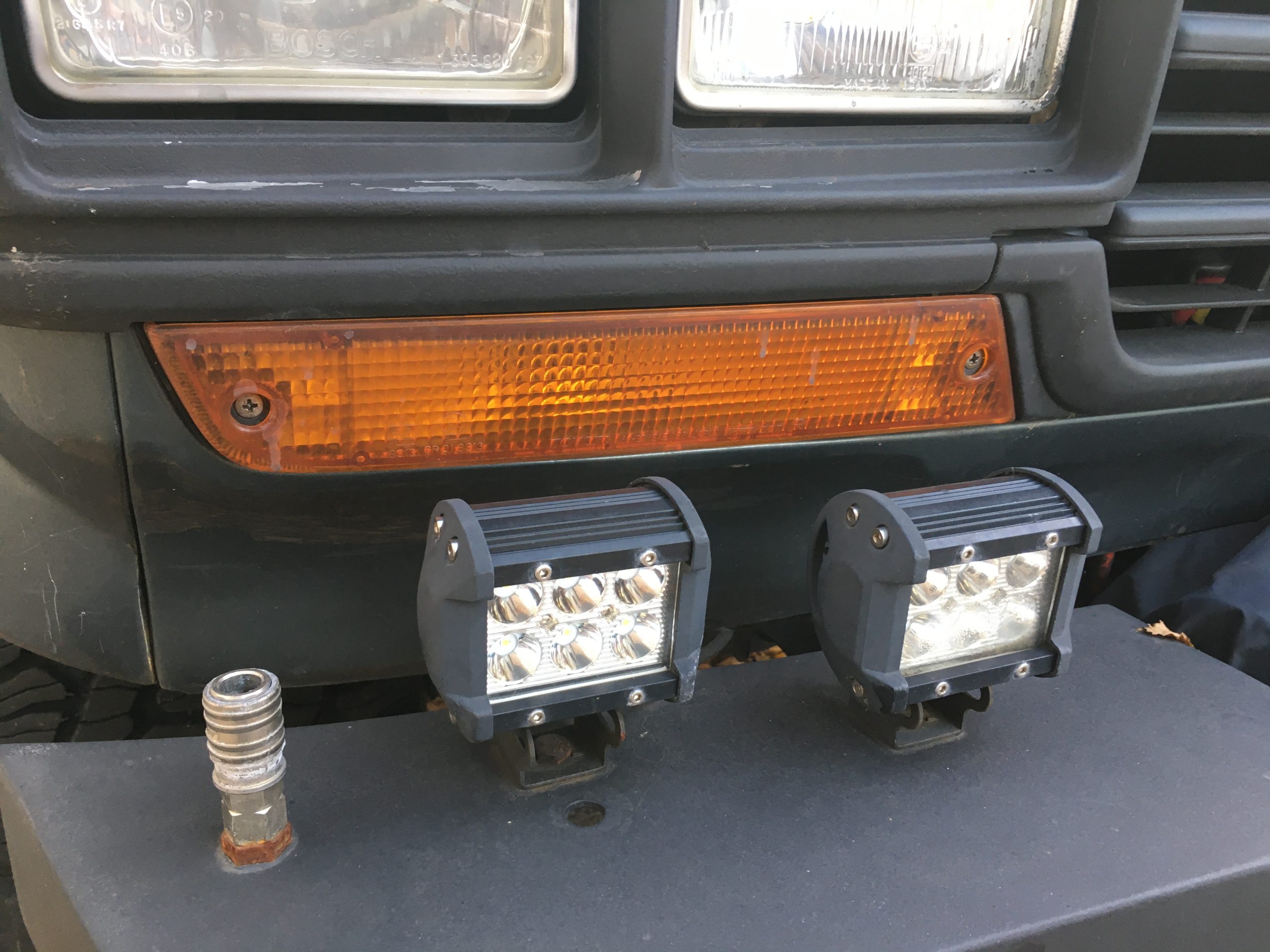
Manufacturers advertise “raw” lumens — a theoretical output figure — while what actually leaves the lens as usable light is the “effective” lumen figure, typically 10-25% lower once thermal, optical, and assembly losses are accounted for (J.W. Speaker; EagleLights). Premium optics typically run 70-90% efficiency, so a bar rated 47,520 raw lumens might deliver around 33,300 effective lumens in real use — still a lot of light, but a meaningfully different number than the one on the packaging.
Example based on a premium bar rated 47,520 raw lumens. Actual gap varies by brand and optic quality. Source: J.W. Speaker and EagleLights lighting-education pages.
For related lighting upgrades, see our best LED truck bed lights guide.
How Bar Length Relates to Lumen Output
Length and lumen output scale together roughly linearly within a product line — more LEDs across a longer bar means more raw light, but also a wider mounting footprint you need to fit on your bumper or roof rack.
Rated (raw) lumen output by bar length, Rough Country Spectrum series. Source: manufacturer spec sheet.
IP67 vs. IP68: Which Waterproof Rating Do You Actually Need?
IP67 means dust-tight and protected against temporary immersion to about 1 meter for 30 minutes — enough for rain, puddles, and road splash. IP68 means dust-tight plus continuous immersion beyond 1 meter to a manufacturer-specified depth — the rating you want if you’re doing regular creek or river crossings, not just driving in wet weather. Most quality light bars carry at least an IP67 rating; check the spec sheet specifically if water crossings are part of your typical use.
Single-Row vs. Double-Row: What’s the Real Tradeoff?
A single-row bar throws its beam farther at a given length, since all its optics point in a tighter, more focused pattern — better for highway-speed visibility or spotting distant terrain. A double-row bar of the same length is generally brighter overall and floods a wider area, at the cost of some maximum throw distance. Neither is objectively better; it depends on whether you need distance (single-row) or wide-area coverage (double-row) more.
Frequently Asked Questions
Can I legally drive with my LED light bar on?
Generally not on public roads while facing forward — federal and state law both restrict bright forward-facing auxiliary lighting while driving. Most owners run light bars off-road or at a work site and keep them off (or covered) on public roads. Check your specific state’s vehicle code, since rules on mounting height and lamp count vary.
Why does my light bar seem dimmer than the advertised lumens?
This is normal. Manufacturers advertise “raw” lumens, a theoretical figure, while real-world “effective” lumens typically run 10-25% lower due to thermal, optical, and assembly losses. Premium optics close that gap better than budget bars.
What’s the difference between IP67 and IP68 light bars?
IP67 handles temporary immersion (rain, puddles, splash) to about 1 meter for 30 minutes. IP68 handles continuous immersion beyond that depth, which matters if you regularly do creek or river crossings rather than just driving in wet conditions.
Bottom Line
The Rigid Industries Adapt/E-Series is the strongest all-around LED light bar for serious truck and off-road use, with the Rough Country Spectrum series covering budget-to-mid buyers well. Before you buy on lumen count alone, remember that number is almost always inflated relative to real-world output — and check your state’s vehicle code before assuming any forward-facing white light bar is legal to run on public roads.