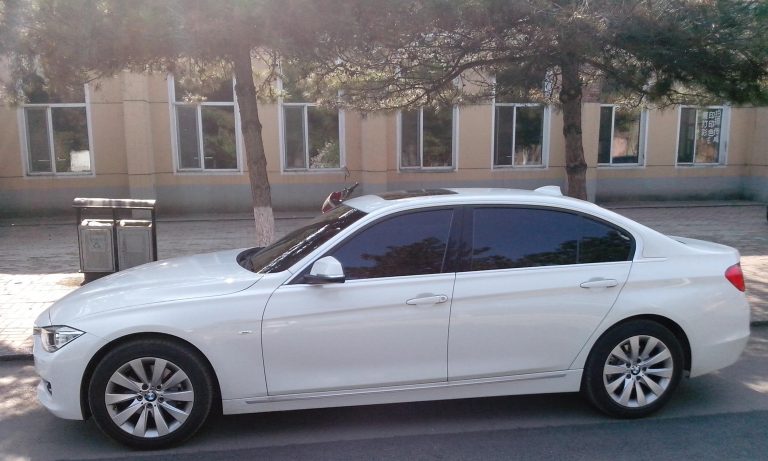

Every standard passenger car has two axles — a front axle and a rear axle — regardless of whether it’s front-wheel drive, rear-wheel drive, all-wheel drive, or four-wheel drive. That answer surprises a lot of people, because “all-wheel drive” sounds like it should mean more mechanical hardware, but axle count and drivetrain type are two separate specs. This guide covers what an axle actually does, why AWD doesn’t add axles, and when a vehicle genuinely does have more than two.
Key Takeaways
- A standard car has 2 axles — one front, one rear — no matter the drivetrain (FWD, RWD, AWD, or 4WD).
- An axle count is determined by the number of wheel rows (pairs of wheels), not by how many wheels actually receive power.
- Large trucks and trailers commonly carry 3-5+ axles, and many tolls and bridge fees charge per axle rather than a flat rate.
- Many modern vehicles use independent suspension with no single physical axle shaft at all, though the “axle” terminology (front axle, rear axle) still applies to the wheel pairing.
- Tandem-axle trailers (two axles close together) distribute weight and improve towing stability compared to a single-axle trailer of the same length.
How Many Axles Does a Standard Car Have?
Two. Every standard passenger car — sedan, hatchback, coupe, or standard SUV — has a front axle and a rear axle, one for each pair of wheels. An axle, in the broadest sense, is the imaginary or physical line running between a pair of wheels on the same side of the vehicle, and cars are built around exactly two of those wheel pairs.
This holds true regardless of engine layout or drivetrain: a front-wheel-drive Honda Civic has two axles, a rear-wheel-drive BMW 3 Series has two axles, and a Toyota RAV4 with all-wheel drive also has two axles (REREV, retrieved 2026-08-17). Axle count tracks how many rows of wheels a vehicle has, not how the engine’s power gets distributed among them.
Does All-Wheel Drive or 4WD Mean More Axles?
No — this is the most common misconception about axles, and it’s worth addressing directly. All-wheel-drive and four-wheel-drive vehicles still typically have two axles; what changes is that power is delivered to both axles instead of just one.
A Jeep Wrangler, a Subaru Outback, a Ram 1500 4×4, and a Dodge Durango AWD all still run on two axles each — the “four” in 4WD refers to four wheels receiving power, not four axles (Car From Japan, retrieved 2026-08-17). In a two-wheel-drive car, only one axle is “live” (powered) while the other is passive; in AWD or 4WD, both axles are live, but the vehicle still has exactly two of them. More drive wheels means more power transfer hardware inside those two axle assemblies, not additional axles.
Solid Axles vs. Independent Suspension: Does Every Car Have a Physical Axle?
Not in the traditional sense. Older and heavier-duty vehicles use a solid (or “live”) axle — a single rigid shaft connecting both wheels on one end of the car, so the left and right wheels move together as a unit. This design is common on trucks, body-on-frame SUVs, and the rear of some rear-wheel-drive cars, because it’s simple and handles heavy loads well.
Most modern passenger cars, though, use independent suspension, where each wheel connects to the chassis separately through its own set of control arms and doesn’t share a rigid shaft with the wheel on the opposite side. Technically, there’s no single physical “axle” bar in that setup — but the industry still refers to the front and rear wheel pairs as the front axle and rear axle for consistency, since the term describes the wheel grouping and the weight it bears, not strictly the hardware connecting them.

How Many Axles Do Trucks, Trailers, and Semis Have?
Axle count climbs fast once you move beyond passenger cars, because heavier vehicles need to spread their weight across more wheel rows to stay within road and bridge weight limits.
- Pickup trucks and vans: 2 axles, same as a standard car, unless towing a trailer with its own axles.
- Box trucks and larger straight trucks: 2-3 axles depending on gross weight class.
- Standard semi tractor-trailers (“18-wheelers”): typically 5 axles — 2 on the tractor and 3 on the trailer — which is also where the “18 wheels” figure comes from (dual wheels on most of those axle positions).
- Specialized heavy haulers: 6-8+ axles for oversized or overweight loads, spreading extreme weight across more contact points.
This is also why many toll roads and bridges charge commercial vehicles per axle rather than a flat rate. The Gordie Howe International Bridge between Canada and the U.S. charges roughly $8.75 USD per axle at its standard rate for large commercial trucks, meaning a typical 5-axle semi pays close to $44 per crossing (Truckerpro, retrieved 2026-08-17). California’s Bay Area toll bridges follow a similar model, charging $19.50 for 3-axle vehicles up to $41.50 for vehicles with 7 or more axles.
What About Tandem Axles on Trailers?
A tandem axle is two axles mounted close together under one end of a trailer, and it’s a common upgrade from a single-axle trailer for anyone hauling a boat, camper, or utility trailer with real weight behind it. The second axle doesn’t just double the weight capacity — it also spreads that weight over more tire contact patches, which improves stability and reduces the sway that a heavily loaded single-axle trailer is prone to at highway speed.
Tandem-axle trailers also add redundancy: if one tire fails on the road, a tandem setup is far more forgiving to drive on safely to a stop than a single-axle trailer losing its only tire on that side. That’s part of why leveling and stabilizing a loaded trailer is more involved on tandem-axle setups — there’s more hardware to account for, but also more built-in stability once it’s set up correctly. Trailer brakes typically need to be matched to axle count too; our guide to electric brake controllers covers how proportional braking adjusts for the added weight tandem axles are usually carrying.
Why Axle Count Matters Beyond Trivia
Knowing your vehicle’s axle count isn’t just a specs-sheet detail — it affects real costs and maintenance decisions. Commercial vehicle tolls, as covered above, scale directly with axle count. Vehicle weight ratings and towing calculations are built around axle capacity, so exceeding a single axle’s rated load — even if the vehicle’s total weight is technically within its overall GVWR — can overload that specific axle and its tires. And when diagnosing a wandering or unstable ride, a worn shock absorber on one axle, rather than the axle itself, is usually the actual cause, since axle failures are comparatively rare on a well-maintained daily driver.
If you’re shopping for a trailer or an RV setup, checking axle-specific weight ratings — not just the trailer’s total GVWR — is worth doing before you load it; our RV wheel chock sizing guide touches on how tandem-axle motorhomes and trailers differ from single-axle setups in what they need for safe parking and stabilization.
Frequently Asked Questions
Do all-wheel-drive cars have more axles than front-wheel-drive cars?
No. Both have two axles. The difference is that in AWD, both axles receive power from the engine, while in FWD only the front axle does. Axle count is about wheel rows, not which wheels are driven.
How many axles does a motorcycle have?
One. A motorcycle has a single wheel in front and a single wheel in back, aligned on the same centerline, which technically counts as one axle line rather than the two side-by-side wheel pairs a car has.
Can a car have three axles?
Not a standard passenger car, but some specialty and heavy-duty vehicles do — certain large motorhomes, box trucks, and dually pickup configurations with tag axles can carry a third axle to support additional weight, most often under the rear of the vehicle.
Does towing a trailer add axles to my car?
No, your car’s own axle count doesn’t change, but the total axle count of your car-plus-trailer combination does increase by however many axles the trailer has — which matters for any toll road or bridge that charges per axle for the full combination.
The Bottom Line
A standard car has two axles — front and rear — no matter how many of those wheels actually receive power from the engine. AWD and 4WD change how power gets split between the axles, not how many axles exist. That two-axle baseline only changes once you move into trucks, trailers, and commercial vehicles, where axle count climbs to spread out heavier loads and directly affects what you pay at tolls and bridges. The next time “axle” comes up — whether it’s a toll receipt, a trailer weight rating, or a suspension repair quote — you’ll know exactly what’s being counted and why it matters.