The cheapest, most common “Doppler radar” module sold for Arduino projects — the RCWL-0516 — cannot actually measure speed at all. It only outputs a digital on/off motion signal, with no frequency data to calculate velocity from. If you’re building a DIY vehicle speed detector, that single distinction decides whether your project works. This guide covers the sensor modules that actually give you a usable speed signal, the amplifier circuit most builds need, and the accuracy limits worth understanding before you trust your own numbers.
Key Takeaways
- The RCWL-0516 is a motion-presence sensor, not a speed sensor — it has no exposed frequency output, despite being commonly marketed and mistaken for a Doppler speed module.
- The HB100 10.525GHz module is the standard choice for DIY speed detection, but its raw output is only 0.5-2mV — too weak for an Arduino to read without an amplifier circuit first.
- No pre-assembled, calibrated “Arduino radar speed gun” kit currently exists for purchase — every viable build starts from a bare sensor module plus your own wiring and code.
- Well-tuned hobbyist HB100 builds have been reported landing within roughly ±3 mph of a reference speedometer at 20-40 mph in informal testing — a useful benchmark, not a certified accuracy spec.
The Buyer Mistake That Sinks Most Builds: RCWL-0516 vs. HB100
Search “Arduino radar sensor” and the RCWL-0516 shows up constantly — it’s cheap, widely available, and labeled as a microwave Doppler motion sensor. It works fine for what it’s built for: triggering a digital HIGH/LOW signal when something moves nearby, the same job a PIR motion sensor does. What it can’t do is give you speed, because all the frequency processing happens on-chip and never reaches a pin you can read. If your goal is an actual vehicle speed number, the RCWL-0516 is the wrong part regardless of how many tutorials use the word “radar” in the title.
The Sensor Modules That Actually Work for Speed
We compared these on whether they output real speed-proportional data, detection range, and how much extra circuitry each requires — since the “best” pick here depends entirely on whether you’re building at street-level distances or short-range.
1. HB100 10.525GHz Doppler Module — Best for Street-Distance Vehicle Speed
Frequency: 10.525 GHz (X-band) | Power: 5V±0.25V, 40mA | Size: 37x45x8mm | Price: ~$4-8
The standard choice for this project because its analog IF output is genuinely proportional to Doppler shift — the physics you need for speed math. The catch: that raw output is only 0.5-2mV, well below what an Arduino’s ADC can reliably read, so every real build pairs it with a ~40dB amplifier stage rather than wiring it straight to an analog pin.
2. SparkFun Acconeer XM125 Pulsed Coherent Radar — Best for Precision Short-Range Builds
Frequency: 60 GHz | Range: Up to 20m | Output: Digital, via library, no external amplifier needed
Explicitly marketed for distance, motion, and speed measurement with millimeter-level precision, and skips the HB100’s amplifier-circuit requirement entirely since signal processing happens on-module. The tradeoff is a shorter effective range than the HB100 for open-road vehicle speed capture, making it better suited to close-range or controlled-distance testing than roadside monitoring.
3. SparkFun A111 Pulsed Radar Breakout — Best for Gesture-Adjacent Short-Range Projects
Frequency: 60 GHz | Range: ~2m | Interface: SPI, up to 50MHz clock
Capable of supporting speed-detection logic at short range, but it’s optimized for gesture and close-distance sensing rather than vehicles passing at road distances — a better fit if your project is closer to a lab bench demo than a driveway speed check.
4. RCWL-0516 — Not a Speed Sensor, Included Here as a Warning
Frequency: ~3.18 GHz | Range: Up to ~7-9m | Output: Digital motion trigger only | Price: ~$1-2
Genuinely useful for presence detection — a porch light trigger, an intrusion alarm — but it has no place in a speed-detector build. Included here specifically because it’s the module most likely to end up in a shopping cart by mistake.
No Ready-Made Kit Exists — Here’s What You’re Actually Building
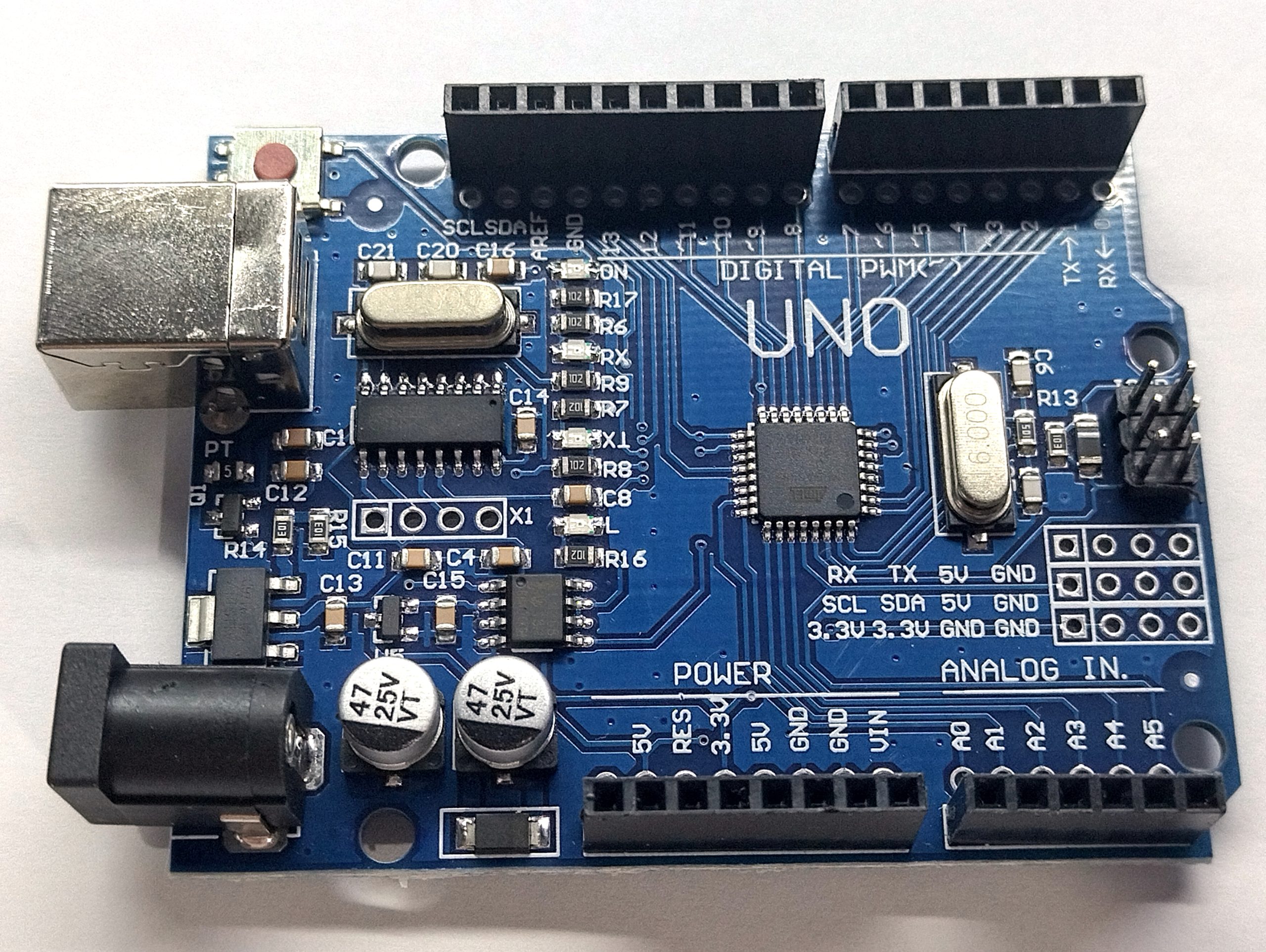
Searching Amazon, SparkFun, and Adafruit turns up bare sensor modules, not a complete, calibrated “Arduino radar speed gun” product. Every functional build is: a Doppler module (HB100, most commonly), a signal-conditioning/amplifier circuit to boost that weak IF output into Arduino-readable range, and your own code to convert the resulting frequency into a speed value. Set that expectation before you order parts — this is a soldering-and-code project, not an unboxing.
The Doppler Math and Why Aim Angle Wrecks Accuracy
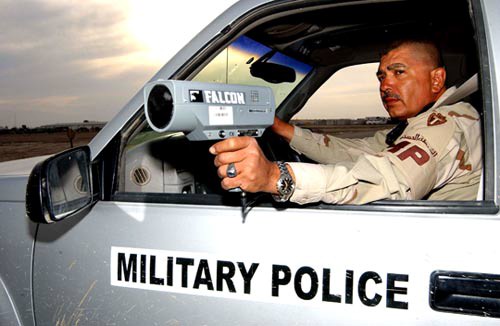
Speed comes from the Doppler frequency shift using Δf = (2 × v × f₀ × cos θ) / c, where f₀ is the module’s transmit frequency (10.525GHz for the HB100), v is target speed, θ is the angle between the sensor’s boresight and the vehicle’s path, and c is the speed of light. That cos θ term is the practical accuracy killer: a sensor angled even slightly off the direct line of travel systematically undercounts true speed, an effect multiple hobbyist builds have documented empirically rather than just in theory (dlpoole, HB100-Doppler-Vehicle-Speed-Measurement, GitHub). Mount the sensor pointed as directly down the road as your setup allows, not at an angle from the roadside, or budget for a correction factor in your code.
Source: manufacturer datasheets (Mantech HB100, SparkFun, jdesbonnet RCWL-0516 documentation).
Why Build This: Real Speeding Behavior Data
17% of U.S. drivers self-identify as frequent speeders (15+ mph over the limit “often” or “always”), with another 44% admitting to speeding at least sometimes, according to NHTSA’s 2022-2023 National Survey of Speeding Attitudes and Behaviors (NHTSA, DOT HS 813 594). That same survey found speeding prevalence drops sharply with age — roughly 24% of drivers 18-24 fall into the speeder category versus about 6% of drivers 65 and older. If your project’s motivation is neighborhood traffic-calming data or a personal curiosity build, this is the honest framing: a DIY sensor gives you your own informal read on local traffic, not a certified enforcement tool. It has no legal standing for citations, and only professional, calibrated equipment can be used for that purpose. For related detection-side content, see our best police speed radar detector and best anti radar laser speed detector guides, which cover buying a detector rather than building your own sensor.
Frequently Asked Questions
Can I use the RCWL-0516 to measure vehicle speed?
No. The RCWL-0516 only outputs a digital motion-present/absent signal with no exposed frequency data, so there’s no way to calculate speed from it. Use the HB100 or a mmWave module like the SparkFun XM125 instead.
Why does the HB100 need an amplifier circuit?
Its raw analog IF output is only 0.5-2mV, far below what an Arduino’s ADC can reliably distinguish from noise. A two-stage op-amp amplifier circuit boosting the signal roughly 40dB is standard in working builds.
How accurate is a DIY Arduino radar speed detector?
Hobbyist reports on well-tuned HB100 builds suggest roughly ±3 mph accuracy against a reference speedometer at 20-40 mph, but that figure comes from informal testing on maker blogs, not a controlled study — treat it as a rough benchmark, not a certified spec. Sensor aim angle is the biggest real-world accuracy factor.
Bottom Line
The HB100 paired with a basic amplifier circuit is the practical starting point for most DIY vehicle speed detector builds, while the SparkFun XM125 is worth considering if you want to skip the amplifier stage and don’t need street-level range. Whichever module you choose, confirm it actually outputs frequency data before ordering — the RCWL-0516’s popularity makes it the single most common mistake in this project — and treat your results as an informal read on local traffic, not a certified measurement.