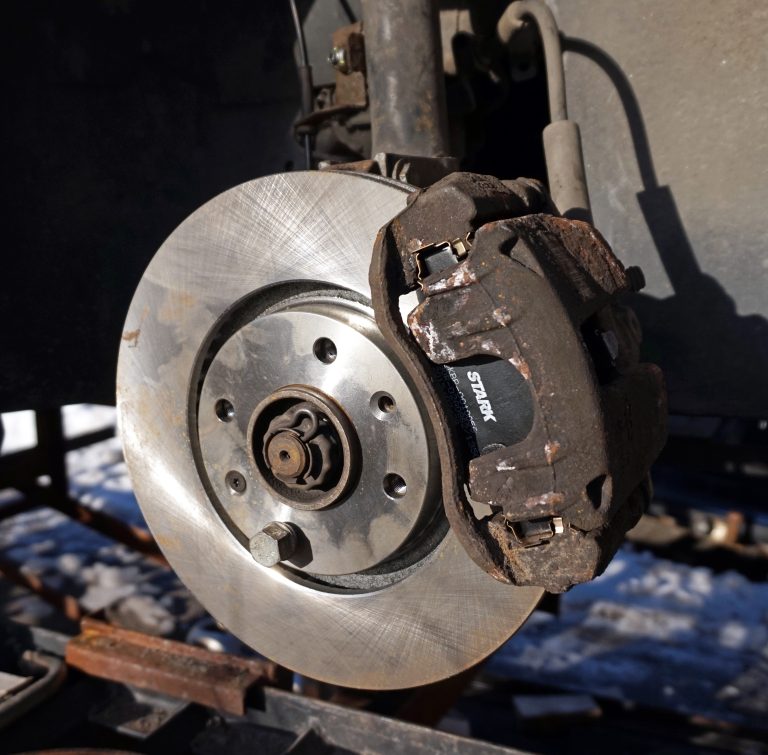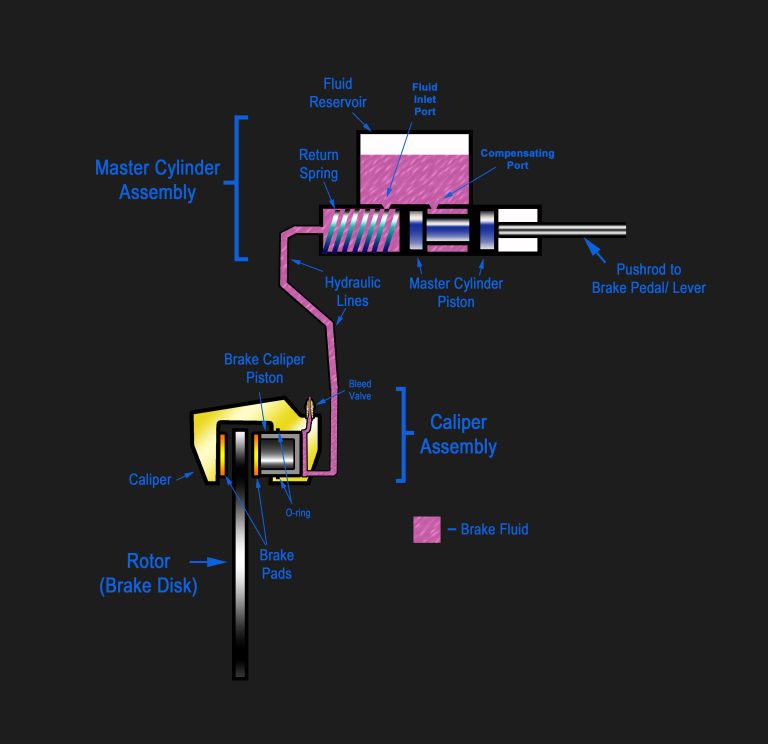

The Consumer Product Safety Commission logs roughly 100,000 ATV-related emergency room visits every year in the United States, and a widely-cited factor in a meaningful share of rollover and stopping-distance incidents is degraded braking performance — often traced back to a warped, glazed, or badly worn rotor that never got replaced on schedule. Unlike a car rotor tucked behind a wheel and a fender liner, an ATV brake disc sits fully exposed to mud, creek crossings, sand, and rock strikes, so it wears on a completely different timeline than anything on pavement. Riders who assume “it’s just a rotor, any aftermarket disc will do” often end up chasing pulsation, warping, or premature pad wear for a full season before realizing the rotor itself was the wrong spec for the job.
Key Takeaways
- ATV rotors wear 2-4x faster than automotive discs because they’re fully exposed to grit, mud, and water with no splash shield.
- Warping shows up as pedal or lever pulsation; scoring and bluing show up as visible heat discoloration and grooves.
- OEM-spec rotors match factory thickness and runout tolerances; aftermarket wave and drilled designs trade some pad life for better mud/water clearing and lighter unsprung weight.
- Expect to pay $30-70 for a budget or OEM-replacement rotor and $90-180 for a premium wave-cut or genuine OEM part.
- Always replace rotors and pads together when the disc is below minimum thickness — resurfacing an ATV rotor is rarely worth the labor given how cheap new discs are.
How ATV Rotors Wear, Warp, and Why Design Matters
A stock ATV or UTV disc brake works exactly like a car’s: a caliper squeezes pads against a spinning steel disc, and friction converts kinetic energy into heat. The difference is environment. A street car’s rotor lives behind a wheel, largely shielded from standing water and mud. An ATV rotor is bolted directly to an exposed hub, spinning in the open where it collects sand, silt, and water on every ride — and that grit acts like valve-grinding compound between the pad and the disc face.
The most common failure signs riders report, roughly in order of frequency:
- Pulsation or a pulsing lever/pedal — almost always rotor warping from uneven heat cycling, most often caused by hitting a creek crossing with hot brakes or over-tightening wheel/hub hardware unevenly.
- Visible blue or straw discoloration — a sign the rotor has been run well past its normal operating temperature, usually from riding the brakes down long descents; heat-cycled steel loses hardness and warps faster afterward.
- Deep circumferential grooves — from grit embedded in worn-out pad material acting like sandpaper; once grooves are visible by eye (not just felt with a fingernail), the rotor is usually due for replacement regardless of measured thickness.
- Thickness below the minimum stamped on the disc face — most ATV OEMs stamp a minimum thickness (often around 3.5-4.5 mm depending on model) directly into the rotor; a caliper piston that’s traveled too far to compensate for a thin rotor also loses effective clamping force.
OEM vs. Aftermarket Rotors
An OEM or OEM-spec replacement rotor matches the factory’s exact thickness, offset, and bolt pattern, and it’s the safest default if you’re not chasing a specific upgrade — it bolts on with zero fitment guesswork and matches the caliper’s designed pad clearance. Aftermarket rotors span a wide range: some are simple solid-disc reproductions priced to undercut OEM, while others add wave-cut edges, cross-drilling, or slotting aimed at riders who spend serious time in mud and water.
Wave, Drilled, and Solid Rotor Designs
A solid rotor is the simplest and cheapest design — a flat disc with no cutouts. It’s durable and predictable, and it’s what most OEM ATV brakes ship with from the factory.
A wave rotor has a scalloped or petal-shaped outer edge. The wave pattern does two things: it sheds mud and water more aggressively (each “valley” acts like a mini squeegee against the pad), and it shaves rotational weight off the outer edge, which matters more than it sounds like for unsprung mass on a spinning wheel component. The tradeoff is a slightly smaller effective pad contact area and, on cheap stamped versions, more prone-to-warp thin gauge steel if the wave geometry isn’t engineered well.
A drilled or slotted rotor borrows from automotive performance parts. Holes and slots help vent gas and steam that builds up between pad and rotor under hard, repeated braking, and they help clear mud film. On an ATV that rarely sees sustained high-heat braking the way a track car does, the practical benefit is mostly about mud/water clearing rather than gas-fade prevention — but the drilled holes are also stress-concentration points, so cheap castings can crack there over time. Buying a reputable brand matters more for drilled/slotted designs than for solid rotors.
The Best ATV Brake Discs Worth Buying
These picks cover OEM-spec replacements, mud-shedding wave designs, and budget options, based on catalog fitment breadth, material specs, and rider-reported durability. Approximate prices are per single rotor; most ATVs use one rotor per braked wheel (commonly front-only or front-and-rear depending on model). Note that fitting a new rotor usually means pushing the caliper pistons back to clear a fresh disc surface — see our guide to the best disc brake caliper compression tool for the right way to do that without damaging the seals.
1. EBC Brakes MD-Series ATV Rotor
EBC’s MD-series is stainless steel, laser-cut to OEM thickness and bolt pattern, with broad fitment across Honda, Yamaha, Polaris, Can-Am, and Suzuki ATV/UTV lines. It’s a straightforward OEM-spec replacement rather than a performance redesign, which is exactly what most riders replacing a worn stock rotor actually want.
Best for: Riders who want a drop-in OEM-spec replacement with no fitment guesswork.
Approximate price: $45-75
2. Moose Racing ATV/UTV Brake Rotor
Moose Racing’s rotors are a longtime powersports aftermarket staple — stainless steel construction, precision-machined to stock tolerances, and priced competitively against OEM parts. They’re a common recommendation on ATV forums specifically because the fitment database is deep and the parts have a long track record.
Best for: Budget-conscious riders replacing a worn stock rotor on common Honda/Yamaha/Polaris models.
Approximate price: $35-60
3. Galfer Wave Rotor
Galfer built its reputation on motorcycle wave rotors before extending the line to ATV and UTV applications. The floating or fixed wave-cut design sheds mud aggressively and cuts rotational weight versus a solid disc, and Galfer’s stainless steel alloy holds up well to repeated water crossings without pitting. This is the pick for riders who spend real time in wet, muddy terrain and notice grabby or delayed braking after creek crossings.
Best for: Mud and water-crossing riders who want faster brake bite after a wet section.
Approximate price: $95-140
4. NICHE Aftermarket ATV Brake Rotor
NICHE is a budget-tier aftermarket brand with wide fitment coverage and prices well under OEM. Quality is generally adequate for light-duty trail riding, though several riders report shorter service life than EBC or Moose Racing under heavy use. It’s a reasonable choice for an older ATV where you want function over longevity.
Best for: Older or lower-value ATVs where a budget rotor makes more financial sense than a premium one.
Approximate price: $25-45
5. All Balls Racing Brake Rotor
All Balls Racing is best known for wheel bearing and seal kits, but its rotor line uses the same OEM-fitment-first philosophy: stainless steel, factory thickness, and a catalog cross-referenced tightly to VIN-level fitment data. It’s a dependable middle-ground pick between rock-bottom budget rotors and premium wave designs.
Best for: Riders who already buy All Balls bearing kits and want a matched-brand rotor at service time.
Approximate price: $40-65
6. Vesrah ATV Brake Disc
Vesrah is a Japanese friction and brake components manufacturer with a strong reputation in motorcycle and ATV racing circles. Its rotors use a higher-grade stainless alloy than most budget options, and the machining tolerances tend to run tighter, which shows up as less initial runout and a longer warp-free service life under hard use.
Best for: Aggressive or competitive riders who want racing-grade material quality on a trail machine.
Approximate price: $55-80
7. Genuine OEM Replacement Rotor (Polaris/Can-Am/Honda)
Buying the manufacturer’s own replacement part guarantees exact fitment, correct heat-treatment spec, and — on newer UTVs with ABS — the correct tone-ring geometry if the rotor incorporates one. It costs more than any aftermarket option, but for a machine still under warranty or for owners who don’t want to troubleshoot an aftermarket fitment mismatch, it removes any guesswork.
Best for: Late-model UTVs with ABS, or any rider who wants zero fitment risk and doesn’t mind paying dealer pricing.
Approximate price: $120-190

Rotor Price and Diameter Comparison
| Rotor | Typical Diameter | Common Fitment | Approx. Price |
|---|---|---|---|
| EBC MD-Series | 190-230 mm | Honda, Yamaha, Polaris, Can-Am, Suzuki | $45-75 |
| Moose Racing | 180-220 mm | Honda, Yamaha, Polaris | $35-60 |
| Galfer Wave | 190-240 mm | Honda, Yamaha, Can-Am, Polaris | $95-140 |
| NICHE Aftermarket | 180-220 mm | Wide generic fitment | $25-45 |
| All Balls Racing | 190-230 mm | Honda, Yamaha, Polaris, Can-Am | $40-65 |
| Vesrah | 190-230 mm | Honda, Yamaha, Suzuki | $55-80 |
| Genuine OEM | Model-specific | Exact model match, incl. ABS tone ring | $120-190 |

Rotor Thickness Comparison Across Design Types
Frequently Asked Questions
How do I know when my ATV rotor needs replacing?
Check the minimum thickness stamped on the rotor face against a caliper measurement, look for visible grooving deeper than a fingernail catch, and test-ride for pulsation under braking. Any one of the three is reason enough to replace it; don’t wait for all three.
Can I resurface a warped ATV rotor instead of replacing it?
Technically yes, but most ATV rotors are thin enough that resurfacing pushes them close to or below minimum thickness in one pass, and shop labor to true a small rotor often costs more than a new budget rotor. Replacement is almost always the better value. If your UTV has an electronic parking brake on the rear caliper, retracting that piston needs a rewind-style tool rather than a standard push compressor — our best disc brake caliper tool guide covers which adapters fit which calipers.
For the pad material to pair with a new rotor, see our guide to the best brake pads — ceramic, semi-metallic, and organic compounds wear rotors at noticeably different rates.
Do wave rotors actually stop better than solid rotors on an ATV?
Not dramatically in dry conditions — the total pad contact area is similar. The real advantage shows up right after a mud or water crossing, where the wave edges clear debris film faster and restore full bite sooner than a solid disc.
Is it safe to mix a new rotor with old, glazed pads?
It works, but glazed pads won’t bed properly to a fresh rotor surface and can transfer an uneven friction layer that causes early warping. Replacing pads and rotors together, or at minimum deglazing old pads with sandpaper, gives a cleaner break-in.
What causes an ATV rotor to warp faster than a car’s?
Repeated hot-to-cold heat cycling from creek crossings while braking hard is the single biggest cause specific to ATVs — dunking a glowing-hot rotor in cold water shocks the steel unevenly, which cars almost never experience.
The Bottom Line
Most riders don’t need a premium wave rotor — an OEM-spec replacement like EBC’s MD-series or a Moose Racing disc covers the vast majority of trail riding without excess cost. The upgrade to a wave or drilled design earns its price mainly for riders who regularly cross water and mud and notice sluggish brake bite afterward, or who care about shaving unsprung rotational weight. Whichever design you choose, match it to your riding conditions rather than chasing a “performance” label, replace pads alongside a badly worn rotor, and check the minimum-thickness stamp before you assume a rotor still has life left in it. After any rotor swap, bleed the system properly — a soft or spongy lever after the job usually traces back to trapped air rather than the new disc, and our best brake master cylinder guide covers bleeding and pressure basics if the pedal still feels off.