
A 2023 International Carwash Association member survey found that drying is the single step detailers and wash operators cite most often as the difference between a “clean” car and a “finished” one, ahead of soap chemistry or rinse water quality. That lines up with what any experienced detailer will tell you: water left to air-dry or wiped away with a dry towel is what causes swirl marks, and a forced-air blower is the tool that avoids both problems by moving water off the paint instead of dragging it across the surface.
Key Takeaways
- Forced-air dryers push water off the paint without a towel ever touching the surface, which is the single biggest source of swirl marks and micro-scratches on a clean car.
- CFM (cubic feet per minute) is the number that predicts drying speed, not horsepower or amperage — a high-CFM blower clears panels faster even at a lower rated HP.
- Handheld electric dusters like the DataVac are excellent for crevices and interior vents but underpowered for drying a full exterior on their own.
- Canister-style blowers (MetroVac Air Force line, Big Blue) are the category most detailers reach for because they combine higher airflow with a long hose for reaching mirrors, badges, and door jambs.
- Noise output varies by 15-20 dB between models, which matters if you’re drying in a driveway, apartment lot, or shared garage.
Why Forced-Air Drying Beats a Towel
Every pass of a chamois, microfiber towel, or shammy across a painted panel is friction, and friction on top of grit the wash missed is exactly how fine, hairline scratches called swirl marks get etched into clear coat. Detailers refer to this as “marring,” and it shows up most under direct sun or a garage LED, appearing as a spiderweb of scratches that dulls an otherwise clean finish. A blower removes that friction entirely: instead of dragging a cloth across the paint to soak up water, it uses high-velocity air to push water droplets off the surface and off the car before they have a chance to spot.
Forced air also reaches places a towel physically can’t get into without a lot of extra effort — side mirror housings, emblem recesses, the gap around the fuel door, wiper cowls, door jambs, and the trim channels around windows. Water trapped in those crevices is what causes water spots to reappear ten minutes after you thought you were done, and it’s also what drips out onto a freshly dried hood or trunk lid when you close a door. A blower clears those pockets in seconds.
The speed difference is real too. A single detailer working with two towels typically needs 10-15 minutes to fully dry a sedan, switching towels partway through because a saturated towel stops absorbing and starts smearing water instead. A decent forced-air blower dries the same car in roughly half that time, and because it’s not adding friction, there’s no risk of the tool itself causing the very damage you’re trying to prevent.

The Best Car Dryer Blowers Worth Buying
The category splits into two real designs. Canister blowers sit on the ground or a cart, connect to a wand or nozzle through a flexible hose, and are built for drying a full exterior. Handheld electric dusters are smaller, lighter, and better suited to interiors, engine bays, and detail work, though a few dual-purpose units try to do both jobs in one housing. Below are the models that keep showing up in professional detailing bays and DIY garages, with real approximate street pricing as of 2026.
MetroVac Air Force Master Blaster (MB-3CD)
The Master Blaster is the model most mobile detailers mention first when asked what they actually run. It’s built around a 4.0-peak-horsepower motor rated near 118 CFM, with a variable-speed dial and a heat option for cold-weather drying. The canister is compact enough to sit on a cart or the floor of a mobile detailing van, and the hose reaches comfortably around a full-size sedan or midsize SUV without repositioning.
Approximate price: $150-170.
Best for: mobile detailers and serious DIYers who want one machine that dries an entire vehicle quickly and holds up to daily use.
MetroVac Air Force Commander (AFC-3B)
The Commander steps up to a 2.0 continuous-duty motor with a stronger duty cycle than the Master Blaster, meaning it’s designed to run longer without the thermal cutoffs some cheaper blowers hit after 20-30 minutes of continuous use. It has the same variable-speed and heat controls, in a housing built for shops that dry multiple cars back-to-back rather than one car a week.
Approximate price: $220-250.
Best for: detail shops and high-volume mobile operators drying several vehicles per day.
Metro Vac ‘N Blo (MB-3B)
This is the dual-purpose option: the same 4.0-peak-horsepower motor as the Master Blaster, but built to switch between blow and vacuum modes with a valve on the canister. That means one machine handles exterior drying and interior vacuuming, which is genuinely useful for anyone with limited garage space or a mobile setup where every extra tool is more weight to carry.
Approximate price: $180-200.
Best for: DIYers and small operations who want exterior drying and interior vacuuming from a single unit instead of buying two machines.
DataVac ED500 Electric Duster (by Metro)
The DataVac is the handheld duster that shows up on workbenches far outside the detailing world — it’s the same basic tool IT departments use to blow dust out of computers, rated around 1.17 peak horsepower. It’s too small to dry a full exterior in reasonable time, but it excels at what canister blowers are clumsy at: wheel wells, emblem gaps, badge recesses, and interior air vents where you need a small, controllable nozzle rather than a firehose of air.
Approximate price: $70-90.
Best for: crevice work, interior vents, and finishing touches after a towel or larger blower has done the bulk of the drying.
XPOWER A-2 Multi-Purpose Air Blower
XPOWER built its name on pro pet-grooming and disaster-restoration blowers, and the A-2 is its compact entry-level model, rated around 3,000 FPM air velocity from roughly a 1/3-horsepower motor. It’s noticeably lighter and cheaper than the MetroVac canisters, which makes it a reasonable starting point for anyone drying a single small car occasionally rather than running a detailing business.
Approximate price: $55-70.
Best for: budget-conscious owners drying one car every week or two, not daily professional use.
Big Blue Dryer (Big Blue Detail Products)
Big Blue built its entire product line around a single purpose-built car dryer rather than adapting an industrial duster, and it shows in the ergonomics — a shaped nozzle designed specifically for sheeting water off curved automotive panels, and a shoulder strap that takes the canister’s weight off your arm during a full dry. Output sits in the same general range as the MetroVac Master Blaster.
Approximate price: $130-150.
Best for: owners who want a dryer designed specifically for cars rather than a repurposed shop or grooming blower.

CFM and Noise: How the Top Models Compare
CFM (cubic feet per minute) is the number that actually predicts how fast a blower clears water off a panel — it matters more than the horsepower rating printed on the box, because two motors with the same HP can move very different volumes of air depending on the fan and housing design. Noise is the other practical factor, especially if you’re drying a car in a shared driveway, an apartment complex lot, or an attached garage where the sound carries into the house.
Spec Comparison
| Model | Type | Approx. CFM | Approx. Price | Best For |
|---|---|---|---|---|
| MetroVac Air Force Commander | Canister | 135 | $220-250 | High-volume shops |
| MetroVac Air Force Master Blaster | Canister | 118 | $150-170 | Mobile detailers, serious DIY |
| Metro Vac ‘N Blo | Canister, dual-mode | 118 | $180-200 | Blow + vacuum in one unit |
| Big Blue Dryer | Canister | 110 | $130-150 | Purpose-built car dryer |
| XPOWER A-2 | Handheld | 65 | $55-70 | Occasional single-car use |
| DataVac ED500 | Handheld duster | 40 | $70-90 | Crevices and interior vents |
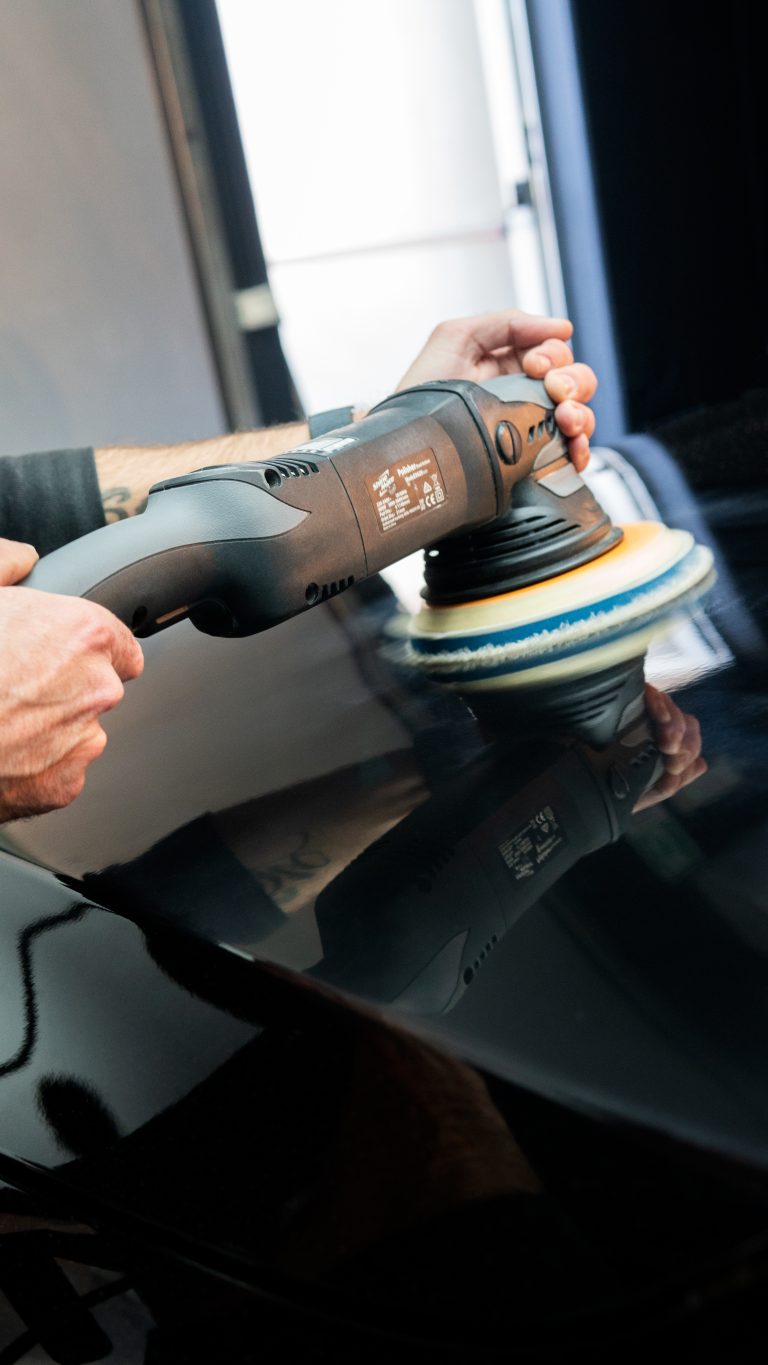
If you’re just getting into paint care and want to understand what these blowers are protecting, it’s worth reading how pH-neutral wash soap for ceramic coated cars avoids stripping the same hydrophobic layer a good dry is meant to preserve. Pairing a blower with the right ceramic coating means water sheets off in bigger beads to begin with, which cuts drying time further. And once the exterior is dry and swirl-free, a dual-action buffer polisher is the next tool worth owning if you want to remove any marring that predates the switch to forced-air drying. Interior detailers pairing this workflow with cabin care should also check our guide to the best leather steering wheel cleaner, since a handheld duster like the DataVac does double duty blowing dust out of vents during the same session.
Frequently Asked Questions
Do I need a canister blower, or is a handheld duster enough?
A handheld duster like the DataVac is genuinely useful for crevices, vents, and detail work, but it doesn’t move enough air to dry a full exterior in a reasonable time. If you’re drying whole cars regularly, a canister blower like the Master Blaster or Big Blue Dryer is the right category.
Will a car dryer blower cause water spots if I don’t get every drop?
No more than a towel would, and usually less — the issue with water spots is mineral content in the water combined with sun exposure, not the drying method itself. Using filtered or deionized rinse water alongside a blower all but eliminates spotting regardless of which tool finishes the job.
How long does a canister blower take to dry a full-size sedan?
Most owners report 5-8 minutes for a sedan and closer to 10-12 for a full-size SUV or truck, versus 10-15 minutes with towels alone, and with no risk of adding swirl marks in the process.
Are these blowers loud enough to bother neighbors?
The higher-output canister models run 88-92 dB at full speed, comparable to a gas leaf blower, so early morning or late evening use in a shared driveway or apartment lot is worth avoiding. The smaller handheld dusters run noticeably quieter, in the high-70s to low-80s dB range.
Can I use a car dryer blower on a wrapped or ceramic-coated vehicle?
Yes — forced air is actually gentler on vinyl wraps and coatings than towel friction, since there’s no cloth dragging across the surface. Just keep the nozzle moving rather than holding it stationary against trim edges or wrap seams for extended periods, since sustained heat from a heated setting can affect adhesive over time.
The Bottom Line
A forced-air blower solves a real problem that no towel, no matter how soft or expensive, actually solves: friction. If you’re drying a car more than once a month and care about keeping the paint swirl-free, a canister blower like the MetroVac Air Force Master Blaster or the purpose-built Big Blue Dryer earns its price back in reduced correction work alone. If your needs are lighter — interior vents, crevices, occasional touch-ups — a handheld duster like the DataVac is a cheaper, smaller complement rather than a replacement. Either way, the case for moving away from towel-only drying is one of the more clear-cut upgrades in a home detailing kit.