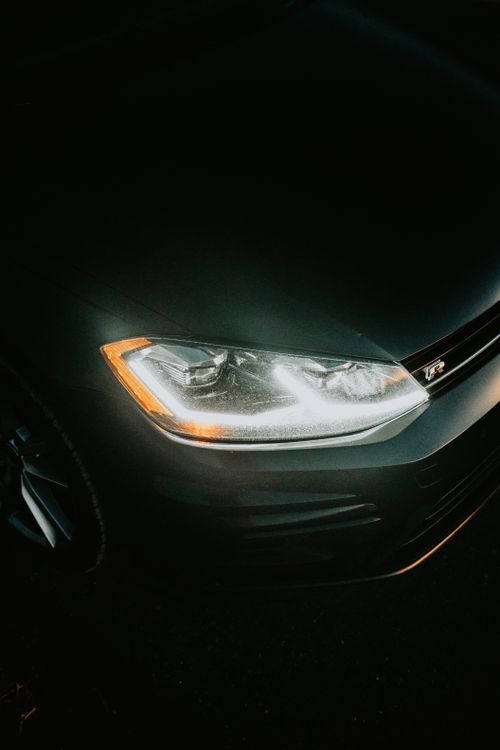
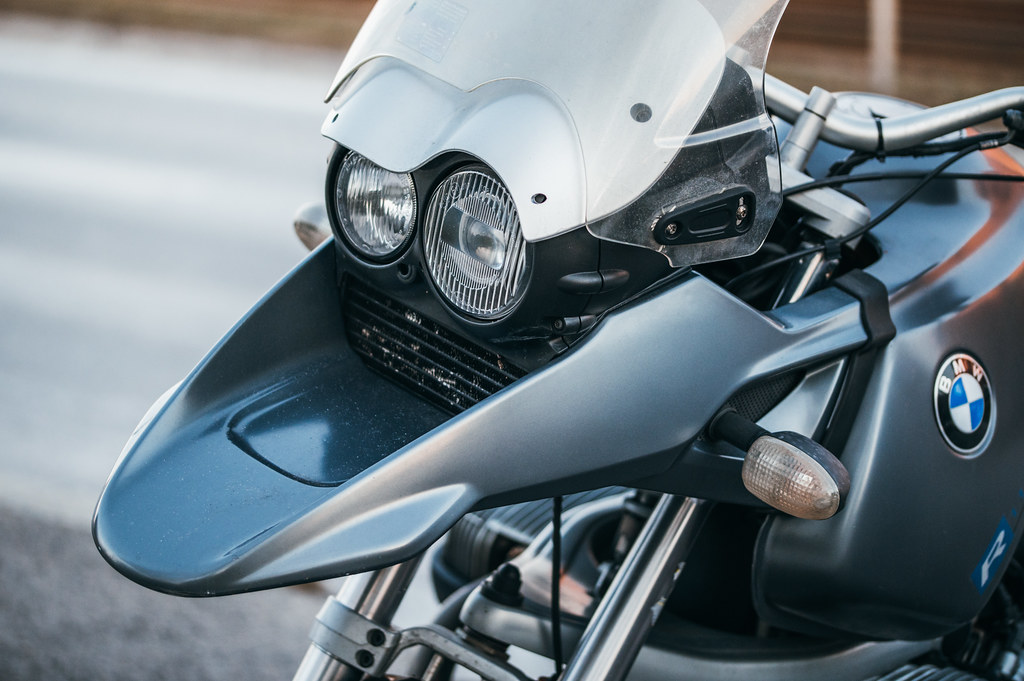
H4 is the bulb behind most 7-inch round headlights — Jeep Wranglers, older motorcycles, classic cars, and countless off-road and aftermarket housings. It is also sold under two other names for the exact same physical bulb: 9003 in the US aftermarket, and HB2 in some European parts catalogues. Most buying guides treat those three names as fully interchangeable.
They are physically interchangeable — same base, same dual filament. What is not interchangeable is the internal shield inside the bulb, and getting that wrong is how a headlight that looks correctly aimed ends up putting glare directly into oncoming drivers’ eyes.
Key Takeaways
- H4, HB2 and 9003 share the same base and are physically interchangeable, but original ECE-spec H4 bulbs use a different internal shield than the US-market 9003/HB2 variant — the shield shape is what actually produces the beam cutoff.
- The original H4 design did not meet US beam pattern regulations because unshielded light could blind oncoming drivers; 9003/HB2 was developed specifically as the US-compliant version.
- Standard H4 output is 60/55W at roughly 1,650/1,000 lumens on a quality halogen. Higher-wattage “performance” H4 bulbs (90/100W) exist but stress factory plastic sockets and wiring not rated for that heat.
- H4 housings are almost always sealed-beam-style reflectors designed around a halogen filament position — the same FMVSS 108 non-compliance problem that applies to LED conversion bulbs generally applies here too.
H4, HB2, 9003: One Bulb, Different Internal Shields
The base, dual-filament design and physical fit are identical across all three names — H4 is the international designation, 9003 is the American aftermarket name, and HB2 is an alternate European code for the same bulb (SEALIGHT, retrieved 2026-07-29). That is the part every retailer listing gets right.
What most listings skip: the original H4 bulb design did not meet US beam pattern regulations, because it could throw glare at oncoming drivers, and the 9003/HB2 variant was specifically developed as the US-compliant version. The mechanism is a shield inside the bulb that blocks unreflected light from the low-beam filament — that shield shape is what actually produces the sharp beam cutoff, and it differs between the true ECE-spec H4 and the US 9003/HB2 variant.
Practically: if your housing was designed around a US 9003/HB2 beam pattern and you install a genuine ECE-spec H4 bulb — common on imported vehicles, JDM parts, or bulbs bought from a European retailer — the cutoff shape will not match what the reflector was engineered to produce. Both patterns are sharp and asymmetrical by design specifically to avoid blinding oncoming traffic when everything matches; the mismatch is what causes problems, not either pattern in isolation.
Where H4 Bulbs Actually Show Up
H4/9003/HB2 remains among the most common bulb types worldwide, especially in vehicles built before roughly 2010, and it is still the standard bulb in most 7-inch round aftermarket and off-road housings sold today. Jeep CJ and Wrangler TJ owners running 7-inch round conversion housings are buying H4 bulbs whether the listing says H4, 9003 or HB2. Motorcycles overwhelmingly use H4 in their single round headlight. Classic and imported European cars frequently run true ECE H4 — which is exactly the population where the shield mismatch above becomes relevant if a US-market replacement bulb gets installed without checking.
What Standard Output Actually Looks Like
Philips publishes its X-tremeVision Pro150 H4 (part 12342XVPS2) at 60/55W, 12V, with 1,650 ±15% lumens on high beam and 1,000 ±15% lumens on low beam, 3,600K color temperature, a P43t-38 base, and a rated life of 540 hours, marketed at up to 150% more brightness than a standard halogen (Philips, retrieved 2026-07-29). Treat the “150% brighter” figure the way you would any performance halogen claim — it is measured against the minimum legal baseline output, not against whatever bulb is currently in your headlight.
Standard-market 7-inch H4 headlight housings, such as KC HiLiTES’ DOT-approved round unit, ship with a 55/60W H4 halogen and are rated by the manufacturer at roughly 1,650 lumens high beam and 1,100 lumens low beam using a multi-surface reflector design — consistent with what a quality 60/55W H4 bulb is actually capable of producing in a well-designed reflector.
The Wattage Trap: Why Bigger Numbers Melt Sockets
H4’s dual-filament, higher-wattage design makes it more prone to a specific failure mode that single-filament bulbs like H7 or H11 see less often: aftermarket “performance” H4 bulbs rated at 90/100W generate substantially more heat than the standard 60/55W bulb, and factory plastic sockets and wiring are frequently not rated to dissipate it. The documented failure pattern is melted socket housings and intermittent contact, with continued use stressing the wiring and potentially damaging the reflector itself from the added heat over time.
The fix, where a genuine wattage increase is wanted, is not to ignore the problem — it is to upgrade the supporting hardware alongside the bulb: ceramic sockets rated for high heat, and 14 AWG wiring, which handles up to 15A safely and is considered adequate for 100W halogens or equivalent loads. A relay harness that pulls switched power through heavier-gauge wire and a relay, rather than routing full bulb current through the factory switch and thin factory wiring, is the standard solution serious H4 upgrades use.
| Bulb spec | Works on factory sockets? | Notes |
|---|---|---|
| Standard 60/55W halogen | Yes | Designed for this exact load |
| Premium 60/55W (e.g. Pro150-class) | Yes | Same wattage, better filament/gas fill |
| 90/100W “performance” halogen | Risky without upgrades | Needs ceramic sockets + 14 AWG relay harness |
| Drop-in LED replacement | Fits, but not compliant | Not FMVSS 108 compliant in a halogen housing |
Should You Put an LED Bulb in an H4 Housing?
No, for the same reason covered in more depth in our general headlight bulb guide: dropping an LED emitter into a reflector designed and shaped around a halogen filament’s exact position changes the system’s photometry, and no aftermarket LED replacement bulb has been submitted, tested and added to NHTSA’s registered replaceable light source docket. That applies to H4 housings exactly as it applies to any other halogen reflector type — the round 7-inch format H4 commonly ships in does not exempt it.
If you want LED output in a 7-inch round application, the compliant path is a complete headlight assembly engineered and certified as an LED unit from the start — not a bulb swap in the existing reflector.
If your vehicle doesn’t use H4, 9003 or HB2, see our guide to the other common halogen bulb sizes — H7, H11, H13, 9005 and 9006 — for how to identify yours and which quality tier is worth buying.
Buying Checklist
- Confirm you need H4/9003/HB2 and not a similar-looking single-filament bulb — check your current bulb’s markings rather than guessing from the housing shape.
- Stick to 60/55W unless you are prepared to upgrade sockets and wiring alongside the bulb.
- If your vehicle or housing is imported or European-spec, verify whether it expects a true ECE H4 or a US 9003/HB2 shield profile before ordering a replacement from a different market.
- Buy in pairs. Halogen output degrades gradually; mismatched age between two bulbs means mismatched brightness.
- Aim after replacement. A correct bulb in poor aim still produces poor results — and aiming is free.
Frequently Asked Questions
Is H4 the same as 9003?
Physically yes — same base, same dual-filament design, fully interchangeable in the socket. The difference that matters is that true ECE-spec H4 bulbs use a different internal shield than the US-market 9003/HB2 variant, which affects beam cutoff shape.
Can I put a European H4 bulb in a US headlight housing?
It will physically fit, but the beam cutoff may not match what a US-pattern reflector was designed around, since the shield shapes differ between ECE and SAE/DOT variants. Check your housing’s intended bulb spec before mixing.
Are higher-wattage H4 bulbs safe for factory wiring?
Standard 60/55W is what factory sockets and wiring are rated for. 90/100W performance bulbs generate meaningfully more heat and commonly melt factory plastic sockets unless paired with ceramic sockets and a properly gauged relay harness.
Can I use LED bulbs in my H4 headlight?
Not as a compliant drop-in replacement. The reflector is shaped around a halogen filament’s specific position, and no aftermarket LED replacement bulb is registered as a compliant light source under FMVSS 108 for use in that housing.
What vehicles commonly use H4 bulbs?
Motorcycles, most 7-inch round aftermarket and off-road headlight housings, Jeep CJ and Wrangler TJ conversions, and many vehicles built before roughly 2010, particularly outside North America where H4 remained standard longer.
The Bottom Line
H4, 9003 and HB2 fit the same socket, but they are not guaranteed to produce the same beam pattern — check which shield profile your housing expects before ordering, particularly on imported vehicles or aftermarket round headlights. Stay at 60/55W unless you are upgrading the sockets and wiring to match a higher-wattage bulb, and skip LED drop-ins in any H4 housing entirely; that reflector was never engineered for where an LED emitter actually sits.
NJ Inspection, Brakes and Exhaust — Keyport, NJ
Lighting is one of the items a New Jersey inspection checks. Discount Brakes and Mufflers has served Keyport and Monmouth County for over 40 years as an NJ State Inspection Facility, and we repair rather than replace wherever the part allows.
Get a price in minutes with our instant estimate tool, see what is involved in muffler and exhaust repair, or contact our Keyport shop.
Note: this is a buyer’s guide compiled from manufacturer datasheets and published lighting regulation sources. It is not legal advice; verify current requirements for your state and vehicle. Discount Brakes and Mufflers specializes in brakes, mufflers, catalytic converters and custom exhaust; we do not perform lighting installation.