Carrying two mountain bikes on a roof rack dropped a tested 2019 Nissan Altima’s fuel economy from 46 mpg to 33 mpg — a 28% hit — and even an empty roof rack cost it 5 mpg before a single bike went on (Consumer Reports). That’s the tradeoff a roof-mounted bike rack makes in exchange for keeping your trunk and hitch completely free. This guide compares the best roof rack bike carriers for 2026 by mount style, weight capacity, and price, and covers the two risks — carbon frame damage and parking garage strikes — that most buying guides mention only in passing.
Key Takeaways
- Roof racks and bikes measurably hurt fuel economy — Consumer Reports measured a 13-14 mpg drop with two bikes loaded, and even an empty rack cost several mpg from wind drag alone.
- Fork-mount racks (front wheel removed) sit lower and hurt mpg less, but risk damaging bare carbon dropouts; wheel-on/frame-free racks never touch the frame but sit taller.
- Forgetting a loaded roof rack before driving into a parking garage is one of the most common real-world roof-rack incidents — garages typically clear 6’8″ to 8’2″, and a rack plus bikes adds 6-12 inches of height.
- The Thule UpRide is the best pick for carbon-frame bikes; the Yakima ForkLift is the best low-profile option if you’re comfortable removing the front wheel.
Roof Rack vs. Other Bike Mounting Positions
A roof-mounted bike rack is one of several mounting positions this site covers, and each solves a different problem. If your car doesn’t have crossbars, or you want a cheaper option that doesn’t touch the roof at all, see our best hitch mount bike rack or best trunk mount bike rack guides instead. Roof mounting’s specific advantage is keeping your trunk and hitch receiver completely free — the tradeoff is the fuel economy and height-clearance costs covered below.
An estimated 35% of Americans age 3 and older rode a bike at least once in 2024, up from 32% in 2018, with youth ridership growing even faster (PeopleForBikes 2024 Impact Report). More riders means more households deciding how to actually transport bikes to the trailhead — which is what a roof rack solves.
Fork-Mount vs. Wheel-On: The Central Decision
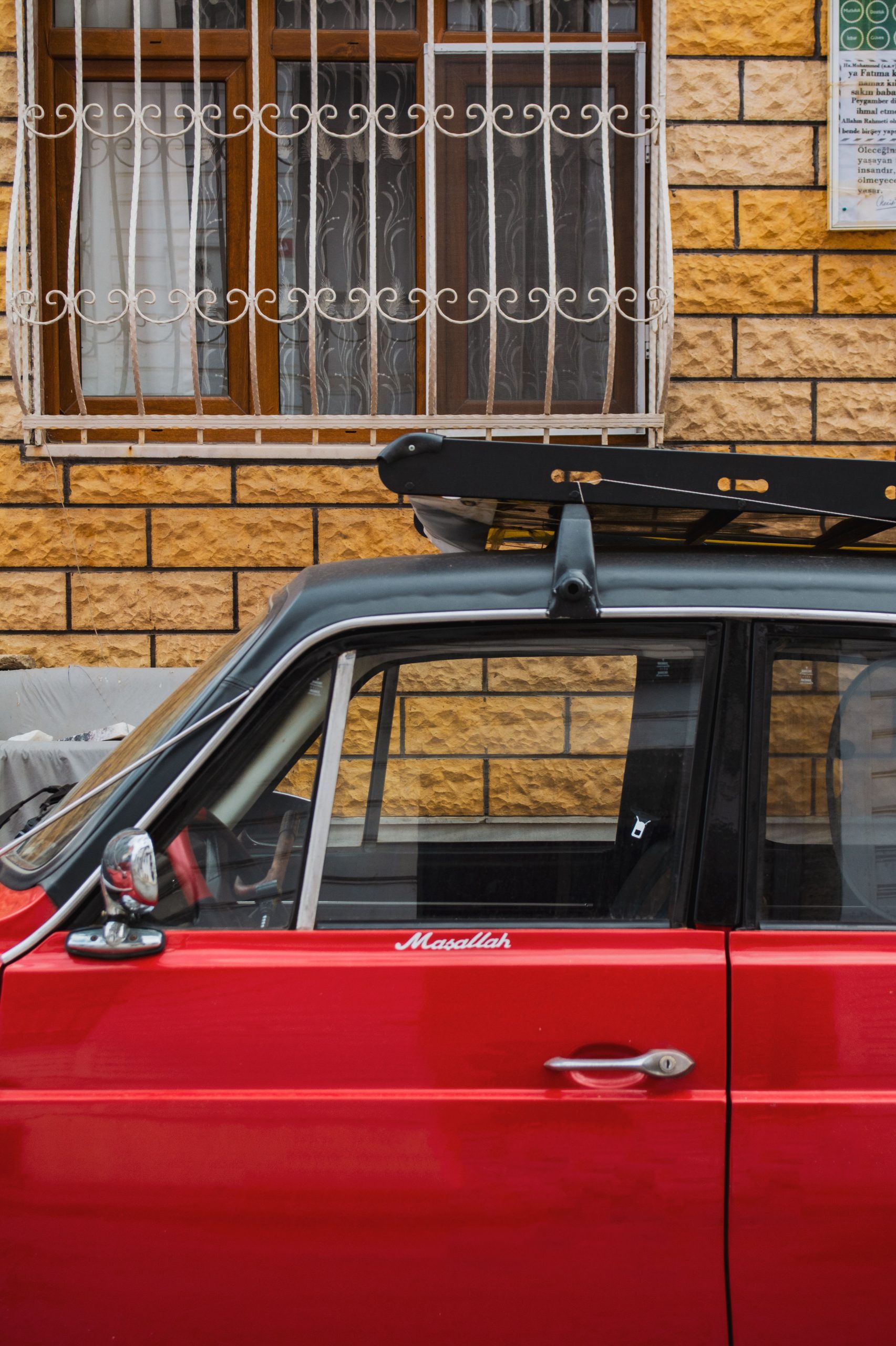
Fork-mount racks require removing your bike’s front wheel and clamping the fork directly into the rack — this sits lower on the roof (better fuel economy, less wind noise) but puts real clamping force on your fork’s dropouts. Thule explicitly recommends wheel-mounted racks over fork-mount for bare carbon fork dropouts, since carbon isn’t as forgiving of clamping stress as aluminum or steel unless the dropouts are reinforced.
Wheel-on (frame-free) racks cradle both wheels without touching the frame or fork at all — the safer default for carbon bikes, and generally faster to load since there’s no wheel to remove. The tradeoff is a taller roof profile, which means more wind drag and a larger cut into your fuel economy.
The 7 Best Roof Bike Racks in 2026
We compared these on mount style, weight capacity, and price, since the fork-mount vs. wheel-on decision matters more for your bike’s safety than any other spec here.
1. Thule UpRide — Best for Carbon Frames
Mount: Wheel-on, frame-touch-free | Capacity: 44 lb | Price: ~$380–400
A dual-cradle design squeezes the front wheel without any frame or fork contact at all, making this the safest choice for a carbon bike. It’s tool-free and among the easiest to load one-handed, though the 17 lb rack weight is heavier than most fork-mount alternatives.
2. Yakima HighRoad — Best for Fat Tires and Long Wheelbases
Mount: Wheel-on, frame-free | Capacity: 45 lb; fits 26″–29″ wheels, tires up to 4″ wide, wheelbase up to 52″ | Price: ~$280–375
The widest compatibility range in this comparison covers fat-tire mountain bikes and long-wheelbase frames that some frame-free racks can’t accommodate. Tool-free mounting keeps setup quick despite the broader fit range.
3. Yakima FrontLoader — Best for Kids’ Bikes and Mixed Fleets
Mount: Wheel-on, frame-free | Capacity: Fits 20″–29″ wheels, tires up to 3″ | Price: ~$150–275
A smaller footprint than the HighRoad makes this the pick for households mixing kids’ bikes with adult bikes across multiple roof trays, where every inch of crossbar space counts.
4. Yakima ForkLift — Best Low-Profile Fork-Mount
Mount: Fork-mount, front wheel removed | Price: ~$249
The lowest roof profile in this comparison means the smallest fuel economy and wind noise penalty of any rack here — the right call if your bike has reinforced (not bare carbon) dropouts and you don’t mind removing the front wheel each time.
5. Kuat Trio — Best Fork-Mount for Single-Bike Households
Mount: Fork-mount, tool-free 3-way adapter (9/12/15/20mm) | Capacity: 45 lb | Price: ~$249–300
An integrated cable lock and tool-free fork adapter covering three axle standards make this a strong single-bike pick, though the same bare-carbon-dropout caveat applies as with any fork-mount design.
6. RockyMounts MachTen — Best Quick-Mount Wheel-On
Mount: Wheel-on | Price: ~$299–300
A tool-free quick-mount base pairs with frame-free wheel cradling, giving you the carbon-safe benefits of a wheel-on design with faster setup than some competitors in this category.
7. SeaSucker Talon MAX — Best for Cars Without Crossbars
Mount: Suction-cup, no crossbars required | Price: ~$335
If you don’t have roof crossbars at all, this suction-mounts directly to the roof or trunk panel and stores flat when not in use, leaving zero permanent roof footprint. It’s the right pick specifically for that gap rather than a general recommendation over crossbar-based racks.
2019 Nissan Altima highway fuel economy test. Source: Consumer Reports, “How Bike Racks Affect Car Fuel Economy.”
The Parking Garage Risk Most Buying Guides Skip
Standard parking garage clearances typically run 6’8″ to 8’2″ (van-accessible), and a roof rack plus mounted bikes adds roughly 6 to 12 inches of vehicle height — enough to turn a car that normally clears a garage into one that doesn’t, especially if you’re driving a route where the rack usually stays empty. This is a genuinely common real-world roof-rack incident, and it’s almost never mentioned in competing buying guides.
The practical fix is a habit, not a product: get in the routine of checking overhead clearance signs whenever bikes are loaded, and consider a dashboard reminder or sticky note after loading up, since the moment you forget is exactly when it costs you a windshield or roof.
Static vs. Dynamic Roof Load: The Spec Most Buyers Miss
Your vehicle’s roof load rating comes in two numbers: static (parked, engine off) and dynamic (while driving), and the dynamic number is almost always lower — sometimes significantly. A roof that can hold 165 lb parked might only be rated for 100-110 lb while moving, once you account for wind loading and road vibration. Add up your rack’s own weight plus every bike’s weight and compare against your vehicle’s dynamic rating, not the higher static number, before assuming a multi-bike setup is safe to drive with.
Frequently Asked Questions
Will a roof rack hurt my gas mileage?
Yes, measurably. Consumer Reports testing found an empty roof rack cost a 2019 Nissan Altima about 5 mpg, and adding two bikes dropped it further to a 28% total loss versus baseline. Fork-mount racks, which sit lower, generally cost less mpg than taller wheel-on racks.
Is a fork-mount or wheel-on roof rack safer for my bike?
Wheel-on (frame-free) racks are the safer default for carbon-frame bikes, since they never clamp the fork or frame. Fork-mount racks require removing the front wheel and clamping the fork dropouts directly, which manufacturers like Thule caution against for bare (non-reinforced) carbon dropouts.
How do I avoid hitting a parking garage with a loaded roof rack?
Build the habit of checking clearance signs every time bikes are loaded, since a rack plus bikes typically adds 6-12 inches of height to your vehicle. Many garages clear only 6’8″ to 8’2″, and forgetting a loaded rack is one of the most common roof-rack incidents.
Bottom Line
The Thule UpRide is the strongest choice if you’re carrying a carbon-frame bike and want zero frame contact; the Yakima ForkLift is the best low-profile pick if your bike’s dropouts can handle fork-mounting. Whichever you choose, budget for the real fuel-economy cost of driving with a loaded rack, and build the habit of checking garage clearance every time — that’s the detail that actually prevents the most common roof-rack mishap.