
Most North American Class 8 semi trucks run a 12V electrical system, not 24V — three or four Group 31 batteries wired in parallel to boost cranking amps while voltage stays at 12V. True 24V systems exist too, built from two 12V batteries in series, and are the European standard as well as an emerging option on some next-generation North American platforms. Knowing which one your truck actually has — and what a healthy voltage reading looks like on it — matters more than any single spec on a battery box. This guide covers the voltage system itself and the testers that actually work on it.
Key Takeaways
- Most North American day cabs and sleepers run 12V with 3-4 batteries in parallel (adds capacity, not voltage); true 24V systems use two 12V batteries in series and are standard in Europe, with some newer North American platforms adopting it.
- A healthy resting 12V battery reads 12.6-12.7V; 12.2V or below signals a weak or discharging battery, and 11.8V or lower is effectively dead.
- Resting voltage only measures stored charge — a battery can read fine at rest and still fail under starter load, which is why a load or conductance test matters more than a plain voltmeter reading.
- Many budget battery testers, including the popular Schumacher BT175, are 12V-only and won’t correctly test a true 24V series system — check this spec before buying, not after.
Is Your Semi Truck 12V or 24V? Check Before You Assume
The honest answer is “it depends on your truck,” and guessing wrong wastes money on the wrong tester or the wrong troubleshooting approach. Most North American-spec Class 8 trucks — Freightliner, Peterbilt, Kenworth, International — run a 12V system using three or four Group 31 AGM batteries wired in parallel, typically rated 900-1150 CCA combined. Parallel wiring adds capacity and cranking amps while keeping voltage at 12V nominal. European-spec trucks (Volvo, Scania, Mercedes-Benz/Daimler) commonly run true 24V systems, built from two 12V batteries wired in series — series wiring doubles voltage while capacity stays the same as a single battery. Volvo has also announced it’s bringing a 24V architecture to its next-generation North American platform, so don’t assume every new truck follows the older parallel-12V convention either. Check your OEM spec plate or owner’s manual to know for certain — this single fact determines which tester you need.

What a Healthy Voltage Reading Actually Looks Like
Resting (open-circuit) voltage, measured after 6-24 hours with no load or charging, tells you the battery’s stored state of charge. For a single 12V lead-acid battery: 12.6-12.7V is fully charged and healthy, 12.4V is roughly 75% charged, 12.2V is roughly 50% and worth watching, 12.0V is weak and a real warning sign, and 11.8V or below is effectively dead. For a true 24V series pack, double every one of those thresholds — 24.0-24.4V is healthy, below 23.6V is weak. Alternator charging voltage while the engine runs is a separate range entirely: 13.5-14.5V is normal for a 12V system, roughly 26-28V for 24V. A reading outside that charging range points to a bad alternator or voltage regulator, not necessarily a bad battery.
Approximate lead-acid resting voltage thresholds, measured after 6-24 hours rest. Double all values for a true 24V series pack.
Why Resting Voltage Alone Doesn’t Tell the Full Story
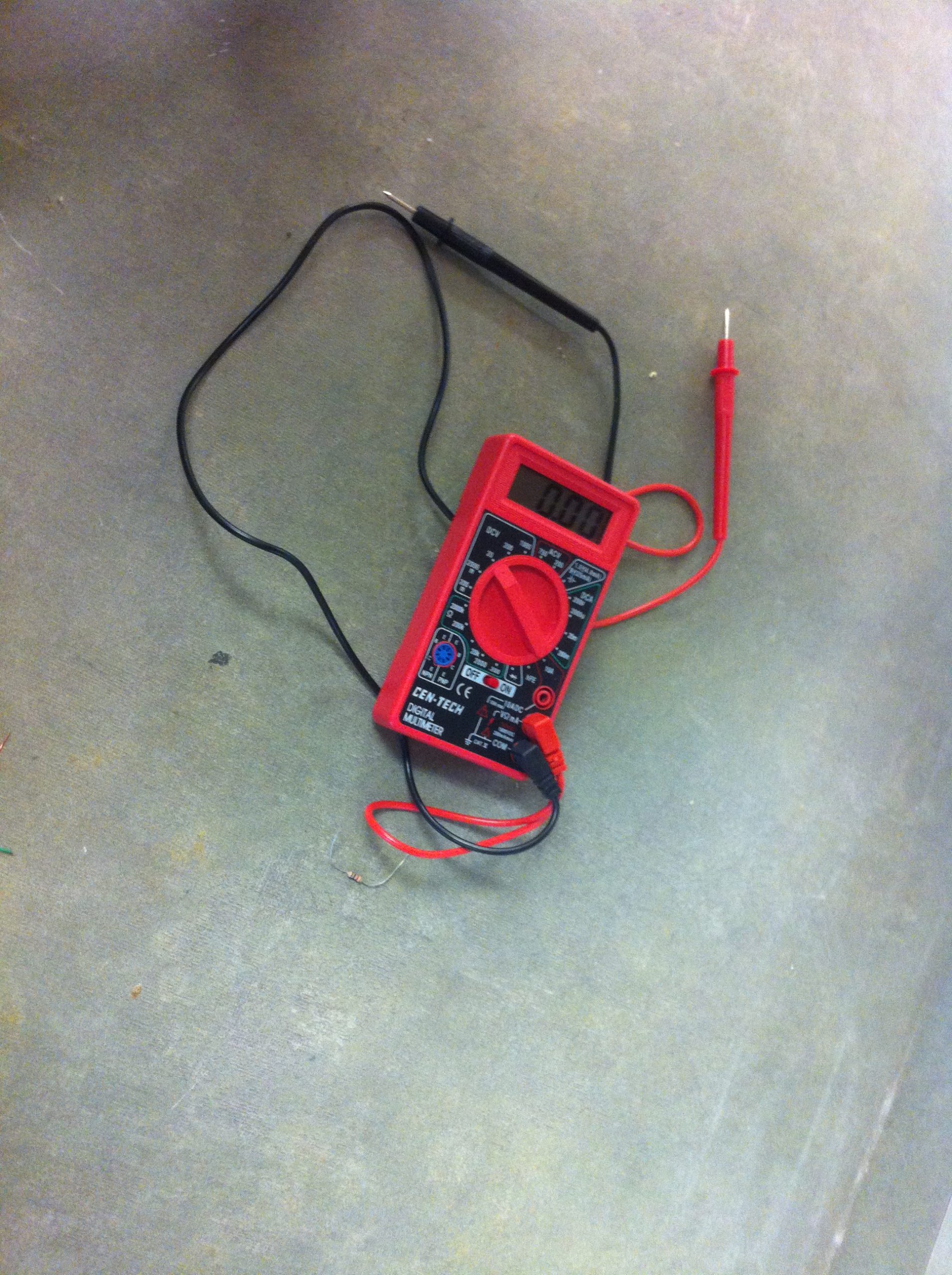
A battery reading a perfectly healthy 12.4V at rest can still fail to crank the engine, because resting voltage only measures stored surface charge, not the battery’s ability to deliver current under load. A load or conductance test — applying an actual draw and watching how voltage holds up — is the real diagnostic. During cranking, a healthy battery shouldn’t drop below roughly 9.6V for a 12V system (about 19.2V for 24V) during a 15-second load test at half its rated CCA. This is exactly why a $10 voltmeter and a proper battery analyzer aren’t interchangeable tools: the voltmeter tells you what’s stored, the analyzer tells you what the battery can actually deliver.
The Testers That Actually Work on a Dual-Battery Semi
We compared these specifically on 12V/24V compatibility, since that’s the buyer mistake that trips up more owner-operators than any other spec on this list.
1. Foxwell BT705 — Best Overall for 12V/24V Semi Trucks
Range: 12V and 24V, 100-2000 CCA | Test type: Conductance | Price: ~$95-120
Explicit dual 12V/24V support and a CCA range wide enough to cover everything from a single passenger-car battery to a full Group 31 commercial bank, with user reports describing accuracy within millivolts of a reference Fluke meter — a strong overall pick for a fleet or owner-operator toolbox.
2. Bosch BAT 155 — Best for Charging System Diagnosis
Range: 12V and 24V | Extra feature: Diode and ripple test for the charging system
The added diode/ripple test goes beyond battery health to catch alternator and charging-system faults that a plain battery tester misses — useful if intermittent electrical issues are the actual complaint rather than a simple no-start.
3. AutoMeter BCT200J — Best for Heavy Load Testing
Range: 6V, 12V, 24V | Load applied: Up to 120A
Applies a genuinely heavy load for a more realistic simulation of starter draw on a commercial vehicle than lighter-duty consumer testers manage, worth the step up if you’re testing full Group 31 banks regularly.
4. DHC BT2400 HD — Best Purpose-Built for Dual-Battery Trucks
Compatibility: Single 24V batteries, 12V parallel packs, and 12V-in-series 24V packs
Built specifically around heavy-duty and commercial vehicle configurations rather than adapted from a consumer product, a reasonable pick if your fleet runs a genuine mix of 12V-parallel and 24V-series trucks and you want one tool that handles both without guesswork.
5. Schumacher BT175 — Budget Pick, 12V Only (Read the Fine Print)
Range: 12V only, 100-1200 CCA | Price: ~$60-80
A capable, well-reviewed tester for passenger vehicles and single 12V batteries, but explicitly not rated for 24V systems — included here specifically as the common mistake to avoid if your truck runs true 24V. Confirm your system type before this one ends up in your cart by default.
Bad Isolator, Bad Ground: What Voltage Readings Can Tell You
A failing battery isolator on a dual-battery bank often shows up as a voltage drop across the isolator itself — for example, 13.7V going in but only 10.9V coming out — along with one battery bank charging normally while the other doesn’t. A functioning isolator should click audibly when engaged and read close to zero ohms across its contacts. A bad ground, meanwhile, tends to produce readings that look fine at the battery terminal but drop noticeably at accessory terminals further down the circuit, along with dim or flickering lights under load — a symptom pattern worth chasing with a multimeter along the ground path rather than assuming the battery itself is at fault. For related fleet maintenance equipment, see our best semi truck batteries guide if the voltage readings point to the battery itself needing replacement, and our best 10 ton jack stands guide for safely supporting the truck during any under-vehicle electrical work.
Frequently Asked Questions
Is a semi truck battery 12V or 24V?
Most North American Class 8 trucks run 12V, using multiple batteries wired in parallel for extra cranking capacity rather than higher voltage. True 24V systems, built from two 12V batteries in series, are standard on European-spec trucks and are being adopted on some newer North American platforms. Check your OEM spec plate to confirm which one your truck has.
What voltage should a semi truck battery read when healthy?
A healthy 12V battery reads 12.6-12.7V at rest. Below 12.2V signals it’s dropping toward weak, and 11.8V or lower is effectively dead. For a 24V series system, double those numbers.
Can I use a regular 12V battery tester on my semi truck?
Only if your truck runs a 12V system, which most North American Class 8 trucks do. If your truck runs true 24V, a 12V-only tester like the Schumacher BT175 won’t test it correctly — confirm your tester’s voltage range supports 24V before buying if there’s any doubt about your truck’s system.
Bottom Line
The Foxwell BT705 is the strongest all-around pick for testing either a 12V-parallel or true 24V-series semi truck battery bank, while the Schumacher BT175 works well but only if you’ve confirmed your truck runs 12V. Whichever tester you choose, remember that resting voltage alone doesn’t tell the whole story — a load or conductance test is what actually predicts whether the battery will crank the engine when you need it to.