
A Prinsu roof rack bolts onto a Double Cab Tacoma with zero drilling. Put the same rack on an Access Cab truck, and the installation instructions change to six drilled holes per side, because Toyota simply never put factory mounting points on that cab. Two trucks, same model name, same model year even, and one requires a drill and the other doesn’t — that’s the kind of fitment problem that only shows up once you’re comparing cab configurations, not generations or brands.
This guide is scoped narrowly and on purpose: it’s about the Tacoma’s cab roof, not the bed, and it’s about this specific truck, not roof racks in general. If you’re shopping for a bed-mounted rack instead, our Tacoma bed rack fitment guide covers stake pockets and accessory rails by generation. And if you want the general explanation of why any truck or SUV’s dynamic roof rating sits so much lower than its static number, our 4Runner roof rack guide already walks through that physics in depth. This guide assumes you know roughly what static-versus-dynamic means and focuses on what’s unique to a Tacoma cab: which cab configuration you have, which generation’s roof you’re bolting to, and how the Tacoma’s own roof number stacks up against the bed rack figures we’ve already published for this same truck.
Key Takeaways
- Double Cab Tacomas (2005–2023) have factory-drilled roof mounting points that most aftermarket cab racks bolt to directly; Access Cab trucks from the same years do not, so Access Cab installs either require drilling rivet-nut holes or a clamp-on, door-jamb-mounted track system instead.
- Toyota’s own factory cab roof limit is commonly cited around 100 lbs, though no forum or retailer has produced a definitive owner’s-manual page stating that figure — it’s the number the aftermarket industry treats as the ceiling, not a confirmed Toyota specification.
- Aftermarket cab racks push dynamic (driving) capacity to roughly 300–800 lbs depending on brand and mounting hardware, which sounds high until you compare it with the 1,100-lb capacity our bed rack guide found on a 4th-gen Cali Raised bed rack — the roof mount is still the more conservative option on the same truck.
- 2nd-gen (2005–2015) and 3rd-gen (2016–2023) Double Cab Tacomas share the same factory roof mounting locations, which is why most cab racks are sold as one 2005–2023 SKU; the 4th-gen (2024+) truck uses different hardware and needs its own rack entirely.
- Rhino-Rack’s Backbone mounting system, one of the highest-capacity options in this category, is sold exclusively for Double Cab Tacomas — it does not have an Access Cab fitment at all.
The Racks Worth Buying
Prinsu Cab Rack (2005–2023, Double Cab and Access Cab)
Prinsu sells its bolt-together aluminum cab rack in two distinct versions, one for Double Cab and one for Access Cab, and the difference isn’t cosmetic. The Double Cab version mounts to existing factory holes with no drilling required; the Access Cab version requires drilling six holes per side to install rivet nuts, because that cab never shipped with the mounting points (Truck Brigade, retrieved 2026-08-01). The Original rack is rated for roughly 600 lbs dynamic and 1,000 lbs static, while the Pro version steps up to around 800 lbs dynamic on a stronger crossbar design (Off Road Tents, retrieved 2026-08-01). Pricing runs $699–$799 depending on configuration. It fits 2005–2023 trucks only; there’s no 4th-gen version yet.
Best for: Double Cab 2nd- or 3rd-gen owners who want a no-drill install and the widest aftermarket accessory support in the category.
Rago Fabrication Roof Rack (3rd Gen 2016–2023 and 4th Gen 2024+)
Rago builds separate, generation-specific racks rather than one rack spanning both eras. The 2016–2023 (3rd-gen) version runs $1,149.95, and the 2024+ (4th-gen) version runs $1,179.95, both in double-walled 3/16″ aluminum plate with a bolt-on, no-drill install and seven crossmembers for accessory mounting (Rago Fabrication, retrieved 2026-08-01). Rago doesn’t publish a load rating on its product pages, so if you need a specific dynamic number for an insurance or trip-planning reason, that’s a call to the manufacturer rather than something you can pull off the listing.
Best for: 4th-gen owners specifically, since Rago is one of the few brands already selling a dedicated 2024+ cab rack rather than a universal or bed-rack-adapted option.
Rhino-Rack Backbone with Pioneer Platform (Double Cab Only, 2005–2023)
The Backbone mounting system is one of the strongest options in this category, but it’s worth leading with the fitment caveat: it’s built exclusively for Double Cab Tacomas and has no Access Cab version. The Backbone mount kit runs around $473.99 on its own, and pairing it with Rhino-Rack’s Pioneer platform is the same hardware trick our 4Runner guide already documented on that SUV — swapping from a factory-rail-only mount to Backbone’s multi-point base roughly quadruples static capacity, from around 175 lbs to 700+ lbs (TheYotaGarage, retrieved 2026-08-01).
Best for: Double Cab 2nd- or 3rd-gen owners who already run Rhino-Rack gear or want the mounting-hardware capacity jump without switching platform brands entirely.
Yakima BaseLine Clamp-On System (Any Cab, No Drilling)
Yakima’s BaseLine towers clamp onto the door jamb rather than bolting to roof sheet metal at all, which sidesteps the entire Double-Cab-versus-Access-Cab mounting-point problem. Toyota’s Access Cab has no factory roof mounting holes the way Double Cab does, so anything that bolts through the roof either needs drilling or, on the Access Cab, simply isn’t an option without it (Expedition Portal Forum, retrieved 2026-08-01). A door-jamb clamp system is the practical workaround for Access Cab owners who don’t want to drill, though it doesn’t reach the capacity numbers of a bolted platform rack and works best for lighter cargo boxes or a compact cargo basket rather than a fully loaded rooftop tent build.
Best for: Access Cab owners who want a rack on and off in minutes without drilling, and don’t need top-tier dynamic capacity.
Access Cab vs. Double Cab: Why the Same Truck Needs Two Different Racks
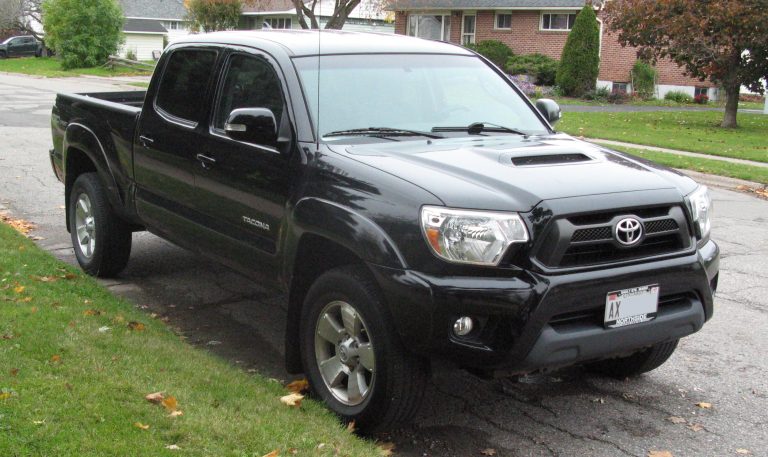
The Tacoma’s overall exterior width doesn’t change between cab configurations — SR and SR5 trims measure 74.4″ wide and TRD Sport, TRD Off-Road, Limited, and TRD Pro trims measure 75.2″, regardless of whether you picked Access or Double Cab (Tailored Trucks, retrieved 2026-08-01). What changes is the cab itself: Access Cab is the two-door, four-passenger configuration with a shorter cab and smaller rear-seat footprint, while Double Cab is the four-door, five-passenger version with more cab length front to back (Limbaugh Toyota, retrieved 2026-08-01). That cab-length difference is exactly why a rack sized for one doesn’t drop onto the other — the roof panel itself is a different shape and length, not just a different set of holes.
The mounting-point story compounds that. Double Cab Tacomas from 2005 through 2023 came from the factory with roof holes already in place for an OEM removable crossbar rack, and most aftermarket cab racks — Prinsu and Rhino-Rack’s Backbone included — are engineered to reuse those exact points. Access Cab trucks from the same years never got that hardware. A Prinsu rack for an Access Cab truck exists, but the install sheet calls for drilling six holes per side to seat rivet nuts, because there’s nothing factory to bolt into (Truck Brigade, retrieved 2026-08-01). Width tracks the same pattern: cab rack listings commonly run around 47″ wide for Double Cab versus roughly 45″ wide for Access Cab, reflecting the narrower cab (Off Road Tents, retrieved 2026-08-01). If you’re cross-shopping a rack listing that only says “Tacoma” without naming the cab, treat that as a red flag rather than a universal fit.
Which Tacoma Generations Have a Factory Roof Rail to Bolt To
The Tacoma’s roof mounting story splits along the same generation lines as its bed hardware, but not for the same reason. Toyota sold an OEM stowable roof rack (part number PT278-35170) for 2005–2023 Double Cab trucks, with crossbars that fold flat into the factory rail channel when not in use (Bev Smith Toyota Parts, retrieved 2026-08-01). Because that channel and its mounting points didn’t change meaningfully between the 2nd gen (2005–2015) and 3rd gen (2016–2023), aftermarket brands like Prinsu sell one rack SKU covering both generations — the same pattern our bed rack guide found on the stake-pocket side of this truck.
The 4th-gen (2024+) Tacoma breaks that continuity. As of this writing, there’s no OEM factory roof rail system for the 4th gen, and forum owners have confirmed the same in ongoing threads (Tacoma4G Forum, retrieved 2026-08-01). Aftermarket brands that do support the 4th gen — Rago and Victory 4×4 among them — sell it as a dedicated product engineered around whatever mounting provisions Toyota did include, not as an extension of the 2005–2023 rack. If you’re moving from a 3rd-gen truck to a 2024+ model and hoping to carry your old cab rack over, don’t; treat it the same way our bed rack guide treats the 4th-gen’s modular accessory channel — as a clean break, not a running change.
The Tacoma’s Roof Rating vs. the Bed Rack Numbers We’ve Already Published
This is the comparison our bed rack guide couldn’t make, because it never touched the roof. Toyota’s own cab roof limit is commonly cited around 100 lbs by aftermarket retailers and fitment guides, though it’s worth flagging that no one has produced a definitive owner’s-manual page confirming that exact figure — a Tacoma World thread digging for the source found a Canadian dealer listing closer to 75 lbs and no consistent citation from Toyota itself (Tacoma World, retrieved 2026-08-01). Aftermarket platform racks push well past that factory ceiling — Prinsu’s Original sits around 600 lbs dynamic, its Pro model around 800 lbs, and Victory 4×4’s Evolution Series publishes 300 lbs dynamic and 800 lbs static (Victory 4×4, retrieved 2026-08-01).
Now set those numbers next to what our Tacoma bed rack guide already found: Cali Raised’s 4th-gen bed rack carries a manufacturer-stated capacity of 1,100 lbs. Even the strongest cab rack in this guide doesn’t approach that bed-mounted figure, and that gap is the point — it’s the same physics our 4Runner roof rack guide covers in more depth, where a load sitting five to six feet off the ground on a roof has far more leverage over handling than the same weight riding low in a bed, so manufacturers rate the roof mount more conservatively even when the hardware itself is comparably strong. If your build is genuinely torn between a Tacoma roof rack and a Tacoma bed rack for the same rooftop tent or cargo box, the load-rating math favors the bed every time; the roof choice comes down to keeping bed space open, not raw capacity.
Mounting Hardware and Track Options by Cab
Once you know your cab and generation, the last variable is mounting hardware, and it matters as much here as it did in our 4Runner guide’s Backbone comparison. Three real options exist for a Tacoma cab roof: bolt to the factory rail channel where one exists (Double Cab, 2005–2023), drill new mounting points where it doesn’t (Access Cab, any year, or 4th-gen trucks without a factory provision), or clamp to the door jamb and skip drilling entirely (any cab, any generation, at the cost of lower capacity).
The factory-channel route is cleanest when available — no new holes, and the rack reuses hardware Toyota already engineered into the roof. Drilling is the most flexible option since the installer controls exactly where the points land, but it’s also the least reversible; six new holes per side don’t disappear if you sell the truck later. The door-jamb clamp system is fully reversible and fastest to install, which suits occasional use, but it tops out well below a bolted platform rack’s capacity, so it’s not the choice for a full-time rooftop tent setup.
Frequently Asked Questions
Do Access Cab and Double Cab Tacomas use the same roof rack?
No. Double Cab Tacomas from 2005–2023 have factory roof mounting points most cab racks bolt to directly. Access Cab trucks from the same years lack those points entirely, so installing a bolted rack means drilling new holes, or you can use a door-jamb clamp system instead.
What’s Toyota’s actual weight limit for the Tacoma cab roof?
Aftermarket sources commonly cite roughly 100 lbs, but that figure isn’t consistently traceable to a specific Toyota owner’s-manual page, and one Canadian dealer listing put it closer to 75 lbs. Treat 100 lbs as the aftermarket industry’s working ceiling rather than a confirmed factory spec, and check your own truck’s manual if you need certainty.
Will a 3rd-gen Tacoma roof rack fit a 4th-gen truck?
No. The 2024+ Tacoma has no OEM factory roof rail system, and aftermarket brands sell 4th-gen-specific racks rather than adapting the 2005–2023 product. Check that any rack you’re considering explicitly lists your generation before ordering.
Is a Tacoma roof rack or bed rack better for a rooftop tent?
It depends on what you’re solving for. Roof-mounted dynamic ratings in this guide top out around 800 lbs, well below the 1,100-lb capacity our bed rack guide found on a 4th-gen bed rack, so the bed wins on raw capacity. A roof rack’s advantage is keeping the bed itself open for cargo, tools, or a topper.
Can I install an Access Cab roof rack without drilling?
Yes, with a tradeoff. Door-jamb clamp-on systems like Yakima’s BaseLine avoid drilling on any cab, including Access Cab, but they carry noticeably less capacity than a bolted platform rack and suit lighter cargo boxes better than a fully loaded rooftop tent.
Do 2nd-gen and 3rd-gen Tacoma roof racks interchange?
Generally yes, for Double Cab trucks. The factory roof mounting channel didn’t change meaningfully between 2005 and 2023, which is why most aftermarket cab racks are sold as a single SKU covering both generations, mirroring what our bed rack guide found on the stake-pocket side of the truck.
Does the Tacoma’s overall width change between cab configurations?
No. Overall vehicle width stays at 74.4″ or 75.2″ depending on trim, regardless of cab choice. What differs is the cab and roof panel length and the rack’s footprint width, which runs narrower on Access Cab than Double Cab.
The Bottom Line
Cab configuration is the first filter for a Tacoma roof rack, ahead of generation and ahead of brand. If you drive a Double Cab 2005–2023 truck, Prinsu or Rhino-Rack’s Backbone system both bolt to mounting points Toyota already put there. If you drive an Access Cab from those same years, budget for either drilled rivet-nut holes or a door-jamb clamp system, because the factory never gave that cab anything to bolt to. If you drive a 2024+ truck, you need a dedicated 4th-gen rack like Rago’s, since there’s no OEM rail to inherit from the older trucks at all. And whichever cab and generation you’re working with, keep the actual numbers in perspective: even the strongest cab rack here tops out well below the bed rack capacity we found in our companion Tacoma guide, so the roof is the right call for keeping your bed open, not for maximizing what you can carry.