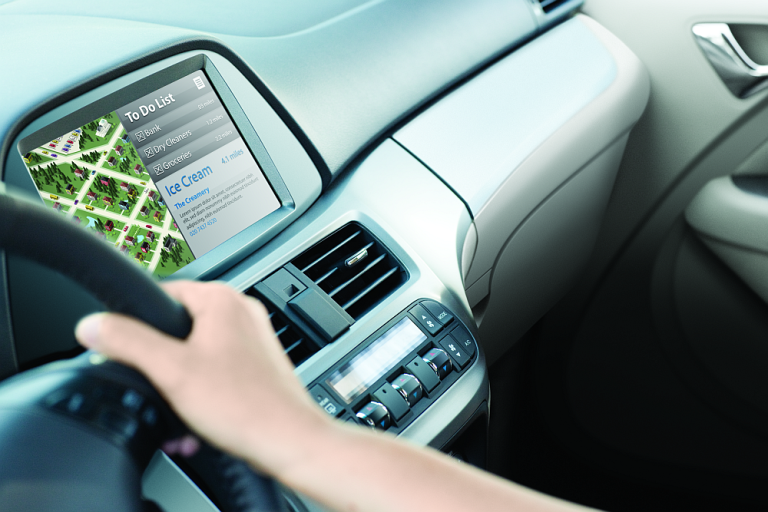
A double-DIN head unit is the cheapest way to make an older car feel ten years newer. Swap the factory radio and you get a touchscreen, wireless Apple CarPlay, Android Auto, a backup-camera input, and preamp outputs that let you add amplifiers later. The hard part is that spec sheets bury the two numbers that actually determine whether you will be happy: preamp output voltage and chassis depth.
This guide covers five double-DIN receivers you can buy in 2026, what each one is genuinely good at, and the specs to check before you order anything.
Key Takeaways
- “Double DIN” describes a dash opening roughly 7 inches wide by 4 inches tall — twice the height of a single-DIN slot, not twice the features (Crutchfield).
- Preamp output voltage is the spec that decides how far you can grow the system. Among the units here it ranges from 5.0V on the Kenwood eXcelon DMX958XR down to a measured 2.03V on the Sony XAV-AX4000.
- Wireless CarPlay and Android Auto are not just convenience features. AAA Foundation research found both interfaces placed measurably lower demand on drivers than the factory systems they replaced.
- The biggest screens often are not double-DIN. Alpine’s 11-inch Halo11 mounts in a standard 1-DIN chassis, which changes what will fit your car entirely.
What “Double DIN” Actually Means
DIN is a dash-opening size, nothing more. A single-DIN slot measures about 7 inches wide by 2 inches tall; a double-DIN slot is the same width but roughly 4 inches tall. As Crutchfield puts it in its size primer, the term refers to the doubled height of the opening, not doubled features or power (Crutchfield, “Single-DIN vs Double-DIN car stereos”, retrieved 2026-07-28).
That extra height is what makes a usable touchscreen possible, which is why nearly every CarPlay-capable receiver is sold in double-DIN form.
How These Picks Were Chosen
Every specification below comes from the manufacturer’s own published product page or, where noted, from a third-party bench review. These are not hands-on reviews — this shop does brakes and exhaust, not stereo installs, and pretending otherwise would not help you. What this guide does is put the manufacturer numbers side by side and flag the ones that change your buying decision.
Prices move constantly across retailers, so this guide names only manufacturer-published pricing and otherwise avoids figures that would be stale within a month.
Quick Comparison
| Model | Screen | Preouts | EQ | Chassis | Best for |
|---|---|---|---|---|---|
| Kenwood eXcelon DMX958XR | 6.8″ capacitive | 3 × 5.0V | 13-band + time alignment | Double DIN, under 3.5″ deep | Amplified builds |
| Pioneer DMH-W4660NEX | 6.8″ WVGA capacitive | Not published by Pioneer | Not published | Double DIN | Factory integration, Alexa |
| JVC KW-M785BW | 6.8″ | 3 × 4.0V | 13-band | Double DIN, short chassis | Shallow dash openings |
| Sony XAV-AX4000 | 6.95″ anti-glare | 2.03V measured | 14-band graphic | Double-DIN face, 1-DIN rear body | Sun glare, stock speakers |
| Alpine Halo11 iLX-F511 | 11″ floating, 1280×720 | 3 × 4.0V | 13-band parametric per channel | Single DIN | Maximum screen size |
The 5 Best Double DIN Car Stereos in 2026
1. Kenwood eXcelon Reference DMX958XR — Best Overall
If you plan to add amplifiers and tune the system properly, this is the unit to beat. Kenwood publishes three sets of 5.0V preouts, a 13-band EQ with digital time alignment, and a 24/32-bit DAC supporting sampling up to 192kHz (Kenwood USA, retrieved 2026-07-28). The 6.8-inch panel is capacitive, so it behaves like a phone screen rather than the mushy resistive panels still found lower down the market.
Two details matter for installers: the chassis is under 3.5 inches deep, and there are four camera inputs. Kenwood also lists LDAC support for higher-bitrate Bluetooth audio and USB-C charging up to 3.0A.
Best for: anyone building toward external amps and a tuned front stage.
2. Pioneer DMH-W4660NEX — Best for Factory Integration
Pioneer’s 6.8-inch WVGA capacitive unit supports wired and wireless CarPlay and Android Auto, has Amazon Alexa built in, and includes an HD Radio tuner with SiriusXM-Ready hardware. The reason it lands here is integration: Pioneer lists compatibility with both iDatalink Maestro and Metra Axxess interfaces, which is how you keep factory steering-wheel controls, chimes, and vehicle data on a modern car. Pioneer’s published price is $600.00 (Pioneer USA, retrieved 2026-07-28).
Worth knowing: Pioneer does not publish preamp output voltage on the product page itself. Retailer listings commonly cite six-channel 4V preouts, but if that number is load-bearing for your build, confirm it with the seller before ordering.
3. JVC KW-M785BW — Best for a Shallow Dash
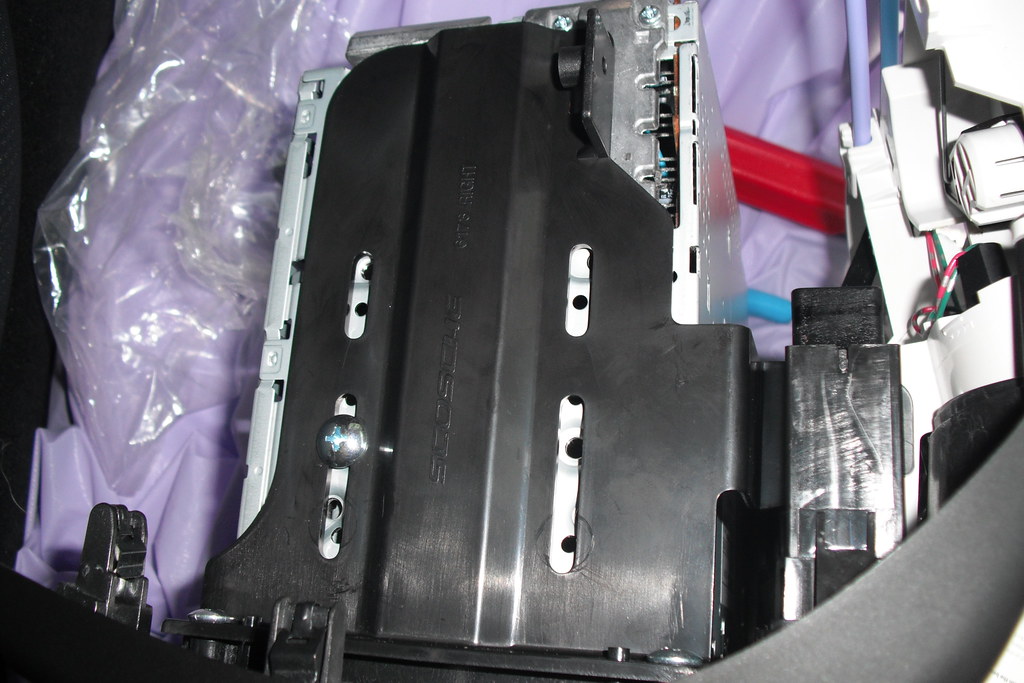
Plenty of good head units will not physically fit, because there is ductwork or structure behind the opening. JVC’s answer is a short chassis that, in its own words, “contributes to a weight reduction and facilitates easier installation.” You still get wireless and USB CarPlay and Android Auto, a 13-band equalizer, three 4.0V high-voltage preouts, and iDatalink Maestro RR/RR2 support for retaining factory steering-wheel audio controls (JVC USA, retrieved 2026-07-28). The screen is 6.8 inches.
Getting 4.0V preouts in a shallow chassis is the unusual part — most short-depth units cut preamp voltage first.
4. Sony XAV-AX4000 — Best Anti-Glare Screen, With One Caveat
Sony’s 6.95-inch anti-glare panel is genuinely easier to read in direct sun than most glossy competitors, and the receiver puts a double-DIN face on a compact single-DIN rear chassis, which helps in tight installs. It carries a 14-band graphic equalizer with nine presets plus two custom slots, offering up to 12 dB of boost or cut.
The caveat is the preamp output. In a bench review published 4 January 2023, BestCarAudio.com measured 2.032 volts RMS and described the panel as a resistive touchscreen rather than capacitive (BestCarAudio.com, retrieved 2026-07-28). Around 2V is fine for a stock-speaker refresh. It is a poor foundation for a multi-amp build, because you will run the amplifier gains higher and pull more noise up with the signal.
5. Alpine Halo11 iLX-F511 — Biggest Screen, But Read This First
An 11-inch, 1280 x 720 floating display, three sets of 4V preouts, a 13-band parametric EQ per channel, HDMI in and out, and wired plus wireless CarPlay and Android Auto. On paper it outclasses everything above.
The catch is in Alpine’s own spec line: “Standard 1-DIN Chassis for Flexible Vehicle Application” (Alpine USA, retrieved 2026-07-28). This is not a double-DIN receiver. The screen floats in front of the dash while the body slots into a single-DIN opening. That is excellent news if your car only has a single-DIN slot, and a real planning problem if you assumed it drops into a double-DIN cavity like the others here.
Preamp Output Voltage: The Spec That Decides Your Upgrade Path
Preamp outputs feed external amplifiers. Higher output voltage means the amplifier needs less gain to reach full power, and less gain means less amplified noise. A unit with 5V preouts and one with 2V preouts can sound identical on factory speakers and behave very differently the moment you add an amp.
The practical rule: if amplifiers are anywhere in your plan, treat 4V as the floor. If you are replacing a tired factory radio and keeping the stock speakers, preamp voltage barely matters and you should spend the money on screen quality and integration instead.
Does Wireless CarPlay Actually Make Driving Safer?
Aftermarket CarPlay is usually sold on convenience, but the more interesting evidence is about attention. The AAA Foundation for Traffic Safety, working with researchers at the University of Utah, tested Apple CarPlay and Android Auto against five vehicles’ native infotainment systems. CarPlay and Android Auto were 24 percent (5 seconds) faster on average than the native system when making a call, and 31 percent (15 seconds) faster when programming navigation (AAA Foundation for Traffic Safety, retrieved 2026-07-28).
Context matters here. An earlier AAA Foundation study of 30 new 2017 vehicles found drivers were visually and mentally distracted for more than 40 seconds completing tasks such as programming navigation, and that none of the 30 systems tested produced a low level of demand (AAA Newsroom, 5 October 2017, retrieved 2026-07-28). Faster is not the same as safe. A better interface shortens the task; it does not make it a good idea at 60 mph.
Demand for these interfaces keeps climbing regardless. Edison Research’s Infinite Dial found that the share of Americans 18+ who had driven or ridden in a car in the last month and had CarPlay or Android Auto in their primary vehicle rose from 26% in 2023 to 32% in 2024, and that 83% of those with access use one of the platforms (Inside Radio, 31 July 2025, retrieved 2026-07-28).
What to Check Before You Buy
- Measure the depth, not just the opening. A double-DIN face means nothing if the chassis hits ductwork. Short-chassis units such as the JVC and Sony exist for this reason.
- Confirm the DIN size of the unit itself. As the Alpine Halo11 shows, a large floating screen can sit on a single-DIN body.
- Budget for the parts nobody quotes. A dash kit, wiring harness, antenna adapter, and often a steering-wheel-control interface are separate purchases.
- Decide about amplifiers now. Preamp voltage is not upgradeable later without replacing the head unit.
- Check steering-wheel control retention. iDatalink Maestro or Metra Axxess support is the difference between keeping your volume buttons and losing them.
- Resistive vs capacitive. Capacitive panels handle swipes and pinches; resistive panels need a firmer press.
Frequently Asked Questions
Will a double DIN stereo fit my car?
Only if your dash has a double-DIN opening or a kit exists to convert a single-DIN opening into one. Many vehicles support both with the right dash kit. Measure the opening height: roughly 4 inches indicates double DIN, roughly 2 inches indicates single DIN.
Do I need wireless CarPlay, or is wired enough?
Wired is more reliable and charges the phone at the same time. Wireless is better for short trips where plugging in each time is the friction point. All five units listed here support both.
What preamp voltage do I actually need?
If you are keeping factory speakers and using the head unit’s internal amplifier, 2V is fine. If you are adding an external amplifier or a subwoofer, aim for 4V or higher so the amplifier gain stays low and the noise floor stays down.
Can I install a double DIN head unit myself?
Many people do. The work involves removing dash trim, connecting a vehicle-specific wiring harness, and mounting the unit in a dash kit. The parts that most often go wrong are steering-wheel control interfaces and antenna adapters, not the head unit itself.
Does a new head unit improve sound with stock speakers?
Usually yes, modestly. A modern receiver brings a cleaner internal amplifier and far better equalization — a 13-band or 14-band EQ versus the two or three tone controls on an old factory radio. Large gains still require better speakers and amplification.
The Bottom Line
For most drivers upgrading a car they intend to keep, the Kenwood eXcelon DMX958XR gives the most room to grow, and the JVC KW-M785BW solves the depth problem that stops many installs before they start. The Sony XAV-AX4000 is the sensible choice if the goal is a readable screen and CarPlay without an amplifier plan, and the Alpine Halo11 belongs on your list only once you have confirmed how it mounts.
Whatever you choose, check the depth of your dash opening before you order. That single measurement causes more returns than any spec on the box.
Getting Your Car Road-Ready in Keyport, NJ
A new stereo makes the drive better. A quiet, leak-free exhaust and brakes that stop straight make it safe. Discount Brakes and Mufflers has served Keyport and Monmouth County for over 40 years, and we repair rather than replace wherever the part allows — which is usually why our quotes come in lower.
Get a price in minutes with our instant estimate tool, read what is involved in muffler and exhaust repair, or contact our Keyport shop to book a time.
Note: this article is a buyer’s guide compiled from manufacturer specifications and published third-party bench reviews. Discount Brakes and Mufflers specializes in brakes, mufflers, catalytic converters and custom exhaust; we do not sell or install car audio equipment.