
A burned-out bulb is a five-minute fix. A cracked lens, a fogged-up housing, or mounting tabs that snap off in your hand are a different problem entirely, and no bulb — halogen, LED, or otherwise — solves any of them. The question “do I need a bulb or a whole new headlight” has a fairly clear answer once you know what to look for, but the ordering side of that answer trips up almost everyone, because most models sell two or three genuinely different headlight assemblies across a single generation depending on trim, facelift year, and whether the car left the factory with halogen or LED equipment.
This guide is deliberately general: it’s about deciding whether you need a full assembly and how to order the correct one for any vehicle, not a trim-by-trim breakdown for one specific truck or Jeep. If you’re chasing an LED upgrade and want the compliance details on drop-in bulbs versus certified LED assemblies, our LED headlight conversion kit guide covers FMVSS 108 in depth and we won’t repeat that here. And if you already know your specific vehicle, four of our posts go deep on exact part numbers and trim equipment: Tacoma, Gladiator, F-150, and Wrangler. This one is for everyone else, or for anyone who wants the decision framework before they go find their model’s specific post.
Key Takeaways
- Replace the whole assembly for a cracked or shattered lens, moisture inside the housing, yellowing that’s gone past what a polishing kit can fix, or broken mounting tabs. A bulb swap doesn’t touch any of those.
- Headlight part numbers commonly differ by trim and facelift year within the same generation — a photo comparison isn’t reliable; use your VIN or a parts-lookup tool instead.
- Match the connector type and light source (halogen, factory LED, or projector) before ordering, not just the general shape of the housing.
- OEM, aftermarket, and “OEM-style” hybrid assemblies trade off price, fit precision, and lens longevity differently — there’s a real reason each one exists.
- A legitimate replacement housing carries a molded or printed DOT and/or SAE marking on the lens; a listing photo that doesn’t show one is worth a second look before you buy.
When You Need a Full Assembly, Not Just a Bulb
A bulb replacement only fixes the light source. If the problem is in the housing, lens, or seal, a new bulb goes into the same broken enclosure and the underlying issue is still there the next time it rains. A cracked or shattered lens is the clearest case: a crack, chip, or hole in the polycarbonate lens breaks the seal that keeps the assembly’s interior dry, and moisture that gets in from there goes on to fog the reflector, corrode the socket contacts, and in some cases short the wiring harness behind the bulb. There’s no repair path for a cracked lens that holds up long-term; the assembly gets replaced.
Moisture or condensation inside an otherwise intact-looking housing is the second major trigger, and it’s often mistaken for a minor cosmetic issue rather than what it actually is: a failed seal. A little fogging that clears on its own after the lights warm up for a few minutes can sometimes be normal, especially right after a car wash or a heavy rain, but persistent fogging, standing water droplets, or a housing that stays cloudy inside even after hours of driving means the gasket or ultrasonic weld that seals the unit has failed. Left alone, that moisture accelerates corrosion on the reflector coating and the electrical contacts, and a housing that’s actively wet inside is also often failing an annual state inspection where those exist.
Yellowing and oxidation are the case most people try to fix themselves first, and correctly so — a genuinely hazy but otherwise sound lens is usually restorable. AAA’s headlight testing found that degraded headlights emit roughly 22% of the light output of new ones, and that restoration recovers a meaningful chunk of that loss but doesn’t fully return it to new-lens performance; we go through AAA’s actual numbers in our headlight clear coat guide (AAA, retrieved 2026-08-01). The dividing line is depth: a polishing kit removes a thin oxidized layer of the polycarbonate itself, but if the yellowing has gone deep enough that polishing doesn’t restore clarity, or if the discoloration keeps coming back within a few months of restoring it, the UV-blocking hard coat is gone for good and the lens needs to be replaced rather than repeatedly re-polished.
Broken mounting tabs are a more mechanical failure mode but just as disqualifying. The plastic tabs and clips that hold a headlight assembly to the fender, radiator support, or bumper cover usually aren’t sold separately, and a housing that rattles, sits crooked, or won’t stay seated isn’t just cosmetic — a loose headlight can vibrate, work its connector loose, and throw off the beam’s factory aim. That matters more than it sounds: IIHS testing found headlights rated “good” cut nighttime crash rates by roughly 19% versus poorly performing units, with aim a meaningful part of that rating (IIHS, cited in our headlight bulbs guide, retrieved 2026-08-01). Finally, there’s the general old-and-degraded case: a reflector delaminating from years of heat cycling, or a lens too brittle and sun-baked to survive a bulb swap without cracking, is a full-assembly job even without one dramatic failure point.
Worth Buying
Depo
Depo is one of the two aftermarket manufacturers, alongside TYC, that consistently comes up as a safe bet across owner forums rather than a gamble. Long-term reports are mixed but skew positive: some owners report years of use with no leaks or fogging, while others note the lens clear coat isn’t as durable as OEM and starts to show wear sooner (various owner forums, retrieved 2026-08-01). It’s a reasonable middle-ground pick when a dealer-only OEM part carries a steep markup and you want something better than the bottom of the aftermarket barrel.
Best for: buyers who want a functional, DOT-marked replacement without paying dealer OEM pricing, and who are comfortable with a lens clear coat that may not outlast the factory one.
TYC
TYC is generally considered the more consistent of the two major aftermarket lighting brands, with several owner forums describing it as solid, workable quality and a common recommendation for buyers who “struck out” trying to find OEM stock. The tradeoff mentioned most often is a thinner lens than genuine OEM glass or polycarbonate, which doesn’t affect legality or basic function but is a real difference in the hand (owner forums including CandlePowerForums and HIDplanet, retrieved 2026-08-01).
Best for: budget-conscious buyers replacing a housing on an older or high-mileage vehicle where perfect factory fit isn’t worth the OEM price premium.
Morimoto Sealed5/Sealed7 or XB-Series Assemblies
For readers whose actual goal is a legitimate LED upgrade rather than a like-for-like replacement, a complete assembly built and independently certified as LED from the factory is the compliant path — our LED conversion kit guide covers exactly what to check (the embossed SAE code on the lens, ISOQA-verified testing) before buying one of these instead of a like-for-like replacement.
Best for: anyone replacing a housing anyway who wants to upgrade to a certified LED unit in the same step, provided a supported application exists for their vehicle.
How to Correctly Identify and Order the Right Assembly
The single most common mistake in this category isn’t picking the wrong brand — it’s ordering the wrong part number for a car that looks, from the outside, identical to the one the listing photo shows. Headlight assemblies routinely differ across a single model generation, and not just between obviously different trims. The Porsche Panamera’s first-generation and facelifted housings are different shapes and not interchangeable; the Genesis G70’s 2022 facelift moved to a “Quad Lamp” design that’s physically and electrically incompatible with the 2019-2021 single-housing units; and the Nissan Sentra’s halogen-equipped and LED-equipped trims use assemblies that aren’t interchangeable without wiring modification (Go-Parts vehicle headlight guides, retrieved 2026-08-01). None of that is unusual — it’s closer to the norm than the exception once a model has been in production for more than one facelift cycle.
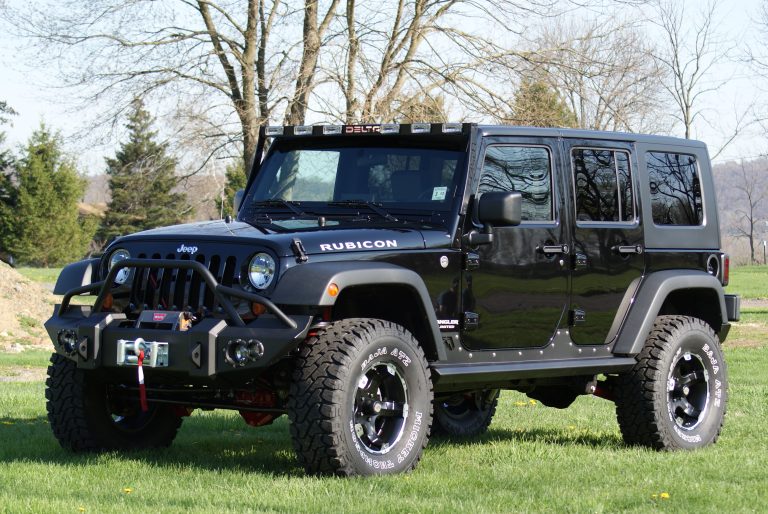
The reliable way around this is to stop comparing photos and start comparing your VIN or factory trim code against a parts-lookup tool — the dealer’s parts counter, a major retailer’s VIN-decode search, or your build sheet. A VIN decode pulls your exact production window and original equipment, catching mid-year running changes a model-year listing alone won’t show. For the four trucks and Jeeps we cover directly, that legwork is already done: the Tacoma post covers which trims got factory LED, the Gladiator post breaks down Sport, Sport S, Willys, and Sahara differences, the F-150 post walks through trim and year splits, and the Wrangler post handles the JK-versus-JL divide.
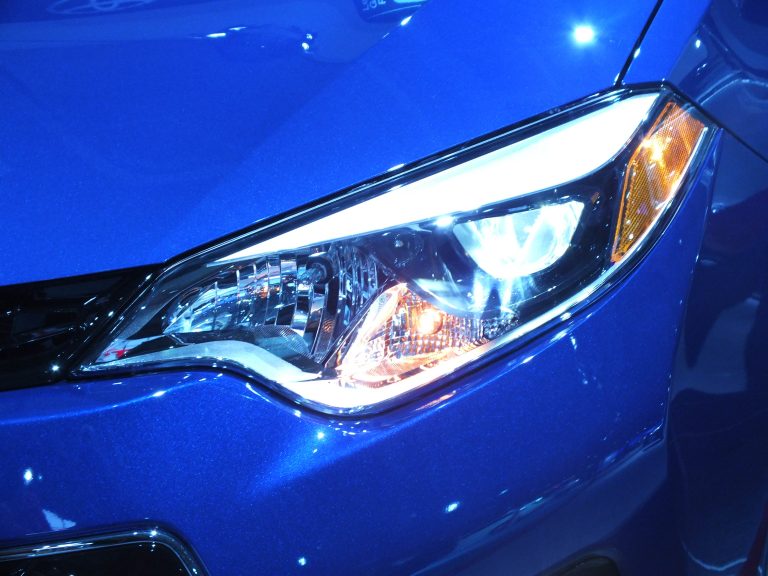
Once you’ve confirmed the right generation and trim, two more details matter before you order. First, the connector type: the plug on the back of your existing harness has to physically match the new assembly’s pigtail, and factory LED headlights often carry an integrated control module in the connector that a halogen or aftermarket LED housing won’t have a slot for. Second, confirm whether your factory unit is halogen, factory LED, or a projector housing (as opposed to a basic reflector) — these use different internal optics, and a reflector-style replacement bolted where a projector housing used to sit will produce a noticeably different, less controlled beam pattern even if the outer shape looks close enough to fit.
OEM vs. Aftermarket vs. Hybrid: The Real Tradeoffs
Genuine dealer OEM parts are built to the exact factory tolerances your car shipped with, which means panel gaps, connector fit, and beam aim line up without adjustment, and they typically use higher-grade lens material that resists yellowing longer than aftermarket equivalents. The tradeoff is price: OEM assemblies routinely cost two to four times what an equivalent aftermarket unit runs, and availability for older or discontinued models can be limited to dealer backorder.
Standard aftermarket assemblies, from manufacturers like TYC and Depo, fit the same mounting points and connector but with more manufacturing variance than OEM. Fit is usually close but occasionally needs minor adjustment, and forum consensus is that the broader aftermarket category “aren’t great and won’t last long before the clears start to peel or cloud up” compared with OEM, but that TYC and Depo specifically hold up better than the rest of the category (owner forum consensus across GMT400, VW Vortex, and Subaru Forester Owners forums, retrieved 2026-08-01). This tier makes the most sense on a car that’s already a few years old, where a full OEM price doesn’t pencil out against the vehicle’s value.
“OEM-style” or hybrid assemblies sit between the two: often built by the same manufacturing base as genuine parts, or licensed reproductions that use OEM-grade lens material and reflector coatings but skip the dealer distribution markup. Quality here varies more by specific brand and part number than the category name suggests, so checking for a DOT/SAE marking and reviewing brand-specific feedback for that exact part number matters more in this tier than in the other two.
| Category | Typical price vs. OEM | Fit precision | Lens longevity |
|---|---|---|---|
| Genuine OEM (dealer) | Baseline (highest) | Exact factory fit | Best resistance to yellowing |
| OEM-style / hybrid | Roughly 40-70% of OEM | Close, minor variance possible | Varies by brand and part number |
| Standard aftermarket (TYC, Depo) | Roughly 25-50% of OEM | Usually fits, occasional adjustment | Clear coat wears sooner than OEM |
DOT/SAE Compliance Markings to Check For
Whichever tier you buy from, the housing itself needs to be a legitimate replacement lighting device, not just a shape that happens to bolt on. DOT certification applies to the complete assembly — housing, lens, reflector, and light source working together — not to an individual bulb, and a maker who molds “DOT” onto a lens is self-certifying that the complete unit meets FMVSS 108, not claiming a government pre-approval (NHTSA interpretation letters, retrieved 2026-08-01). SAE markings are a separate, voluntary set of testing standards that a manufacturer can carry alongside DOT compliance, and a housing carrying both markings generally reflects a more thorough testing effort than one with neither.
In practice this means checking the lens itself, not just the product listing copy, for a molded or printed DOT and/or SAE code before you buy. That marking has to be physically on the part; a listing description that says “DOT compliant” without a visible marking in the product photos is worth a closer look before ordering, the same way it’s worth double-checking on any bulb or kit that claims compliance without showing you where the marking actually is.
Frequently Asked Questions
Can I just replace the lens instead of the whole assembly?
On some vehicles, aftermarket replacement lenses are sold separately, but this only makes sense if the internal reflector, wiring, and seal are all intact and undamaged. If there’s any moisture, corrosion, or broken mounting hardware, a lens-only fix doesn’t address the underlying failure.
How do I know if my headlight housing has moisture damage?
Look for visible fogging or water droplets inside the lens, especially after the headlights have been on for a while — fogging that persists after warm-up rather than clearing indicates a failed seal, not just temporary condensation from a wash or rain.
Will a headlight restoration kit fix a cracked lens?
No. Restoration kits polish away oxidized material from the lens surface; they don’t repair a crack or restore a broken seal. A cracked lens needs a full assembly replacement.
Why do headlight part numbers differ between trims on the same model?
Different trims frequently ship with different equipment — halogen versus factory LED, reflector versus projector optics, or different bezel styling — and those differences usually require different part numbers even though the exterior shape looks similar.
Is a cheaper aftermarket assembly always the wrong choice?
Not necessarily. TYC and Depo, the two most established aftermarket lighting brands, are widely reported as functional and durable enough for daily use, with the main tradeoff being a lens clear coat that tends to wear faster than OEM glass or polycarbonate.
Do I need a professional to install a replacement headlight assembly?
Most passenger vehicles allow a DIY headlight assembly swap with basic hand tools, but the assembly should be aimed correctly afterward using your vehicle’s aim adjusters, and any vehicle with adaptive or leveling headlights may need the system recalibrated by a shop after replacement.
What’s the difference between a projector and reflector headlight housing?
A reflector housing shapes the beam using a mirrored bowl behind the bulb; a projector housing uses a lens and internal shield to focus and cut off the beam more precisely. They aren’t interchangeable — installing a reflector-style replacement where a projector housing belongs changes the beam pattern.
The Bottom Line
A bulb swap only fixes a bulb. Cracked lenses, moisture inside the housing, yellowing beyond what a polish restores, and broken mounting hardware all call for a full assembly, and no amount of bulb shopping changes that. Once you’ve confirmed it’s an assembly job, the part is only right if it matches your exact generation and trim — pull your VIN or use a proper parts-lookup tool rather than trusting a photo, confirm the connector and light-source type, and check for a molded DOT/SAE marking on the lens before you buy. From there, OEM, standard aftermarket, and OEM-style hybrid assemblies are all legitimate options; which one makes sense is mostly a question of how long you’re keeping the vehicle and how much fit-and-finish precision matters to you. And if you’re chasing a genuine LED upgrade while you’re in there anyway, our LED conversion kit guide covers the compliance side, while our Tacoma, Gladiator, F-150, and Wrangler posts cover exact trim equipment for those specific vehicles.