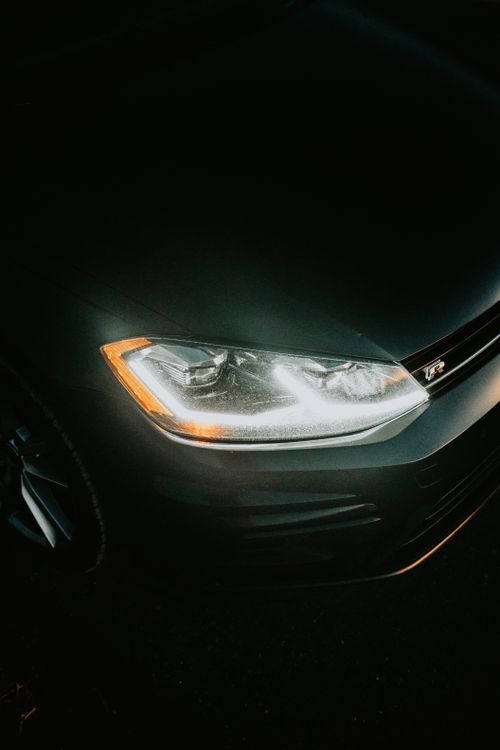

Search “LED headlight conversion kit” and three completely different products come back mixed together: a $40 drop-in bulb meant to replace a halogen capsule, a $300+ complete headlamp assembly built and certified as an LED unit from the factory, and a professional bi-LED projector retrofit that a shop installs into your existing housing. Only one of those is a compliant “replaceable light source” under FMVSS 108, and it’s not the one most people click first.
Our guide to headlight bulbs already covers why a drop-in LED bulb in a halogen reflector isn’t legal. This guide picks up from there and covers the actual “conversion kit” category: what’s compliant, what to check before buying any of it, and what to do if you’re getting a drop-in bulb anyway.
Key Takeaways
- A complete LED headlamp assembly — not a bulb swap — is the compliant path. Morimoto’s XB and Sealed5/Sealed7 lines are independently tested by ISOQA and carry an SAE stamp on the lens confirming DOT/FMVSS 108 compliance.
- A drop-in LED bulb draws roughly 12–25W versus 55W for a halogen, which is low enough that many CANbus-monitored vehicles read it as a burned-out bulb and throw a dashboard warning — a decoder module is the workaround, not a fix for legality.
- Bulb bases are not interchangeable between types: an H11 uses a PGJ19-2 base with closely spaced pins, while a 9006 uses a P22d base with a completely different pin layout. Forcing one into the wrong socket damages the bulb or the housing.
- A professional bi-LED projector retrofit is a third, separate category — not a bulb, not a factory assembly — that can be legal if the projector itself is DOT/SAE or E-mark certified and a shop aims it correctly, but is not automatically legal just because a shop installed it.
Three Products, One Search Term
This isn’t the only category where one product name covers several legal statuses at once — our guide to radar and laser detectors runs into the same pattern, where three devices sold under overlapping names carry three different legal statuses depending on which one you actually bought.
Drop-In LED Bulbs (Not a Compliant Replacement)
This is what most “LED headlight conversion kit” listings actually sell: an LED emitter shaped to plug into a halogen socket — H11, 9005/HB3, 9006/HB4, H13, and similar. As covered in our headlight bulbs guide, FMVSS 108 defines a compliant replaceable light source by reference to 49 CFR Part 564, and aftermarket LED bulbs built for halogen housings are not on that registered list. The optic was shaped around a halogen filament’s exact position and size; an LED emitter sits differently and throws light where the reflector wasn’t designed to control it. Our H4 headlight bulb guide covers a related version of this same problem — even swapping between two halogen bulbs of the wrong internal shield can throw the beam pattern into oncoming traffic, which is the smaller-scale version of what happens when an LED emitter replaces a halogen filament entirely.
Best for: nobody, as a “best pick.” If you already own a set, see the harm-reduction section below rather than treating this as a recommended purchase.
Morimoto XB and Sealed5/Sealed7 LED Headlamp Assemblies
These are complete headlamp units built as LED from the start, not bulbs. Morimoto has its DOT and SAE compliance independently verified by ISOQA, and a genuine unit carries an embossed SAE code on the lens confirming that testing (Morimoto, retrieved 2026-07-30). Installation on supported vehicles is plug-and-play through the factory connector, with no splicing, resistors, or module coding required, and the Sealed5/Sealed7 universal round assemblies cover classic and off-road vehicles that never had a factory LED option.
Best for: anyone who wants an actual LED upgrade that doesn’t require arguing about compliance later — check for a supported application before buying.
Professional Bi-LED Projector Retrofits
A retrofit replaces the projector unit inside your existing headlamp housing rather than swapping a bulb or the whole assembly. Whether it’s legal depends entirely on the projector itself carrying DOT/SAE certification in the US (or E-mark in the EU/UK) and on the shop aiming the cutoff line correctly afterward — an uncertified projector or a sloppy aim job produces the same glare problem as a bad drop-in bulb, just in a more expensive housing. Most professional installs take roughly two to three hours and don’t permanently modify the housing or factory wiring.
Best for: enthusiasts working with an experienced retrofit shop who will verify certification and re-aim the result — not a DIY weekend project.
If a Drop-In Bulb Is Already in Your Car
Two practical problems show up on top of the legal one, and they’re worth knowing regardless of what you decide to do.
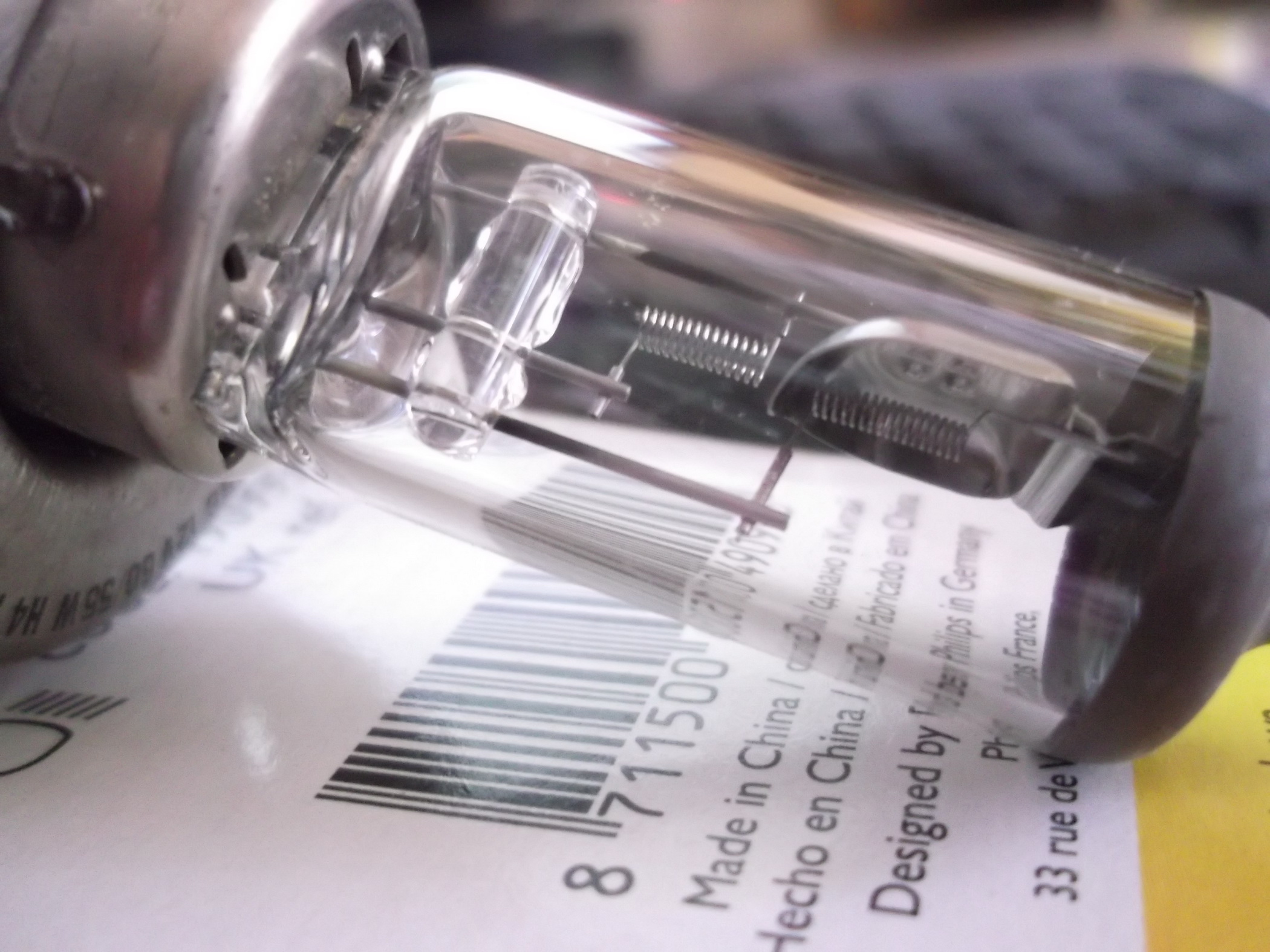
First, CANbus errors. Many vehicles built in roughly the last twenty years monitor headlight circuit current to detect a burned-out bulb. A halogen draws around 55W; an LED conversion bulb typically draws only 12–25W, which is low enough that the car’s electronics can read the drop as a failed bulb and throw a dashboard warning or make the remaining bulb flicker via the same PWM control that’s supposed to protect it. A CANbus decoder module addresses the electrical symptom, but installing one doesn’t change the underlying compliance question.
Second, connector fitment. Bulb bases are not interchangeable across types. An H11 uses a PGJ19-2 base with closely spaced pins and tabbed plugs; a 9006 uses a P22d base with a different pin arrangement entirely. Forcing an H11 bulb into a 9006 socket, or the reverse, risks damaging the bulb, the socket, or both — confirm your exact factory bulb type before ordering anything, not just the general “H11 vs 9005” family.
Fanless vs. Fan-Cooled, If You’re Comparing Bulbs
This doesn’t change the compliance picture, but it’s worth knowing if you’re evaluating drop-in bulb listings anyway. Fanless designs rely on a passive heat sink — typically a finned aluminum body or copper plate — instead of a small cooling fan, which removes a moving part that can fail and lets the bulb fit into tighter housings. The trade-off is that fanless units depend entirely on the heat sink’s size and the housing’s airflow to stay cool, while fan-cooled designs actively move heat away but add a component that wears out and occasionally seizes over time.
Either design still has to fit the physical envelope of the socket it’s replacing, and neither one addresses the core problem: the light source is still in the wrong shape, in the wrong place, for an optic built around a halogen filament.
How to Verify a Kit Is Actually Compliant
| Product type | Compliance path | What to check |
|---|---|---|
| Drop-in bulb for halogen housing | Not compliant | Not registered under 49 CFR Part 564 regardless of packaging claims |
| Complete LED headlamp assembly | Compliant if certified | Embossed SAE code on the lens; independent test lab (e.g., ISOQA for Morimoto) |
| Professional bi-LED projector retrofit | Depends on the projector and install | DOT/SAE or E-mark certification on the projector itself, plus a proper aim after install |
“DOT approved,” “SAE compliant,” and “for road use” are printed on drop-in bulb packaging routinely without those bulbs actually being legal in a halogen housing. The embossed SAE code on a genuine certified assembly’s lens is a physical marking you can check yourself, not a marketing phrase — if a listing photo doesn’t show one, that’s a reason to look closer, not to assume it’s there.
One more variable that has nothing to do with the bulb: a clouded or yellowed lens scatters light regardless of what’s behind it. If your headlights are original and hazy, our guide to headlight clear coat covers what AAA’s testing found about how much output degraded lenses actually lose, and whether restoration is worth doing before you spend money on the light source itself.
Frequently Asked Questions
Are LED headlight conversion kits legal?
Drop-in LED bulbs sold to replace a halogen capsule in a housing designed for halogen are not compliant replaceable light sources under FMVSS 108. Complete LED headlamp assemblies built and independently certified as LED units, like Morimoto’s XB line, are a different and compliant product.
Why does my dashboard show a bulb-out warning after installing LED bulbs?
LED conversion bulbs typically draw 12–25W versus roughly 55W for the stock halogen bulb. Many vehicles monitor that current draw to detect failures, and the drop is large enough to trigger a false warning. A CANbus decoder addresses the symptom but doesn’t change whether the bulb is a legal replacement.
Can I use an H11 bulb in a 9006 socket?
No. The two use different bases — PGJ19-2 for H11 versus P22d for 9006 — with different pin spacing and plug shapes. Forcing one into the other’s socket can damage the bulb or the housing.
Are professional bi-LED retrofits legal?
They can be, if the specific projector used carries DOT/SAE certification (E-mark in the EU/UK) and the installer aims the cutoff correctly afterward. Certification and correct aim are both required; a professional installer doesn’t automatically make an uncertified projector legal.
What should I buy if I want a real LED upgrade?
A complete headlamp assembly built and certified as an LED unit for your specific vehicle, such as Morimoto’s XB line where a supported application exists. Verify the embossed SAE code on the lens before buying.
The Bottom Line
If a listing calls itself an “LED headlight conversion kit” and it’s a pair of bulbs meant for your factory halogen socket, it’s not a compliant upgrade no matter what the packaging claims. A complete certified LED headlamp assembly, or a professional bi-LED retrofit using a certified projector, are the two paths that actually hold up. Check for the embossed SAE code, confirm your exact bulb base before ordering anything, and if you already have drop-in bulbs installed, at least solve the CANbus warning with a proper decoder while you decide what to do next.
LED isn’t the only lighting technology with a housing-compatibility catch. If you’re weighing a genuine xenon upgrade instead, our HID headlight kit guide covers the related but distinct problem of dropping an HID bulb into a halogen reflector, and which kits actually pair a bulb with optics built for it.
For the full legal and safety case against drop-in LED bulbs, including IIHS crash data on headlight performance, see our complete headlight bulbs guide. And if your housing itself is cracked, fogged, or too degraded to bother upgrading the light source inside it, our replacement headlight assembly guide covers when a full assembly is the right call and how to order the correct one for your exact trim.