Waterproof truck cargo bags marketed for bed or rooftop use typically hold between 15 and 20 cubic feet, and the difference between a genuinely waterproof seam-taped design and a merely “water-resistant” one shows up the first time it rains on a highway trip, not in the product photos (Mechanic Insider, retrieved 2026-08-11). That gap between marketing language and actual performance is the single biggest reason buyers end up with a soaked duffel bag after a five-hour drive in a storm.
This guide covers the truck cargo bags worth buying in 2026, how bed-mounted and rooftop styles trade off against each other, what “waterproof” actually means on a spec sheet versus a listing, and how pricing compares across the category.
Key Takeaways
- Waterproof truck cargo bags typically run 15–20 cubic feet of capacity, roughly comparable to a large rooftop cargo box but at a fraction of the price.
- Truck-bed-specific bags use heavier PVC tarp material (18-22 oz) than rooftop bags, since they sit exposed to road spray rather than just rain.
- Genuinely waterproof designs use welded or taped seams; “water-resistant” listings usually mean stitched seams that will eventually wick moisture through the needle holes.
- Prices range from around $50 for basic rooftop bags to roughly $160 for heavy-duty truck-bed-specific models like the Tuff Bag.
- A cargo bag is a cheaper, more flexible alternative to a hard rooftop box or a full tonneau cover, but it doesn’t lock and offers no theft deterrence.
The Best Truck Cargo Bags Worth Buying
Tuff Bag Truck Bed Cargo Bag
The Tuff Bag is built specifically for truck beds rather than adapted from a rooftop design, using a heavy 1000-denier PVC tarp shell rated for the road spray and grit a bed-mounted bag actually deals with, at roughly $150–$160. It skips the straps-over-the-cab routine entirely and instead clips to the bed rail or tailgate, which keeps the load low and out of the wind (Mechanic Insider, retrieved 2026-08-11).
Best for: buyers who want a bag built and shaped for bed-mounted use rather than a repurposed rooftop bag.
RoofPax Car Roof Bag
RoofPax publishes roughly 20 cubic feet of capacity at around $80–$90, putting it near the top of the rooftop bag category for volume per dollar. It ships with a set of straps designed to route through the cabin doors as a backup anchor point on vehicles without a roof rack (Mechanic Insider, retrieved 2026-08-11).
Best for: buyers without an existing roof rack who need a no-rack-required mounting option.
Sailnovo Rooftop Cargo Carrier Bag
Sailnovo’s carrier rates around 15 cubic feet at a budget-tier price near $55–$65, and uses a double-layer PVC-coated construction that trades some volume for a lower price point than RoofPax or NEXPOW (Mechanic Insider, retrieved 2026-08-11).
Best for: occasional users who want a legitimate waterproof bag without paying for a 20-cubic-foot model they won’t fill.
Issyauto Car Roof Bag
Issyauto sits in the same 15-cubic-foot, sub-$60 tier as Sailnovo, but distinguishes itself with a wider set of universal straps intended to fit both bare-roof vehicles and those with crossbars (Mechanic Insider, retrieved 2026-08-11).
Best for: buyers switching between a rack-equipped vehicle and a bare-roof vehicle who want one bag that mounts either way.
NEXPOW Rooftop Cargo Carrier Bag
NEXPOW publishes around 20 cubic feet, matching RoofPax’s capacity, at a typical price near $65–$75. Reinforced double-stitched seams with a waterproof coating over the stitching are the main differentiator from the cheapest bags in this range (Mechanic Insider, retrieved 2026-08-11).
Best for: buyers who want RoofPax-level capacity at a lower price and are comfortable with a coated-stitch seam rather than a fully welded one.
Rightline Gear Car Top Carrier (Range 3)
Rightline Gear’s Range 3 rates 18 cubic feet at a premium price point around $130–$150, reflecting a heavier-gauge fabric and a longer track record than most of the budget imports in this category (Mechanic Insider, retrieved 2026-08-11).
Best for: buyers who want an established U.S. brand with a longer warranty history over an unfamiliar import brand.
Highland Truck Bed Expedition Cargo Bag
Highland’s expedition bag runs a mid-range 15–16 cubic feet for around $70–$85 and is built with a truck bed’s specific dimensions in mind — a lower, wider profile than a rooftop bag rather than a taller dome shape (Mechanic Insider, retrieved 2026-08-11).
Best for: mid-size truck owners who want a bed-shaped bag without paying Tuff Bag’s premium pricing.
Truck Bed vs. Rooftop Cargo Bags: Which Type Fits Your Vehicle
A truck-bed cargo bag like the Tuff Bag or Highland sits low, inside the bed rails, which keeps weight off the roof and out of the wind stream — a real factor on longer highway trips where a rooftop bag can add noticeable drag and a few miles per gallon of fuel penalty. Bed-mounted bags also skip the ladder-and-straps process of loading a roof, which matters if you’re doing this solo in a parking lot. The tradeoff is that a bed bag takes up the entire bed, so it doesn’t work if you’re also hauling a tool box, a wheel well tool box, or anything else back there at the same time.
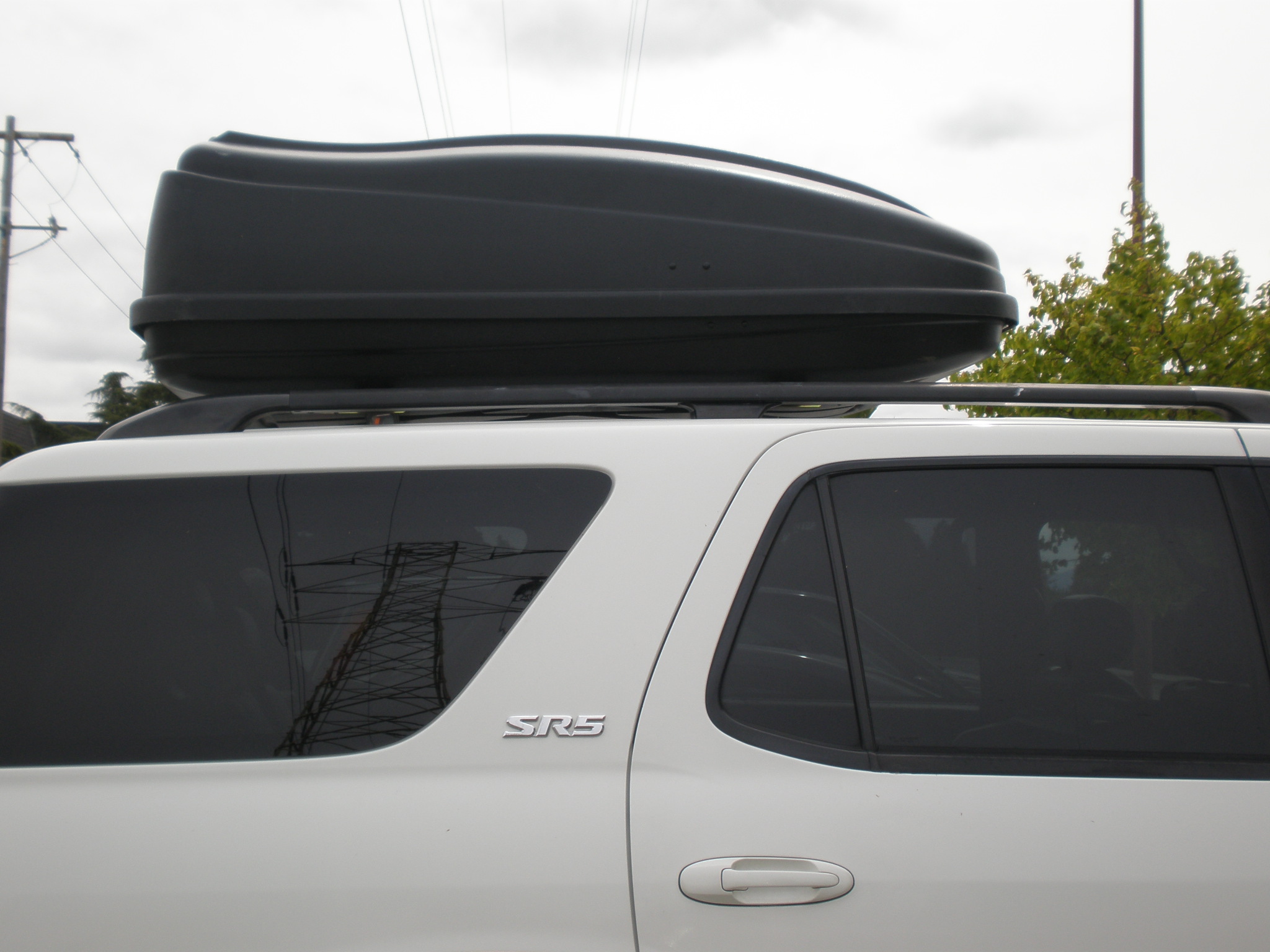
A rooftop bag like RoofPax or NEXPOW keeps the bed free for other cargo, and works on SUVs and crossovers that don’t have a bed at all. It also mounts to an existing roof cargo basket or bare crossbars, giving it more universal compatibility than a bed-specific design. The downside is exposure: a rooftop bag rides in direct rain, road spray kicked up from other vehicles, and constant wind pressure trying to work water in at every seam and zipper, which is why the seam-sealing quality matters more for a rooftop bag than a bed bag riding low and somewhat sheltered by the cab.

How to Keep a Cargo Bag Truly Waterproof
The word “waterproof” on a cargo bag listing isn’t standardized the way it is on a jacket with an IP rating, so the construction detail matters more than the marketing copy. Fully welded or heat-taped seams are the gold standard — there’s no needle hole for water to migrate through over time. Double-stitched seams with a waterproof tape or coating layered over the stitching are the next tier down, common on bags like NEXPOW and Rightline Gear, and hold up fine in normal rain but can start to seep during a sustained highway downpour at speed. Plain stitched seams with no additional sealing, sometimes sold as “water-resistant” rather than “waterproof,” are the ones that actually let moisture through, and that distinction in the listing language is worth reading closely before buying.
The material itself matters too. Heavier PVC-coated tarp fabric in the 18–22 oz range, like the shell used on the Tuff Bag, resists abrasion from road grit and UV breakdown better than the lighter coated polyester used on some budget rooftop bags. That’s the same reason heavy-duty tarps and marine dry bags — the category waterproof cargo bags borrow their construction from — use similarly heavy coated fabrics rather than the thin ripstop nylon found on a cheap rain cover.

Cargo Bag vs. Hard Box vs. Tonneau Cover
A soft cargo bag costs a fraction of a hard rooftop box or a full tool box tonneau cover setup, and it folds flat for storage between trips, which a hard box never does. What it gives up is security: a soft bag has no lock, and a determined thief can simply cut the fabric rather than defeat a latch. If you’re hauling anything valuable, a hard-sided option or a locking roll up tonneau cover is the safer call. For camping gear, seasonal storage, or overflow luggage on a road trip, though, a cargo bag’s low price and flexibility usually win out over the added security of a hard box.
Weight capacity is the other practical limit. Most cargo bags aren’t rated the way a truck bed rack or roof basket is, since the bag itself isn’t structural — the limiting factor is your roof rack’s or bed rail’s actual weight rating, not anything printed on the bag. Overloading a soft bag past what your mounting points can handle is a straps-failing-at-highway-speed risk, not just a bag problem.
| Model | Type | Capacity | Approx. Price | Seam Type |
|---|---|---|---|---|
| Tuff Bag | Truck bed | 16 cu ft | $150–$160 | Heat-welded |
| RoofPax | Rooftop | 20 cu ft | $80–$90 | Double-stitched, coated |
| Sailnovo | Rooftop | 15 cu ft | $55–$65 | Double-stitched, coated |
| Issyauto | Rooftop | 15 cu ft | $50–$60 | Double-stitched, coated |
| NEXPOW | Rooftop | 20 cu ft | $65–$75 | Double-stitched, coated |
| Rightline Gear Range 3 | Rooftop | 18 cu ft | $130–$150 | Double-stitched, coated |
| Highland Expedition | Truck bed | 15.5 cu ft | $70–$85 | Double-stitched, coated |
How to Size and Load a Truck Cargo Bag Correctly
Cubic-foot capacity on a spec sheet describes the bag’s maximum internal volume when fully expanded, not how much you can actually stuff into it and still zip it closed. In practice, most owners get 70–80% of the published capacity out of a soft-sided bag before the zipper or roll-top closure starts fighting back, since duffels, sleeping bags, and coolers don’t pack as densely as the empty-air measurement assumes. If your typical load is closer to 12–14 cubic feet of actual gear, a bag rated at 15 cubic feet like Sailnovo or Issyauto will feel tight; sizing up to an 18–20 cubic-foot model like Rightline Gear, NEXPOW, or RoofPax gives you working room instead of a bag bulging at the seams, which is also where leaks tend to start.
Loading technique matters almost as much as the bag itself. Heavier items belong low and centered — directly over the axle on a bed bag, or centered between the crossbars on a rooftop bag — rather than pushed to one end, since an unevenly loaded rooftop bag can shift the vehicle’s handling in a crosswind. Soft-sided bags should never be loaded so full that the fabric is under tension at the seams; that tension is exactly what accelerates seam failure and turns a “waterproof” bag into a leaking one after a season of hard use. For a rooftop bag, running the straps through the open cabin doors before closing them, rather than just cinching over the bag, remains the single most effective way to keep a fully loaded bag from working loose on the highway, even when it’s mounted to a proper roof rack cross bar setup.
Frequently Asked Questions
Are truck cargo bags actually waterproof?
It depends on the seam construction. Fully welded or heat-taped seams hold up to sustained rain and highway spray; double-stitched seams with a waterproof coating handle normal rain but can seep in a heavy downpour; plain stitched seams marketed as “water-resistant” are the ones most likely to let moisture through.
Do I need a roof rack to use a rooftop cargo bag?
No. Most rooftop bags, including RoofPax and Issyauto, ship with straps designed to route through the cabin doors on bare-roof vehicles, though a roof rack or basket gives a more secure, rattle-free mount.
How much weight can a cargo bag hold?
The bag’s stitching isn’t usually the limiting factor — your roof rack’s or bed rail’s actual weight rating is. Check your vehicle’s roof load rating or bed rail capacity before loading a bag near a cargo bag’s maximum volume.
Is a truck-bed bag better than a rooftop bag?
Neither is universally better. A bed bag keeps weight low and off the roof but takes over the whole bed; a rooftop bag keeps the bed free for other gear and works on SUVs without a bed at all, at the cost of more wind and rain exposure.
Can a cargo bag replace a tonneau cover?
Not for security. A cargo bag has no lock and can be cut open, while a locking tonneau cover protects the entire bed. A cargo bag is better suited to overflow gear, camping equipment, or occasional trips rather than daily, valuable cargo.
Will a cargo bag hurt my gas mileage?
A rooftop bag creates more aerodynamic drag than a bed-mounted bag, since it sits up in the airflow rather than tucked below the bed rails, and most owners report a modest fuel economy dip on highway trips. A bed bag has minimal aerodynamic impact since it stays below the cab line.
The Bottom Line
For most truck owners, the decision comes down to where the bag lives: a bed-mounted bag like the Tuff Bag or Highland Expedition keeps weight low and skips the roof-loading hassle, while a rooftop bag like RoofPax or NEXPOW frees up the bed and works on any vehicle with a roof. Whichever style you pick, prioritize seam construction over cubic-foot capacity on the spec sheet — a smaller bag with welded seams will keep your gear drier than a larger one with plain stitching, and that’s the difference that actually shows up the first time you drive through real rain.