
Sanding a yellowed headlight back to clarity takes twenty minutes. Keeping it clear takes the right coating — and most people pick the wrong one, which is why the lens hazes over again within a season.
The reason is chemistry, not effort. A hardware-store rattle can of 1K acrylic clear has no UV package designed for polycarbonate and no cross-linking hardener. It looks perfect for two months. This guide covers the coating types that actually survive, what the published data says about how much light you get back, and the point where a new lens is the cheaper answer.
Key Takeaways
- AAA lab testing found deteriorated headlights on low beam produced just 22 percent of the light a new headlight produces.
- Both DIY and professional restoration returned light output to only about 70 percent — and both produced more glare than DOT criteria allow.
- Two chemistries are worth using: a 2K urethane aerosol with a hardener, or a ceramic/silica wipe-on. Ordinary 1K acrylic clear is the mistake to avoid.
- Restoration is a visibility improvement, not a restoration to factory condition. On a safety-critical lens, OEM replacement is the only route back to 100 percent.
What the Data Says About Restored Headlights
Deteriorated headlights on low beam provided just 22 percent of the light a new headlight does at full capacity. AAA reached that figure using an accredited laboratory to test headlights taken from two popular sedans roughly 11 years old, measured against new units, with all testing performed in accordance with Federal Motor Vehicle Safety Standard 108 (AAA Newsroom, December 2018, retrieved 2026-07-28).
The part almost no product page mentions: AAA found professional and DIY restoration each returned light output to approximately 70 percent, and both methods produced more glare than is acceptable according to DOT criteria. Replacing the headlight with OEM parts was the only method that restored output to 100 percent.
Read that as a decision rule rather than a reason to skip restoration. Going from 22 percent to 70 percent is a large, cheap safety gain on a car worth a few thousand dollars. On a newer vehicle where the lens is available, replacement buys the other 30 percent and removes the glare problem.
Why Headlights Yellow in the First Place
Polycarbonate lenses leave the factory with a UV hard coat. That coat degrades through two parallel mechanisms: hydrolysis, where atmospheric moisture attacks the polymer, and photolysis, where UV breaks molecular bonds directly. The result is a porous, oxidized surface layer that scatters light instead of transmitting it.
This matters for coating selection. Once you sand off the failed factory hard coat, you have exposed raw polycarbonate with nothing protecting it. Whatever you spray on next is the new UV barrier. A clear coat formulated for painted steel does not carry the UV absorber package that bare polycarbonate needs, which is why so many restorations yellow again within months.
The Three Coating Types, Ranked
1. 2K Urethane Aerosol — Best Durability
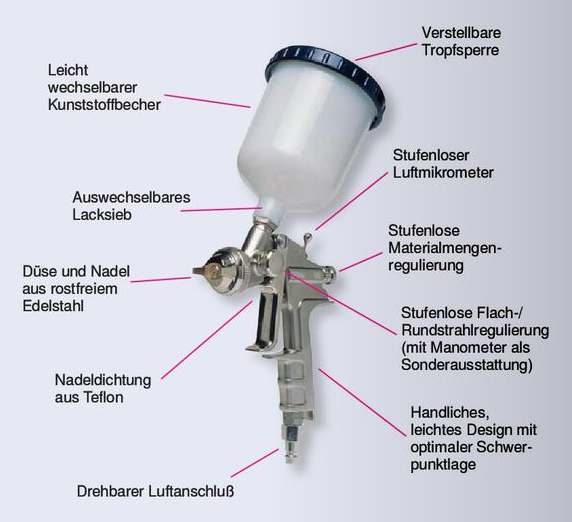
A 2K (two-component) aerosol holds the hardener in a separate chamber inside the can. You activate it, and the coating chemically cross-links rather than simply drying. That cross-linked film is what resists car-wash chemicals, road salt, and UV.
SprayMax’s 2K 2in1 Headlight Clear is the widely used example. It ships in a 250 ml can, has an 8-hour potlife at 68°F once activated, needs roughly 10 minutes flash-off between coats, and the manufacturer states it “provides durable UV and weathering resistance” and “increases protection against UV light, salt water, car wash, etc.” (SprayMax, retrieved 2026-07-28).
The catch is that potlife. Once activated, the can is on a clock and cannot be resealed. If you are coating one pair of headlights you will throw away a meaningful share of a not-cheap can. Line up every plastic part you want coated and do them in one session.
Best for: anyone comfortable with spray technique who wants the longest-lasting result.
2. Ceramic / Silica Wipe-On — Best for Beginners
Wipe-on ceramic coatings trade some film thickness for a much lower skill floor. There is no spray pattern to control, no overspray, and no potlife panic.
Cerakote’s Ceramic Headlight Restoration Kit is the reference product here. The company advertises a “limited lifetime warranty,” a “30 minute process,” “no tools required,” “one kit restores 2 headlights,” and describes the coating as “100% UV proof” (Cerakote, retrieved 2026-07-28).
Treat “100% UV proof” as marketing language rather than a measured specification — no coating manufacturer publishes an independent accelerated-weathering result alongside that phrase. The warranty is the part with actual teeth, because it puts the manufacturer on the hook if the lens re-yellows.
Best for: a first-time restoration, or anyone without a garage and a respirator.
3. 1K Acrylic Clear — Skip It
The generic clear lacquer sold for touch-up work contains no hardener and no polycarbonate-specific UV package. It dries by solvent evaporation, stays soft, and offers little resistance to the exact conditions that killed the factory coating. It will look excellent for a few weeks. That is the trap.
Quick Comparison
| Coating type | Cross-links? | Skill needed | Main drawback |
|---|---|---|---|
| 2K urethane aerosol | Yes, hardener in can | Moderate to high | Single-use can, 8h potlife |
| Ceramic / silica wipe-on | Chemical bond to lens | Low | Thin film, prep-sensitive |
| 1K acrylic clear | No | Low | Fails within months |
Prep Decides the Outcome, Not the Product
Every coating in this guide fails the same way when prep is rushed. Three points do most of the damage:
- Sand out the oxidation completely. If any haze remains, the coating locks it in permanently. Work up through grits until the lens is uniformly matte with no cloudy patches.
- Degrease after sanding. Isopropyl alcohol on a lint-free cloth. Skin oil from handling the lens will cause fish-eye defects in the film.
- Mask generously. 2K urethane on paint is permanent. Overspray does not polish off.
Temperature matters too. Both chemistries specify a cure window; applying at 45°F in an unheated driveway will not produce the film the datasheet describes.
When to Replace the Lens Instead
Coating a lens is the wrong call in three situations. First, if the crazing is inside the lens or the reflector bowl is tarnished, no surface treatment reaches the problem. Second, if the housing has moisture intrusion, you are sealing water in. Third, on a late-model vehicle with projector or adaptive optics, the glare penalty AAA measured is a real argument for OEM glass.
Otherwise, restoration plus a proper coating is one of the highest-value hours you can spend on an older car.
Frequently Asked Questions
How long does clear coat on headlights actually last?
Manufacturers publish warranty terms rather than measured service life, and independent long-term comparison testing is not publicly available. A well-prepped 2K urethane film and a warrantied ceramic coating are both aiming at multi-year protection; a 1K acrylic clear is not.
Can I clear coat headlights without sanding?
No. The failed factory hard coat is a porous oxidized layer. Coating over it traps the haze and the new film delaminates as the layer beneath continues to break down.
Is ceramic coating better than 2K clear for headlights?
They solve different problems. 2K urethane builds a thicker, more abrasion-resistant film but demands spray skill and wastes product on small jobs. Ceramic wipe-ons are far easier to apply correctly and often carry a warranty, at the cost of film thickness.
Will restoring my headlights pass inspection?
Clarity is generally what an inspector assesses, and restoration usually resolves that. Note AAA’s separate finding that both restoration methods produced more glare than DOT criteria allow — a properly aimed, undamaged lens still matters.
Does headlight film work instead of clear coat?
Protective film shields a lens that is still in good condition. It does not repair one that has already oxidized, and applying it over haze traps the defect.
The Bottom Line
Choose 2K urethane if you can spray and want maximum film durability. Choose a warrantied ceramic kit if this is your first attempt. Skip 1K acrylic entirely. And keep AAA’s numbers in mind: restoration takes you from roughly 22 percent to roughly 70 percent of a new lens, which is a genuine improvement and still short of factory.
Brakes, Exhaust and Inspection in Keyport, NJ
Clear headlights are one part of a car that passes inspection and stops when you need it to. Discount Brakes and Mufflers has served Keyport and Monmouth County for over 40 years as an NJ State Inspection Facility, and we repair rather than replace wherever the part allows.
Get a price in minutes with our instant estimate tool, see what is involved in muffler and exhaust repair, or contact our Keyport shop.
Note: this is a buyer’s guide compiled from manufacturer datasheets and published laboratory research. Discount Brakes and Mufflers specializes in brakes, mufflers, catalytic converters and custom exhaust; we do not perform headlight restoration or paint work.