A full car wrap in 2026 typically runs $2,000 to $7,000, with most sedans landing near $2,500-$3,500 and SUVs or trucks running $3,500-$6,500 — but the number that actually determines your quote isn’t the vehicle, it’s the square footage of film and the finish you pick. Material alone costs $1.50-$8 per square foot depending on grade, while specialty finishes like chrome or color-flip vinyl run $15-$18 per square foot once labor is factored in, which is why two “full wrap” quotes on the same car can differ by thousands of dollars. This guide breaks down exactly where that money goes, so you can tell a fair quote from an overpriced one before you book an install.
Key Takeaways
- A full wrap costs $2,000-$7,000 for most cars, $3,500-$6,500 for SUVs and trucks, and $8,000-$12,000+ for luxury or exotic vehicles needing premium film.
- Vinyl material runs $1.50-$8 per square foot; professional installation labor adds another $3-$5 per square foot on top of that.
- A partial wrap (hood, roof, mirrors, or stripes) costs $250-$2,500 — a fraction of a full wrap — and is the cheapest way to change a car’s look.
- Wrapping is almost always cheaper than a quality repaint: a professional wrap averages $2,500-$5,000 versus $6,000-$10,000+ for comparable paint work, though paint lasts roughly twice as long.
- DIY wrap kits cut material cost to a few hundred dollars, but a poor install shows in every seam and edge — this is the job where paying for experience is usually worth it.
How Much Does It Cost to Wrap a Car by Vehicle Type?
Vehicle size is the single biggest driver of wrap cost because it directly sets how many square feet of vinyl the installer has to buy and apply. A wrap shop isn’t pricing “your car” so much as pricing the surface area of your car, plus the labor hours that surface area demands.
- Sedans and small cars: $2,000-$3,500 for a full wrap, with most quotes clustering around $2,500.
- SUVs and crossovers: $3,500-$6,500, since the extra body height and rear cargo area add significant film.
- Trucks: $3,800-$6,200 for a full wrap, with the bed and higher door panels pushing costs toward the top of that range on larger models.
- Luxury and exotic vehicles: $8,000-$12,000 or more, driven less by size and more by the premium films, complex curves, and precision trim work these cars demand.
Those ranges hold across most shops nationally as of 2026, though regional labor rates and local demand can shift any individual quote by a few hundred dollars in either direction (Wrapmate, retrieved 2026-08-17). Get quotes from at least two shops before committing — the spread on identical vehicles is often wide enough to be worth the extra phone call.
What Determines the Price: Material, Labor, and Finish
Every wrap quote breaks down into two costs stacked on top of each other: the vinyl itself, and the hours it takes a trained installer to apply it without a single visible bubble or wrinkle.
Material cost runs $1.50-$8 per square foot depending on grade and finish — cast vinyl (thinner, more conformable, better for curves) sits at the higher end of that range compared to cheaper calendared vinyl, which is more prone to shrinking and lifting at the edges over time.
Labor cost adds $3-$5 per square foot on top of material for trimming, panel removal, edge-wrapping around mirrors and door handles, and post-heat application to lock the film down on curves. A full-size vehicle easily has 250-400 square feet of wrappable surface, which is why labor alone can total $1,000-$2,000 even before material is added in.
Specialty finishes — chrome, color-flip, satin, or matte with complex color-shifting effects — push combined material-plus-labor cost to $15-$18 per square foot, because these films are harder to source, harder to work without visible seams, and far less forgiving of installer mistakes (Metro Center Sign Works, retrieved 2026-08-17). If a quote for a chrome or holographic wrap looks close to a standard gloss color-change price, that’s worth double-checking before you sign off.
Full Wrap vs. Partial Wrap: What’s the Real Price Difference?
Not every wrap job covers the whole car, and the price gap between a full wrap and a partial one is large enough to change the calculation for a lot of buyers.
A partial wrap — a hood, roof, mirrors, a set of stripes, or a color-change on just the doors — typically costs $250-$2,500 depending on how much surface area is covered and what material is used. This is the entry point most people use to test whether they like a color or finish before committing to a full wrap, and it’s also the standard approach for adding a racing stripe, a roof accent, or a small business logo without touching the rest of the paint.
A full wrap covers every visible painted panel and lands in the $2,000-$7,000+ range discussed above. The jump in price isn’t just more vinyl — full wraps require more careful color-matching across panel gaps, more edge-wrapping around trim, and generally more total labor hours per square foot than a single panel does, since a partial wrap on a flat hood is mechanically easier than working around a full set of curves, mirrors, and door handles.
Is It Cheaper to Wrap or Paint a Car?
Wrapping is almost always the lower-cost option upfront: a professional car wrap typically runs $1,500-$5,000, while a quality paint job costs $6,000-$10,000 or more once custom colors, bodywork, or specialty finishes are involved (Metro Center Sign Works, retrieved 2026-08-17). That gap widens further at the premium end — high-end paint jobs with extensive prep or exotic colors can climb past $20,000, well beyond what even a premium wrap costs.
Cost isn’t the only factor, though. Paint has a real durability advantage: a professional paint job can last 10-15 years or more with proper care, while even a premium cast vinyl wrap typically lasts 5-7 years before it needs to be replaced. For a color that’s genuinely temporary — a wrap you might change again in a few years, or a lease vehicle you want to protect — that shorter lifespan isn’t a downside, it’s the point. Vinyl wrap also protects the factory paint underneath from UV fading and light scratches and is fully reversible, which is why it’s the more common choice for anyone who wants to preserve resale value rather than commit to a permanent color change.
If your goal is actually fixing damaged paint, rust, or deep scratches rather than changing color, painting remains the better investment — vinyl wrap goes over existing paint and won’t hide or repair underlying body damage. For cars in good paint condition where you simply want a new look, wrap is the more economical path for most owners (VinylWrapRo, retrieved 2026-08-17).
Should You DIY a Car Wrap or Hire a Professional?
A DIY vinyl wrap kit can cut material cost to a few hundred dollars, since you’re only paying for film and tools rather than a shop’s labor rate — but this is one of the few automotive jobs where the skill gap between amateur and professional work shows up immediately and visibly, not just under close inspection.
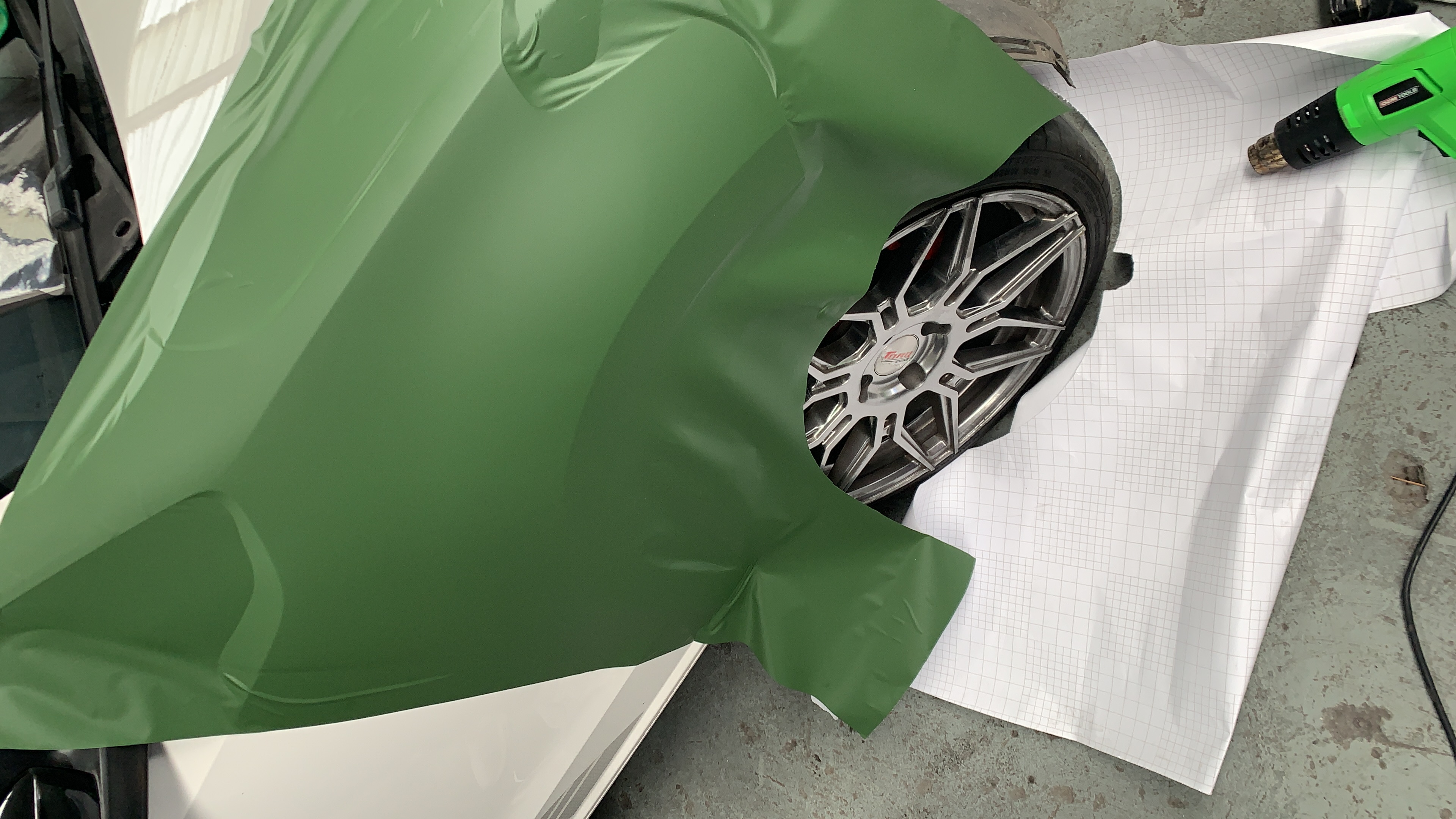
Vinyl wrap installation requires stretching film around compound curves, working out air bubbles with a squeegee before the adhesive sets, and precisely trimming edges around mirrors, door handles, and body seams — all without letting the film cool and lock into a wrinkle. A rushed or under-heated install shows up as lifting edges within weeks, not years, and re-wrapping a botched panel usually costs more in total than paying a professional to do it correctly the first time.
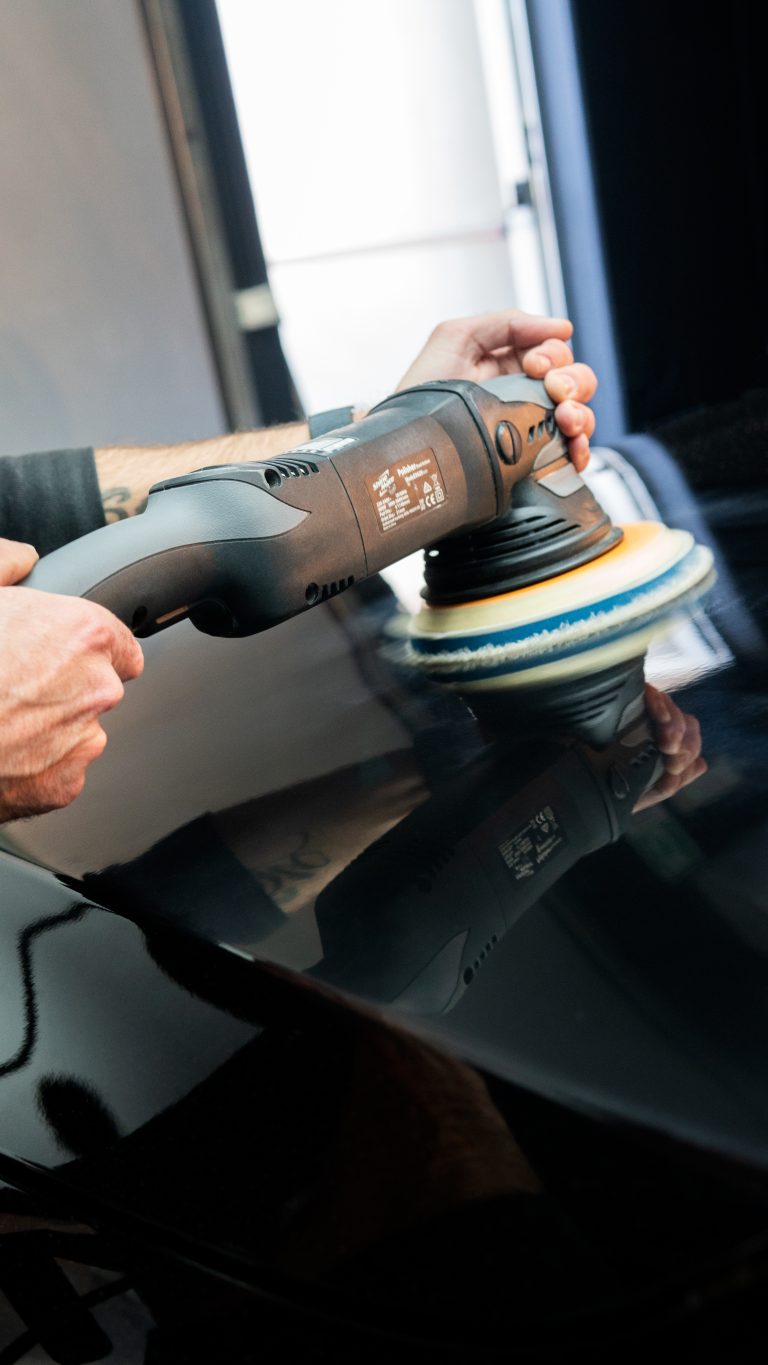
Before starting any wrap job, home or professional, panels need to be completely clean and free of wax, polish residue, or contamination that would stop the adhesive from bonding — a dual-action polisher is often used beforehand to correct minor paint defects that would otherwise telegraph through the film. If you’re testing whether you like a finish before committing to a full wrap, a small partial wrap — a hood or roof panel — is a far more forgiving first DIY project than an entire vehicle.

How Long Does a Car Wrap Last, and What Does Maintenance Cost?
A quality vinyl wrap lasts 3-7 years depending on the film grade, with premium cast vinyl at the top of that range and cheaper calendared film wearing out closer to 2-3 years, especially in high-UV climates. Removal and re-wrapping at the end of that lifespan typically costs close to a fresh full-wrap install, since old film has to be carefully peeled and any adhesive residue cleaned off before new vinyl goes on.
Day-to-day maintenance is cheap by comparison: wrapped cars need regular washing with a pH-neutral shampoo rather than anything abrasive or wax-based, since standard car wax can haze or discolor vinyl film over time. A dedicated pH-neutral wash soap — the same category used for ceramic-coated paint — is the safer choice for keeping a wrap’s finish and color from degrading early. Some owners add a ceramic topcoat over their wrap for extra UV and scratch protection, which works similarly to how ceramic coating protects factory paint, though it adds to the upfront cost.
Frequently Asked Questions
Does wrapping a car damage the paint underneath?
No, not when the paint was in good condition before the wrap and the film is removed correctly. A properly installed wrap actually protects the factory clear coat from UV exposure and minor scratches during the years it’s on. Damage typically only happens if the wrap is left on too long past its rated lifespan, the paint underneath already had defects, or an inexperienced installer removes it improperly.
How much does it cost to remove a car wrap?
Wrap removal alone, without a new install, generally runs $500-$1,500 depending on vehicle size and how long the old film has been on — older, sun-baked vinyl takes longer to peel cleanly and may leave more adhesive residue to clean off. Many shops discount removal when it’s bundled with a new wrap install.
Will insurance or financing cover the cost of a wrap?
Standard auto insurance does not cover cosmetic wraps, since they’re considered an aftermarket modification rather than a repair. Some wrap shops offer in-house financing or payment plans for larger commercial or full-vehicle jobs, but this varies by shop and isn’t something to assume without asking directly.
Is a cheaper wrap quote ever a red flag?
Often, yes. A quote well below the $1.50-$8 per square foot material range plus $3-$5 per square foot labor usually means thinner calendared vinyl, less experienced installation, or both — and the savings tend to show up later as lifting edges, visible seams, or premature fading rather than at signing.
The Bottom Line
For most owners, a full car wrap costs $2,000-$7,000 depending on vehicle size, with sedans at the lower end and trucks or SUVs pushing toward the middle and upper end of that range. Partial wraps ($250-$2,500) are the cheapest way to test a color or finish, and even a full wrap comes in well under a quality repaint in nearly every case. The variable that actually moves your price the most is finish choice — a standard gloss or matte color change stays in the ranges above, while chrome, color-flip, or other specialty films can push cost meaningfully higher. Get two or three quotes from shops that use cast vinyl rather than the cheaper calendared alternative, confirm what’s included in labor, and treat any quote that’s dramatically below the going rate as a reason to ask more questions before booking.