A plain screw-and-cube compression tool will do fine on most cars, and it will also quietly wreck a caliper on many of them. The distinction that gets missed constantly: standard sliding calipers have a piston that only needs to be pushed straight back into its bore, while a growing share of vehicles use an electronic parking brake (EPB) with an integrated ball-screw piston that has to be rotated as it retracts. Force that kind of piston straight back with a mechanical push tool and you can strip the internal spindle, crack the piston, or damage the motor gearset behind it — a mistake that turns a $40 pad job into a caliper replacement.
This guide covers which compression tools are actually worth buying, how to tell a standard sliding caliper from an EPB caliper before you ever put a tool on it, what the universal adapter kits with all those cubes and plates are actually for, and the fluid-reservoir prep step that keeps brake fluid off your paint and your driveway. It’s a natural companion to a pad swap — if you’re shopping for pads too, see our ceramic brake pads guide for which friction material fits the way you actually drive.
Key Takeaways
- A standard screw/cube compression tool pushes the piston straight back and works on ordinary sliding calipers, but can damage an EPB caliper that requires the piston to rotate as it retracts.
- EPB-equipped vehicles need a dedicated rewind/wind-back adapter (2-pin or 3-pin) or an OBD-II tool that puts the caliper into service mode first.
- Universal kits include multiple cubes and adapter plates because piston bore shapes and diameters vary widely across makes — square, round, and stepped profiles all show up on production vehicles.
- Siphoning a bit of fluid from the brake fluid reservoir before compressing a piston prevents overflow, since worn pads leave more room in the caliper and less in the reservoir.
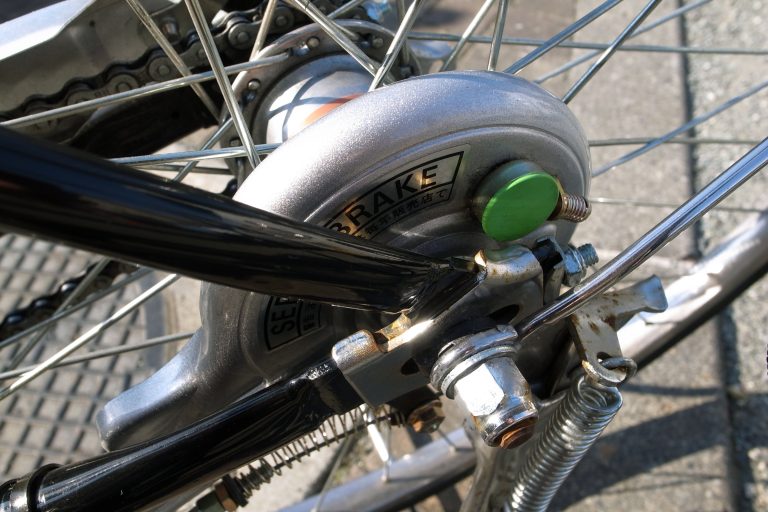
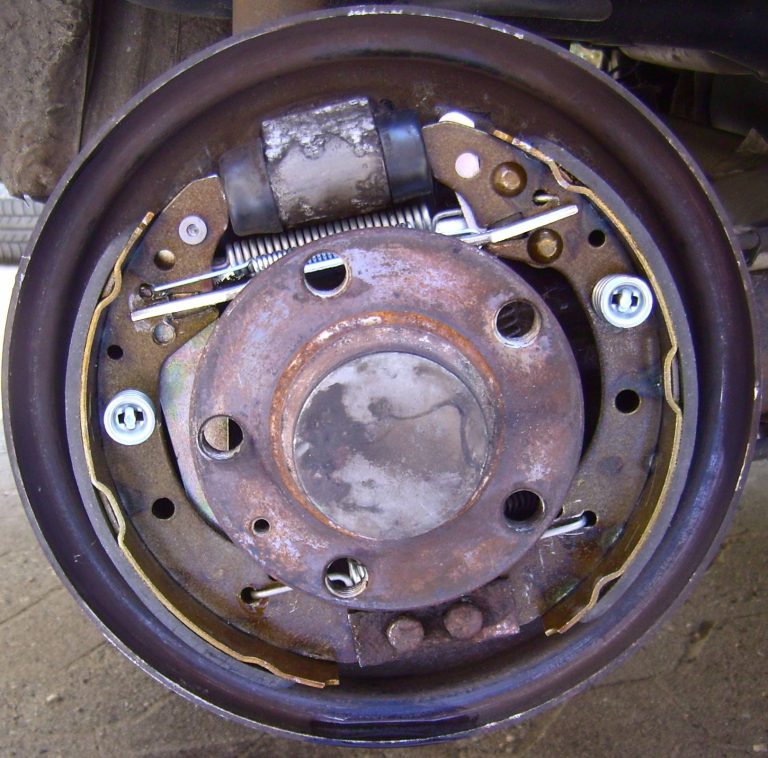
- This tool is specifically for disc brake calipers with a piston — drum brakes use a completely different adjustment mechanism, so a compression tool has no role in a shoe replacement.
The Tools Worth Buying
OTC 7317A Disc Brake Caliper Tool Kit
OTC’s 7317A is a long-standing shop-grade universal kit built around a forcing screw, a retaining plate, and a set of disc adapters sized for common piston diameters, including roughly 1-1/2″, 1-11/16″, 1-7/8″, and 2-1/8″ openings. It’s a push-style tool, meaning it’s designed for ordinary sliding calipers where the piston just needs to travel straight back into the bore — it is not a rewind tool and shouldn’t be used on an EPB caliper (OTC Tools, retrieved 2026-08-01). The kit is commonly stocked by professional parts suppliers and sold as covering most domestic, GM, Ford, and imported four-wheel-disc applications.
Best for: shops and serious DIYers doing routine pad jobs on standard sliding calipers across a wide range of makes.
Cal-Van Tools 725/726 Brake Caliper Rewind Adapter Set
Cal-Van’s rewind adapters are purpose-built for EPB calipers: the 725 is a 2-pin adjustable turn-back tool and the 726 is a 3-pin version, both designed to engage the drive notches on an electric parking brake piston and rotate it back into the bore rather than just pushing it. Cal-Van lists compatibility across a long list of EPB-equipped makes including Audi, Ford, Honda, Mazda, Mercedes-Benz, Mitsubishi, Nissan, and Toyota (Cal-Van Tools, retrieved 2026-08-01). These adapters typically chuck into a 3/8″ drive ratchet or a cordless tool set to low torque, letting you rotate the piston in a controlled way instead of forcing it.
Best for: rear calipers on EPB-equipped vehicles, where a standard push tool is the wrong tool entirely.
OEMTOOLS 2 and 3 Pin Brake Rewind Adapter Set
OEMTOOLS sells a comparable 2-pin and 3-pin adjustable rewind adapter set through mainstream parts retailers, aimed at the same EPB rewind job as the Cal-Van set (AutoZone, retrieved 2026-08-01). It’s a reasonable lower-cost alternative if you only need the tool occasionally and want it available at a local counter rather than shipped. Adjustable pin spacing on both the 2-pin and 3-pin sides means one physical tool covers a range of drive-notch spacings rather than needing a separate adapter per make.
Best for: DIYers who need an EPB rewind tool for one or two vehicles and want a widely available, lower-cost option over a shop-grade set.
Orion Motor Tech 24-Piece Brake Caliper Compression Tool Set
Orion Motor Tech’s kit is a budget-friendly universal push-style set that bundles a large range of adapters and cubes — the company’s listings describe kits with roughly 18 to 24 disc adapters plus right- and left-handed thrust bolt assemblies, aimed at covering hundreds of separate make/model piston shapes in one case (Orion Motor Tech, retrieved 2026-08-01). Like the OTC kit, this is a straight-push tool for standard sliding calipers, not an EPB rewind tool.
Best for: home garages that work on multiple vehicles and want the broadest adapter coverage for standard calipers at a lower price point than a shop-grade kit.
Push-Style Versus EPB Rewind: Why the Two Aren’t Interchangeable
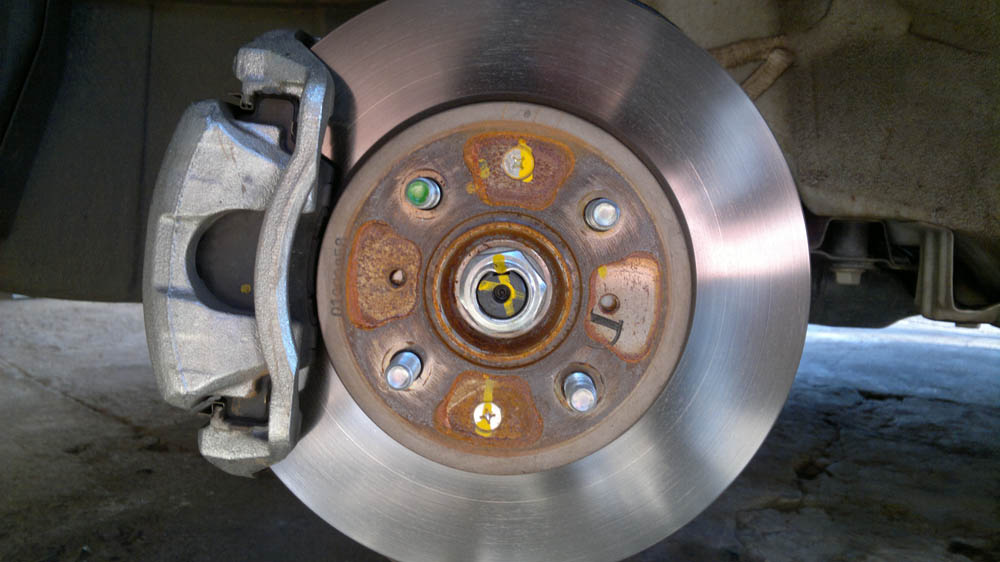
A conventional sliding caliper piston sits in its bore held by nothing more than hydraulic pressure and a rubber seal. Squeezing it back in with a C-clamp, an old pad as a spacer, or a screw-and-cube tool is purely a mechanical push — the piston slides straight back, the seal rolls with it, and there’s no internal mechanism to damage as long as you go slowly and watch the fluid level.
An EPB caliper is a different design entirely. Instead of a cable-actuated parking brake shoe or drum, these calipers house a small electric motor and gear reduction that drives a ball-screw or spindle mechanism, which is what applies the parking brake by extending the piston. Because the piston threads onto that spindle rather than just floating in the bore, retracting it means rotating the piston while it moves inward, not just pushing on it. A straight mechanical push tool can strip the spindle threads, shear the drive coupling, or jam the motor gearset — and on most EPB systems, you’re also supposed to put the caliper into a service or maintenance mode first (either through a scan tool or a manual procedure) so the electric motor doesn’t fight you while you’re retracting the piston by hand (iFixit, retrieved 2026-08-01). Skipping the service-mode step or using the wrong tool is a common way an otherwise routine rear pad job turns into an unplanned caliper replacement.
The practical takeaway: before you buy a compression tool, find out which caliper design your vehicle actually has. If the rear brakes have an electric parking brake switch on the dash instead of a hand lever or foot pedal, assume EPB calipers and budget for a rewind adapter or an OBD-II service-mode tool rather than grabbing a generic screw-and-cube kit.
How to Tell Which Caliper You Have Before You Buy a Tool
The dash switch is the fastest tell: a small electric parking brake button (often labeled “P” with a circle around it) instead of a mechanical handbrake lever or foot-operated parking brake pedal almost always means EPB calipers on the rear axle. Front calipers are essentially never EPB — the electric parking brake mechanism is a rear-axle feature, since that’s where the parking brake function lives on nearly every passenger vehicle.
A second confirmation is looking at the caliper itself once the wheel is off: an EPB caliper has a visible electric motor housing bolted to the back of the caliper body, usually with a wiring harness connector, that a standard sliding caliper simply doesn’t have. If you can see a motor housing and connector, that’s a rewind job, not a push job. When in doubt, a quick search of your vehicle’s year, make, and model alongside “electric parking brake” will confirm it before you’re standing in the driveway with the wrong tool in hand.
Universal Adapter Kits and Why Piston Shapes Vary So Much
Caliper manufacturers don’t standardize piston bore shape or diameter across makes, which is exactly why the OTC and Orion Motor Tech kits above ship with a dozen-plus adapter cubes instead of one universal tip. A round bore on one car might measure a different diameter than the round bore on the car in the next bay, and plenty of calipers — particularly twin-piston front calipers on some SUVs and trucks — use square, stepped, or offset bore shapes that need a differently profiled cube to seat properly and spread force evenly across the piston face.
Using a cube that doesn’t match the bore shape, or one that’s noticeably undersized, concentrates force on one edge of the piston instead of the full face, which can cock the piston sideways in the bore and damage the seal even on an ordinary push-style job. This is the actual reason to spend more on a kit with broad adapter coverage rather than assuming any single compression tool works everywhere: it’s not padding out the box count, it’s covering real variation in caliper design.
Standard Push-Style vs. EPB Rewind Tools, Compared
| Tool type | Motion applied | Typical caliper | Example |
|---|---|---|---|
| Screw/cube compression tool | Straight push, no rotation | Standard sliding caliper, front or rear | OTC 7317A, Orion Motor Tech 24-pc kit |
| Pin-style rewind adapter | Rotation while retracting | EPB caliper, rear axle only | Cal-Van 725/726, OEMTOOLS 2/3-pin set |
| OBD-II service-mode tool | Puts motor in retract mode; still needs a pin adapter to turn the piston on many vehicles | EPB caliper, when manual mode isn’t available | Autel EBS301-class brake service scan tools |
| Air-powered wind-back tool | Powered rotation, dual-direction | Shops doing high volume of EPB and standard rewind jobs | CTA 4302 air-powered wind-back kit |
Prepping the Fluid Reservoir Before You Compress Anything
Every bit of volume a worn piston occupied in the caliper bore gets displaced back into the brake fluid reservoir when you compress it. If the reservoir was already topped off — which is common, since fluid level naturally rises as pads wear and the caliper piston sits farther out — pushing or winding the piston back in can overflow the reservoir and send brake fluid running down the master cylinder, onto the fender, and onto paint, where it’s an effective paint stripper.
The fix is simple and takes under a minute: before compressing any piston, pull the reservoir cap and siphon out a small amount of fluid with a clean turkey baster, syringe, or dedicated fluid extractor, bringing the level down to roughly the midpoint between the “Min” and “Max” marks. Do this per axle if you’re doing a full brake job, since front and rear reservoirs (on vehicles with separate circuits) or the shared reservoir can fill at different rates depending on which piston you’re compressing. Keep a rag under the cap regardless, and never let old brake fluid or a used extractor bulb near paint or interior surfaces.
Technique and Safety Notes
Work slowly on any push-style compression — steady, incremental turns of the forcing screw give the fluid time to displace back through the lines rather than spiking pressure against a closed system. If the piston feels unusually stiff partway through, stop and check that the adapter cube is still seated squarely on the piston face rather than cocked to one side, since a misaligned cube is the most common way a standard compression job damages a seal.
On EPB calipers, always confirm whether the vehicle needs to be put into a service or maintenance mode before you start turning the rewind adapter. Some vehicles allow manual retraction with the ignition off and the tool engaged directly; others require a scan tool to disengage the parking brake motor first, and forcing a rotation against an energized motor is a fast way to damage the actuator. When a manual procedure exists for your specific vehicle, follow the exact direction of rotation specified — EPB pistons typically retract clockwise, but this varies by manufacturer and getting it backward can bind the mechanism instead of retracting it.
Finally, always inspect the compressed piston and boot for damage before installing new pads. A torn dust boot or a piston that doesn’t sit flush and square in the bore after compression is a sign something went wrong during the process, and it’s cheaper to catch that now than after the caliper is bolted back on and bleeding fluid.
Frequently Asked Questions
Can I use a C-clamp instead of buying a compression tool?
For a simple single-piston sliding caliper, a C-clamp with an old pad as a backing plate can work in a pinch, but it applies force less evenly than a purpose-built cube and offers no rewind function at all, so it’s unusable on EPB calipers regardless.
How do I know if my car has EPB calipers?
Check for an electric parking brake switch on the dash instead of a mechanical lever or pedal, and look for a visible motor housing with a wiring connector bolted to the back of the rear caliper once the wheel is off.
Will a standard compression tool damage an EPB caliper?
It can. EPB pistons thread onto an internal spindle and need to rotate as they retract; forcing them straight back with a push-style tool risks stripping the spindle or damaging the motor gearset behind the piston.
Do I need to open the brake fluid reservoir before compressing a piston?
You don’t need to fully open it, but you should check the level and siphon some fluid out first if it’s near the “Max” mark, since compressing the piston pushes displaced fluid back into the reservoir and can cause an overflow.
Are universal adapter kits worth the extra cubes and plates?
Yes, for anyone working on more than one vehicle. Piston bore shapes and diameters vary enough across manufacturers — round, square, stepped, offset — that a single cube won’t seat properly on every caliper you’re likely to encounter.
Does this tool work on drum brakes?
No. Drum brakes use a star-wheel adjuster and shoes rather than a hydraulic piston in a bore, so a compression tool has no role there. See our brake shoes guide if that’s the axle you’re working on.
Do I need an OBD-II tool for every EPB caliper job?
Not always. Some vehicles support a fully manual retraction procedure with the ignition off. Others require the caliper to be put into a service or maintenance mode via a scan tool before the piston can be safely rewound, so check your vehicle’s specific procedure before starting.
The Bottom Line
If your car has ordinary sliding calipers, a push-style kit like the OTC 7317A or a budget universal set like Orion Motor Tech’s 24-piece kit will handle the job well, provided you match the adapter cube to the piston bore shape and check the fluid reservoir first. If your rear axle uses an electric parking brake, skip the push tool entirely and get a dedicated rewind adapter set like Cal-Van’s 725/726 or the OEMTOOLS equivalent — and confirm whether your vehicle needs a service-mode step before you touch the piston. Getting this one distinction right is the difference between a routine pad job and an unplanned caliper replacement.