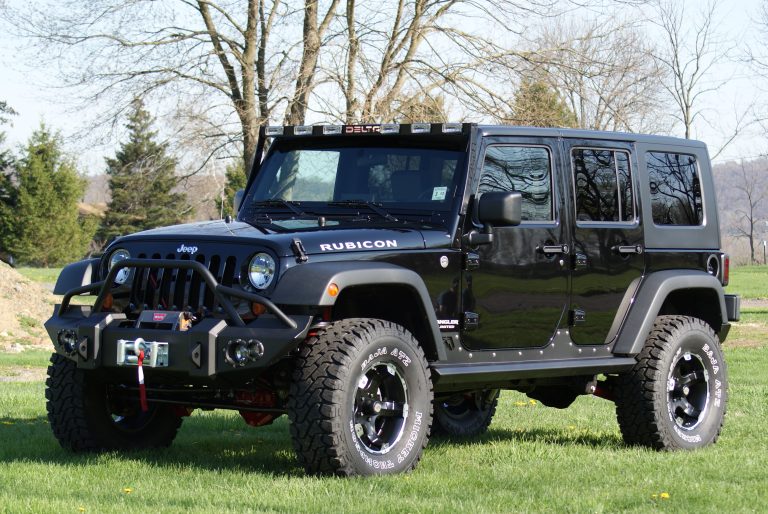

Not every “fog light” lives in the factory fog light pocket in your bumper. A growing category of auxiliary LED pod lights skips the OEM housing entirely: small, round or square lights — usually 2 to 6 inches across — that bolt onto a bracket and mount almost anywhere on a truck, Jeep, or SUV. If you’ve read our guide to best yellow fog lights or best projector fog lights, you already know those posts cover lights built into the OEM fog light location — one about beam color and glare control, the other about the optical design inside a bumper-integrated housing. Pod lights are a different animal: standalone units with their own bracket, their own wiring, and the freedom to go on a bumper, a roof rack, an A-pillar, or a bull bar.
This guide focuses on that pod-specific category: what separates a genuinely useful pod from a cheap eBay knockoff, how spot, flood, and combo beam patterns actually differ in practice, where to mount pods for the best result, what the law says about running them on public roads, and how lumen specs and build quality separate budget pods from serious off-road and overlanding gear. As of this writing (August 2026), we’ve cross-checked current specs from the major pod manufacturers so you’re not working from outdated numbers.
Key Takeaways
- LED pod lights are standalone auxiliary lights mounted via bracket to a bumper, roof rack, A-pillar, or bull bar — distinct from OEM-style fog lights built into the bumper’s factory housing.
- Beam pattern matters more than raw lumens: spot pods throw a tight beam for long-distance visibility, flood pods light up a wide area close to the vehicle, and combo pods blend both in one housing.
- Most states restrict off-road auxiliary lights on public roads — they typically need to be covered, angled down, or switched off unless they meet on-road placement and color rules.
- Mounting location changes what a pod is good for: bumper-level pods light the trail surface, roof-mounted pods extend forward throw, and A-pillar pods aid low-speed visibility around obstacles.
- Reputable brands publish independently comparable raw lumen and IP-rating specs; if a listing only advertises “lumens” without a wattage or test standard, treat the number skeptically.
The Pod Lights Worth Buying
These are established names in the auxiliary lighting space, chosen for a mix of output, build quality, and beam pattern options rather than price alone. Specs below were verified via manufacturer and retailer listings in August 2026; always confirm current numbers before buying, since manufacturers revise product lines.
Baja Designs Squadron Sport / Squadron 2.0 Sport
The Squadron line is a 3-inch square pod available in spot, flood, driving/combo, and wide-cornering optics. The updated Squadron 2.0 Sport is rated around 3,200 lumens at 30 watts, with a powder-coated cast-aluminum housing, IP69K waterproofing, and MIL-STD-810G shock and vibration testing. Baja Designs backs the line with a limited lifetime warranty, which matters for anything bolted to the front of a vehicle that sees washboard roads and rock strikes.
Best for: buyers who want one pod family that covers every beam pattern without switching brands.
Rigid Industries D-Series PRO / D2
Rigid’s D-Series pods are compact — roughly 3 inches square — and available in spot and 60-degree flood optics. The D2 lamp is rated in the 2,600–3,000-plus lumen range depending on optic and finish, drawing around 28–34 watts, with an estimated LED lifespan near 50,000 hours. Because the housing is small, D-Series pods are a common choice for A-pillar or grille mounts where space is tight.
Best for: low-profile mounting spots like A-pillars, grille slats, or mirror brackets where a larger pod won’t physically fit.
KC HiLiTES FLEX ERA 3 / FLEX ERA 1
KC’s FLEX ERA system uses interchangeable bezels and lenses so one housing can be reconfigured between beam patterns without buying a whole new light. The FLEX ERA 3 is rated near 4,383 lumens at 60 watts in a compact finned housing, while the smaller FLEX ERA 1 delivers about 2,430 lumens in a more budget-friendly package. Both carry an IP68 rating and amber backlighting for visibility when the light is off.
Best for: owners who expect to swap beam patterns or lens colors as their setup evolves, rather than committing to one configuration.
Diode Dynamics SS3 Sport / SS3 Pro
The SS3 line uses TIR (total internal reflection) optics rather than a reflector, which Diode Dynamics markets as delivering tighter beam control per lumen. The SS3 Sport produces roughly 2,262 lumens per light at 14.5 watts; the SS3 Pro roughly doubles that to about 5,796 lumens per light. SS3 pods are sold in flood, combo, spot, SAE fog, and SAE driving patterns, including SAE-compliant options intended for closer-to-road-legal use.
Best for: shoppers who want an SAE-compliant fog or driving beam option within the same pod family as their off-road-only lights.
Spot vs. Flood vs. Combo: What the Beam Pattern Actually Does
Every pod light on this list is sold in at least two beam patterns, and picking the wrong one is the single most common mistake buyers make. The optics inside the pod — not the LED itself — determine how the light spreads.
- Spot beam: A narrow, concentrated beam (roughly 6–15 degrees) that throws light a long distance down the trail. Good for high-speed off-road driving, desert running, or picking out obstacles far ahead, but it leaves the immediate foreground and periphery dark.
- Flood beam: A wide beam (commonly 60×60 degrees or wider) that lights up a broad area close to the vehicle. Good for slow technical crawling, camp-site lighting, or seeing what’s directly beside the trail, but it doesn’t reach far ahead.
- Combo beam: A single housing that blends spot and flood optics — sometimes literally two lens types in one pod — to get moderate distance throw and moderate width. It’s a compromise pattern, useful when you’re only running one pair of pods and want a beam that does a bit of both jobs.
Many overlanders running two pairs of pods will mix patterns deliberately: spot pods high on a roof rack or bull bar for distance, and flood pods lower on the bumper for wide, close-range illumination. That combination covers both ends of the beam spectrum better than any single combo pod can.
Mounting Location Options
Because pod lights come with a separate bracket rather than being built into a housing, mounting location is a real design decision rather than a fixed factory choice.
- Bumper mount: The most common location, often using an existing bumper’s light tabs, a hidden-kit bracket behind the grille, or a dedicated light bar mount on an aftermarket bumper. Puts the beam low and close to the road or trail surface.
- Roof rack or roof rack basket: Raises the beam height, extending forward throw and reducing the chance the beam is blocked by brush or a winch bumper. Common for spot pods on overland rigs.
- A-pillar mount: Small brackets that clamp near the windshield’s A-pillar. Useful for tight, low-profile pods since they aim slightly outward, helping with visibility around sharp trail curves at low speed.
- Bull bar or brush guard: A dedicated aftermarket bumper accessory with built-in mounting tabs, popular because it keeps pods forward of the factory bumper and out of the way of recovery gear.
- Ditch light brackets: Windshield-pillar brackets marketed specifically as “ditch lights,” positioned to light up the shoulder of a trail or road rather than straight ahead.
On-Road Legal Considerations
This is the part buyers most often overlook. Off-road-oriented pod lights are generally not designed or certified for use on public roads, and in most states it’s illegal to run them while driving on a public highway. General guidance that came up consistently in current sourcing (retrieved August 2026):
- Rules vary significantly by state, and there is no single nationwide standard — check your state’s vehicle code or DMV guidance before wiring pods to run with your headlights.
- Some states require auxiliary off-road lights to be physically covered with opaque material, or disconnected, while driving on public roads.
- Where on-road use is permitted at all, forward-facing auxiliary lights commonly need to emit white or amber light and be mounted within a specific height range off the ground (commonly cited around 16–42 inches).
- Roof-mounted light bars and pods are frequently singled out for stricter on-road restrictions than bumper-level lights, partly due to headlight-height glare concerns for oncoming traffic.
Because these rules genuinely differ by jurisdiction and change over time, treat this section as a starting point, not a legal opinion — verify current requirements with your state’s DMV or vehicle code before wiring pods into an always-on circuit. Wiring pods through a separate switch (rather than tied to your headlights or high beams) is the simplest way to keep them off by default on the street.
Lumen Output and Quality Tiers
Lumen numbers on pod light listings are inconsistent across brands, so they’re only useful for comparison within a reputable manufacturer’s own lineup — not across brands where testing methods differ. A few things separate genuinely good pods from cheap ones regardless of the lumen number printed on the box:
- Raw lumens vs. “effective” or marketing lumens: Established brands publish raw lumen output measured under a defined standard. Listings that only show a huge lumen number with no wattage, LED count, or test method attached are difficult to verify.
- IP rating: Look for IP67 or IP68 at minimum; IP69K (rated for high-pressure washdowns) is common on premium pods and is a reasonable proxy for build quality.
- Housing material: Die-cast or powder-coated aluminum housings dissipate heat better than plastic, which matters for LED longevity since LEDs dim faster when they run hot.
- Optic type: Reflector optics are the traditional design; TIR (total internal reflection) lenses, used in lights like the Diode Dynamics SS3, are a newer approach that some manufacturers say gives tighter, more controllable beam patterns per lumen.
- Warranty length: A limited lifetime or multi-year warranty is a reasonable signal the manufacturer expects the pod to survive years of vibration, moisture, and UV exposure.
Pod Light Comparison
| Model | Size | Approx. Lumens (per light) | Beam Patterns Available | IP Rating |
|---|---|---|---|---|
| Baja Designs Squadron 2.0 Sport | 3″ square | ~3,200 | Spot, flood, combo, wide-cornering | IP69K |
| Rigid Industries D2 / D-Series PRO | ~3″ square | ~2,600–3,000+ | Spot, flood (60°) | Sealed / off-road rated |
| KC HiLiTES FLEX ERA 3 | ~3.6″ x 3.5″ | ~4,383 | Interchangeable bezels/optics | IP68 |
| KC HiLiTES FLEX ERA 1 | Compact | ~2,430 | Interchangeable bezels/optics | IP68 |
| Diode Dynamics SS3 Sport | 3″ round | ~2,262 | Spot, flood, combo, SAE fog/driving | Sealed, TIR optics |
| Diode Dynamics SS3 Pro | 3″ round | ~5,796 | Spot, flood, combo, SAE fog/driving | Sealed, TIR optics |
Frequently Asked Questions
What’s the difference between LED pod lights and regular fog lights?
Regular fog lights — including the yellow and projector styles covered in our other guides — are built into the vehicle’s bumper at the factory fog light location. LED pods are standalone units with their own bracket that can mount virtually anywhere: bumper, roof rack, grille, or A-pillar.
Should I buy spot, flood, or combo pods?
It depends on your driving. Spot pods suit higher-speed, long-sightline driving where you need to see far ahead. Flood pods suit slow, technical terrain where wide, close-range visibility matters more than distance. Combo pods are a reasonable single-pair compromise if you’re only buying one set.
Can I run LED pod lights on the street?
Generally not while they’re on, unless they’re specifically SAE-rated for on-road use and meet your state’s placement and color rules. Most states require off-road-only auxiliary lights to be covered or switched off on public roads — check your state’s vehicle code before wiring them to your headlight circuit.
How many lumens do I actually need?
More lumens isn’t automatically better if the beam pattern is wrong for your use case — a high-lumen flood pod still won’t throw light far down a trail. Compare lumens within the same beam pattern and brand rather than chasing the single biggest number on a listing.
Where’s the best place to mount pod lights?
There’s no single best spot — it depends on the beam pattern and your vehicle. Spot pods generally benefit from being mounted higher (roof rack or bull bar) to maximize unobstructed forward throw, while flood pods work well lower, at bumper height, to light the ground close to the vehicle.
Do LED pods need a separate wiring harness and switch?
Yes, in virtually all cases. Pod lights are aftermarket accessories and don’t tap into factory fog light wiring the way integrated OEM-style fog lights sometimes can. Most kits include a relay harness and a dash-mounted switch, which also makes it easy to keep them off by default for street driving.
Are cheaper pod lights worth buying?
Budget pods can be fine for occasional, light-duty use, but the price gap with name-brand pods usually shows up in housing material, water sealing, and LED longevity rather than in initial brightness. If the pods will see regular trail use, the reputable brands’ warranties and IP ratings tend to be worth the premium.
The Bottom Line
LED pod lights solve a different problem than OEM-style fog lights. Instead of upgrading what’s already in your bumper, they let you add lighting wherever your vehicle actually needs it — a roof rack for long-distance spot visibility, a bumper for wide flood coverage, or an A-pillar for tight-trail awareness. The brands worth buying — Baja Designs, Rigid Industries, KC HiLiTES, and Diode Dynamics among them — back their pods with real IP ratings, published raw lumen specs, and warranties that reflect confidence in the housing and electronics. Match the beam pattern to how and where you actually drive, mount with your state’s on-road rules in mind, and a good set of pods will outlast several vehicles. If your fog light needs are limited to the factory bumper location instead, our guides to best yellow fog lights and best projector fog lights cover that OEM-integrated category in more depth.