The global truck bedliner market was worth an estimated $558.9 million in 2023 and is projected to climb to $878.9 million by 2033, and drop-in bedliners — the category that includes bed mats — already held the largest product segment share as of 2022 thanks to their low cost and simple installation (Allied Market Research via PR Newswire, retrieved 2026-08-11). That popularity makes sense once you own a Tacoma: the bed floor is bare stamped steel from the factory, and anything you haul — a mountain bike, a cooler, firewood, a generator — slides, scratches, and eventually rusts through the paint if you never put anything down. A bed mat is the cheapest, least-permanent way to stop that, but “cheapest” doesn’t mean “one-size-fits-all.” Tacoma beds changed dimensions across three generations, and a mat cut for the wrong one will bunch up at the wheel wells or leave gaps along the tailgate.
Key Takeaways
- A drop-in bed mat is not the same product as a spray-in bedliner — a mat is a removable rubber or composite sheet you lift out, while a spray-in coating is permanently bonded to the bed floor and walls.
- Tacoma bed mats are sold by generation and bed length: 2nd/3rd-gen trucks (2005–2023) split into 5-foot (short) and 6-foot (long) bed versions, while 4th-gen (2024+) uses its own mat pattern entirely.
- Custom-fit mats from BedRug, WeatherTech, Husky Liners, and Dee Zee run roughly $100 to $230 depending on material and coverage, while universal trim-to-fit mats cost less but require cutting.
- A mat plus a bed rail cap covers the floor and the top edge of the bedsides, which a mat alone doesn’t protect from tie-down strap wear or cargo scrapes.
- None of the mats in this guide are load-bearing accessories — they protect the bed floor from abrasion and moisture, they don’t add tie-down capacity or structural support.
Drop-In Mat vs. Spray-In Bedliner vs. Mat-Plus-Rail-Cap
The three ways to protect a Tacoma bed solve overlapping but different problems, and mixing them up leads to buying the wrong thing. A drop-in mat is a pre-molded rubber, carpet-topped, or closed-cell foam sheet that sits on top of the factory bed floor and lifts out for cleaning or replacement. It’s the cheapest option, it doesn’t require drilling or spraying, and because it’s removable it won’t trap moisture against bare metal the way a poorly installed spray-in liner sometimes can. The tradeoff is that a mat only covers the floor — unless you buy a mat plus wall panels, the bedsides stay exposed paint.
A spray-in bedliner is a polyurethane or polyurea coating applied directly to the bed floor and walls, usually by a shop with pressurized spray equipment, though DIY roll-on kits exist. It covers the entire bed including the walls and wheel wells in one continuous surface, it’s essentially permanent, and it resists punctures better than most mats. It also costs several times more than a mat — commonly $400 to $600 professionally installed — and if it’s ever damaged, you’re repairing a bonded coating rather than swapping a $150 mat.
A mat-plus-rail-cap combo is the middle path a lot of Tacoma owners land on: a drop-in mat for the floor, plus a separate bolt-on or clip-on cap that covers the top edge of the bedsides where tie-down straps and cargo edges do the most cosmetic damage. Rail caps run $60 to $150 per side depending on brand and don’t require removing the mat to install, so the two accessories stack cleanly.
Tacoma Generation and Bed-Length Fitment
Bed mat fitment follows the same generational split that governs every other bed accessory on this truck. The 2nd generation (2005–2015) and 3rd generation (2016–2023) share a broadly similar bed floor stamping, and most manufacturers — BedRug and WeatherTech among them — sell mats that fit both eras, split only by bed length rather than by generation. A short-bed Tacoma runs about 5 feet of cargo floor; a long-bed Double Cab runs closer to 6 feet. Buying the wrong length means the mat either leaves a gap near the tailgate or overhangs and has to be trimmed.
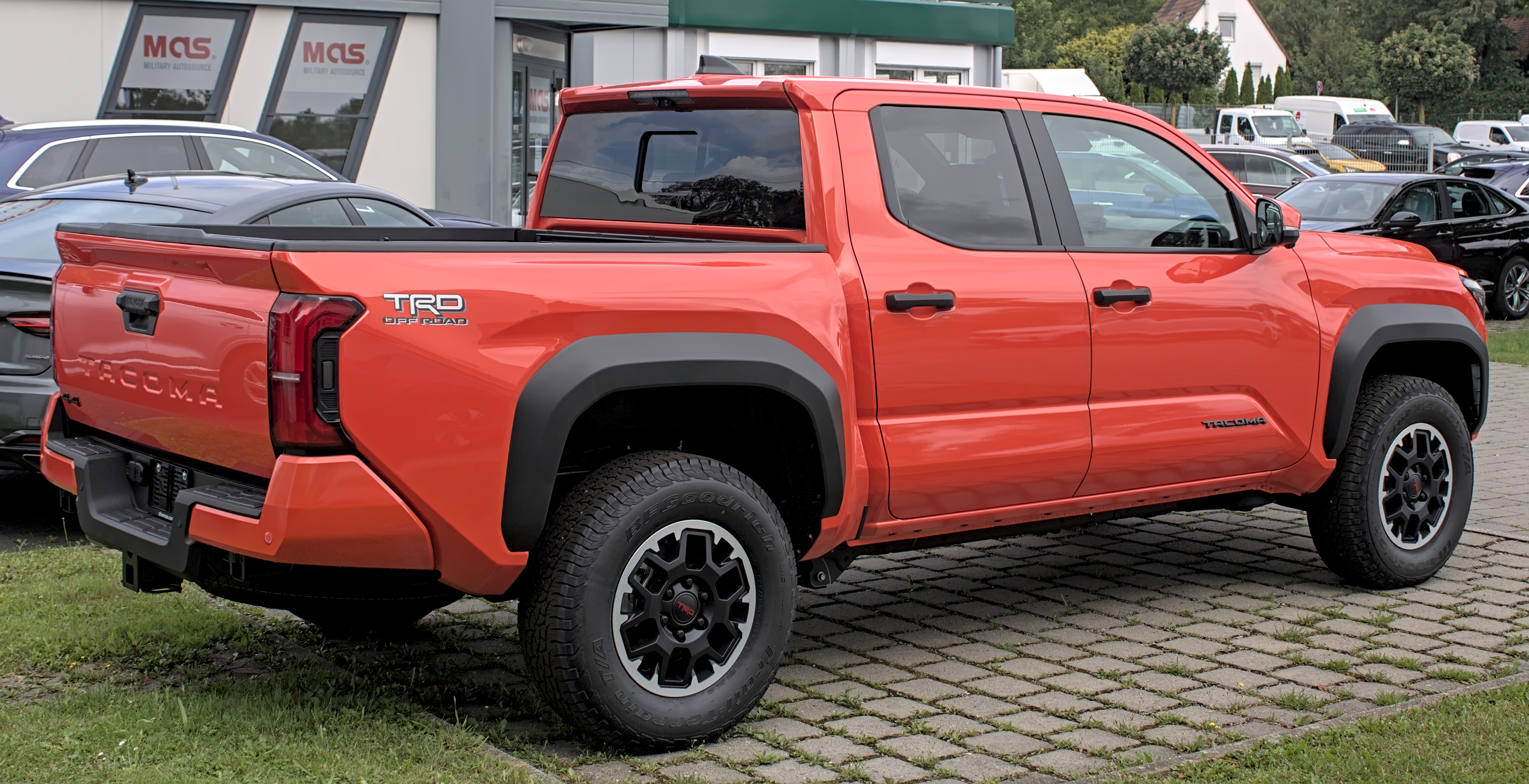
The 4th generation (2024+) changed enough underneath — new stamping, a relocated tie-down layout, and in some cases a different bed-floor contour — that 2005–2023 mats do not reliably drop into a 2024+ bed without gaps or high spots. BedRug’s XLT line, for example, lists a dedicated part number for 2024–2026 Tacomas that’s a separate SKU from its 2005–2023 version, mirroring the same generational split that governs Tacoma bed racks (see our Toyota Tacoma bed rack fitment guide if you’re pairing a mat with a rack and want the stake-pocket-versus-accessory-rail breakdown). Always match the listing to your model year and bed length before ordering rather than assuming “Tacoma” alone is specific enough.
The Best Tacoma Bed Mats Worth Buying
BedRug XLT Bed Mat
BedRug’s XLT is a carpet-topped composite mat built around roughly ¾-inch closed-cell foam padding under a soft-touch, waterproof, stain-resistant fiber surface. It’s sold in Tacoma-specific fitments including a dedicated 2024–2026 version separate from the 2005–2023 mat, runs about $229.95, and carries a limited lifetime warranty (ExtremeTerrain, retrieved 2026-08-11). It’s the plushest, quietest-riding mat in this lineup — cargo doesn’t rattle or slide on it the way it can on bare rubber — but the carpet surface takes more effort to hose out after a muddy hauling job than a smooth rubber mat does.
Best for: owners who want the mat to double as a soft surface for gear, pets, or camping setups in the bed, not just abrasion protection.
WeatherTech TechLiner
WeatherTech’s TechLiner is a rigid, custom-molded plastic composite mat that follows the exact contour of the Tacoma bed floor, including around the wheel wells, rather than sitting as a flat sheet. It’s sold separately for 5-foot and 6-foot beds on 2005–2021 Tacomas, priced from roughly $189 to $205 depending on bed length (Pure Tacoma, retrieved 2026-08-11). Because it’s rigid rather than flexible rubber, it doesn’t shift or bunch up the way a looser-fitting mat can, but that same rigidity means it doesn’t roll up for storage if you ever want the bed mat-free.
Best for: owners who want the tightest wheel-well contour fit and don’t mind a firmer, less cushioned floor feel.
Husky Liners Heavy Duty Bed Mat
Husky Liners builds its Heavy Duty mat from a rubberized DuraGrip HD compound with raised nibs on the underside that let air circulate and moisture drain out from under the mat instead of pooling against the bed floor. Pricing starts around $159.99, and installation is tool-free, drop-in (Radco, retrieved 2026-08-11). It’s resistant to most automotive chemicals, which matters if you routinely haul anything that might leak — paint cans, fertilizer, a leaking cooler.
Best for: owners who want drainage nibs specifically to avoid moisture getting trapped under the mat over a wet season.
Dee Zee Heavyweight Bed Mat
Dee Zee’s Heavyweight mat is a straightforward solid rubber sheet, sold as a custom fit for Tacoma with separate part numbers for the 5-foot bed (DZ86963) and 6-foot bed (DZ86964), both covering the 2005–2023 generations. It’s priced around $134, making it one of the more affordable custom-fit options in this roundup (Upfit Supply, retrieved 2026-08-11). Solid rubber means less cushioning than a foam-backed mat, but also less to tear or compress under a heavy toolbox that sits in one spot for years.
Best for: budget-conscious buyers who want a solid rubber mat rather than a foam-backed one, without going universal/trim-to-fit.
Gator by RealTruck Rubber Bed Mat
Gator’s rubber mat is one of the least expensive custom-fit options for the Tacoma, starting around $100.99 and sold in generation- and bed-length-specific part numbers, including a 5’2″ bed fitment for 2016–2022 trucks (RealTruck, retrieved 2026-08-11). It skips the foam padding and drainage-nib features of pricier mats, but it’s still cut to the bed’s exact shape rather than sold as a trim-to-fit universal sheet, which keeps installation simple.
Best for: owners who want a custom-cut mat on the tightest budget without stepping down to a universal trim-yourself product.
Rugged Liner Solid Rubber Bed Mat
Rugged Liner’s mat is a heavy-gauge solid rubber sheet sold as a Tacoma-specific custom fit, positioned similarly to Dee Zee’s Heavyweight mat in the lineup — no foam layer, straightforward drop-in installation, and pricing that typically lands in the $110 to $150 range depending on retailer and bed length. It’s a common pick for owners who already use a tonneau cover and don’t need the plush carpet surface of a BedRug, since the cover keeps direct sun and rain off the mat anyway.
Best for: owners running a tonneau cover who want simple floor protection without paying for features a covered bed doesn’t need.
Bed Mat Specs at a Glance
| Mat | Material | Tacoma Fitment | Approx. Price |
|---|---|---|---|
| BedRug XLT | Carpet-top composite, ¾″ foam | 2005–2023 and separate 2024–2026 SKU | ~$229.95 |
| WeatherTech TechLiner | Rigid molded composite | 2005–2021, 5-ft or 6-ft bed | ~$189–$205 |
| Husky Liners Heavy Duty | Rubberized DuraGrip HD w/ drain nibs | Generation-specific drop-in | ~$159.99+ |
| Dee Zee Heavyweight | Solid rubber | 2005–2023, 5-ft or 6-ft bed | ~$134 |
| Gator Rubber Bed Mat | Solid rubber | Generation- and length-specific | ~$100.99+ |
| Rugged Liner Solid Rubber | Solid rubber | Custom Tacoma fit | ~$110–$150 |
Approximate Price Range by Mat
Universal Trim-to-Fit Mats: When They Make Sense
Every mat above is a Tacoma-specific custom fit, but universal rubber mats sold by the roll or in a generic rectangle exist too, and they’re worth mentioning because they solve a different problem. A universal mat costs less — often $50 to $80 — and it’s the only option if you’re covering a bed with a non-standard modification, like a spray-in liner you want a removable layer over, or a bed you’ve already cut for a slide-out drawer system. The tradeoff is that you’re trimming it yourself with a utility knife around the wheel wells and tie-down anchors, and a rough cut leaves gaps that custom-fit mats don’t have. If your Tacoma bed is stock, a custom-fit mat is worth the extra cost for the cleaner fit alone.
If you’re running a tonneau cover over the bed, it’s worth checking our roll-up tonneau cover guide for how a soft cover’s lack of a weight rating interacts with cargo sitting directly on a bed mat underneath — the cover keeps rain off the mat, but it isn’t rated to bear the load of anything stacked against it. And if you’re pairing a bed mat with a bed rack rather than a cover, our Toyota Tacoma bed rack guide covers which rack SKU matches your Tacoma’s generation, since rack leg placement can land directly on the mat’s surface and is worth checking before you buy either accessory.

Installing and Maintaining a Bed Mat
Custom-fit Tacoma mats are designed to drop in without tools — the mat’s molded shape and weight generally hold it in place against normal driving, though a few brands include tabs or clips that hook onto factory tie-down loops for extra security on rough roads. Before installing any mat, clean and dry the bed floor completely; trapping dirt, sand, or moisture under a new mat defeats the point of protecting the paint, since grit under a mat can grind against the floor coating just as much as it would loose in an unprotected bed.
Pull the mat out periodically — every few months for a truck used for regular hauling, less often for light use — and hose off both the mat and the bed floor underneath. This is the maintenance step universal spray-in liner owners don’t get to skip past: a drop-in mat’s biggest advantage over a spray-in coating is that you can actually see and clean the metal underneath it, catching a scratch or the start of surface rust before it becomes a real problem.
Frequently Asked Questions
Do I need a bed mat if my Tacoma has a spray-in liner?
Not usually. A spray-in liner already covers the floor and walls with a bonded, abrasion-resistant coating, so adding a mat on top is mostly redundant unless you specifically want a removable, cushioned surface over the coating for gear or pets. Most owners choose one or the other, not both.
Will a 3rd-gen Tacoma bed mat fit a 4th-gen truck?
No, not reliably. The 4th-gen (2024+) Tacoma bed differs enough in floor contour and tie-down layout that manufacturers like BedRug sell a separate part number for 2024–2026 trucks rather than extending their 2005–2023 mat to cover it. Order the listing that specifically names your model year.
Does a bed mat protect against rust?
It helps, but only if you keep it clean and dry underneath. A mat blocks direct scratches and most surface moisture from sitting on the paint, but if sand, road salt, or standing water gets trapped between the mat and the floor and stays there, it can accelerate corrosion rather than prevent it. Pull the mat and clean underneath periodically.
Is a carpet-top mat like BedRug XLT harder to clean than rubber?
Yes, generally. A smooth rubber mat like Dee Zee’s Heavyweight or Gator’s rubber mat rinses off quickly with a hose. A carpet-top composite mat like BedRug’s XLT is more comfortable and quieter for cargo, but mud and debris work into the fiber surface and typically need a stiff brush rather than just a rinse.
Can I install a bed mat myself, or does it need a shop?
Custom-fit drop-in mats are designed for owner installation — no tools, no drilling, typically a five- to ten-minute job of setting the mat into the bed and, on some models, clipping it to the factory tie-down loops. This is one of the main reasons drop-in mats outsell spray-in liners as an entry-level bed protection option.
The Bottom Line
A Tacoma bed mat is the lowest-cost, lowest-commitment way to keep the factory bed floor from scratching, denting, and eventually rusting under regular cargo. The generation and bed-length split matters more than the brand: get a mat cut for your specific model year and bed length first, then pick based on material preference — BedRug’s XLT for cushioned carpet comfort, WeatherTech’s TechLiner for the tightest contour fit, Husky Liners for built-in drainage, and Dee Zee, Gator, or Rugged Liner if solid rubber at a lower price is all you need. None of these mats add hauling capacity or tie-down points on their own, so if your build also needs a rack or a cover, check fitment on those separately against your Tacoma’s generation — the same 2nd/3rd-gen versus 4th-gen split that governs mats governs almost every other bed accessory on this truck.