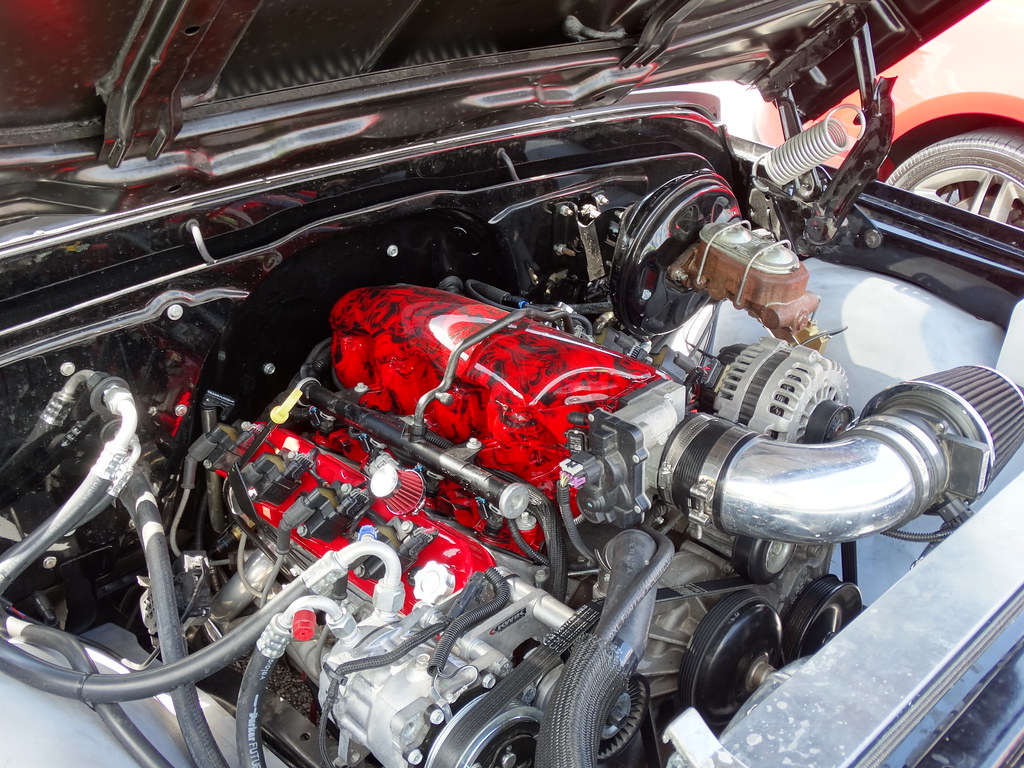
The 5.3 Vortec is one of the most boost-tolerant factory engines GM ever built, and turbo kit listings for it lean hard on that reputation — big horsepower numbers, bolt-on simplicity, keep your AC and power steering. Most of that is true. What those listings skip is that “5.3 Vortec” covers two different blocks with different tolerance for boost, that the transmission behind it is usually the first thing to give up, and that turbocharging a street-driven gasoline truck raises an emissions question almost nobody selling these kits mentions.
This guide covers what to check before buying, not just which kit to buy.
Key Takeaways
- The 5.3 Vortec ships in two different blocks: the iron LM7 and the aluminum LM4. For boost, the iron LM7 is the one to build on — it tolerates cylinder pressure the aluminum block does not.
- A healthy stock-bottom-end iron 5.3 commonly survives in the 500–600 horsepower range with conservative boost and a proper tune; daily-driver setups are often kept around 7–11 psi rather than pushed to the kits’ advertised maximums.
- The 4L60E automatic behind most of these trucks has a stock torque capacity around 330–380 ft-lb and is widely considered the limiting factor before the engine itself, especially at its weak 3-4 clutch pack and sun shell.
- The EPA treats aftermarket forced-induction kits on a street-driven gasoline engine as potential tampering under the Clean Air Act unless the installer has a documented reasonable basis showing no adverse emissions effect, or the part carries a CARB Executive Order.
First: Which Block Do You Actually Have?
“5.3 Vortec” is a displacement, not one engine. The two common truck variants split on block material, and that split matters more for a turbo build than almost any other spec.
The LM7 is the iron-block 5.3, used across 1999–2007 Chevy and GMC trucks, vans and SUVs. The LM4 is the aluminum-block 5.3 used in some 2003–2005 trucks and SUVs where weight mattered more than boost tolerance. Enthusiast consensus on this is consistent: iron block strength makes the LM7 the clear choice for boost or nitrous, while the LM4’s advantage is lower weight for a naturally aspirated build (OnAllCylinders, retrieved 2026-07-29).
Check your VIN’s 8th digit or the engine block casting before buying anything. A turbo kit does not care which block it bolts to; the block cares a great deal once boost starts building.
How Much Boost a Stock 5.3 Actually Tolerates
Kit marketing tends to lead with the biggest achievable number. Owners running these engines day to day describe something more conservative.
Reported daily-driver boost levels commonly range from about 7 to 15 psi, with one experienced owner specifically capping a daily-driven 5.3 at 11 psi on 91 octane. A healthy stock-bottom-end iron 5.3 with proper ring gap, strong fuel delivery and a safe tune is often cited as surviving in the 500–600 horsepower range (SlashGear, retrieved 2026-07-29). Enthusiasts running smaller turbos and higher boost, up toward 20 psi, do exist — but that territory trades daily-driver reliability for track-day peak numbers, and it is not the same use case a bolt-on kit is marketed for.
Treat these as owner-reported figures, not engineering test data — nobody publishes a controlled failure study on a used truck engine. The direction is consistent across sources: conservative boost with a real tune survives; pushing toward advertised maximum kit boost on stock internals is where head gaskets and head bolts become the failure point.
What a Kit Actually Includes
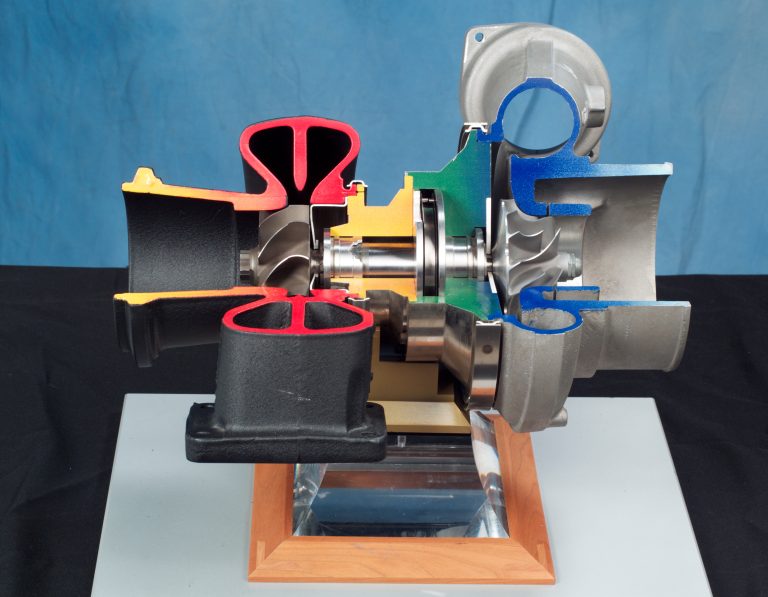
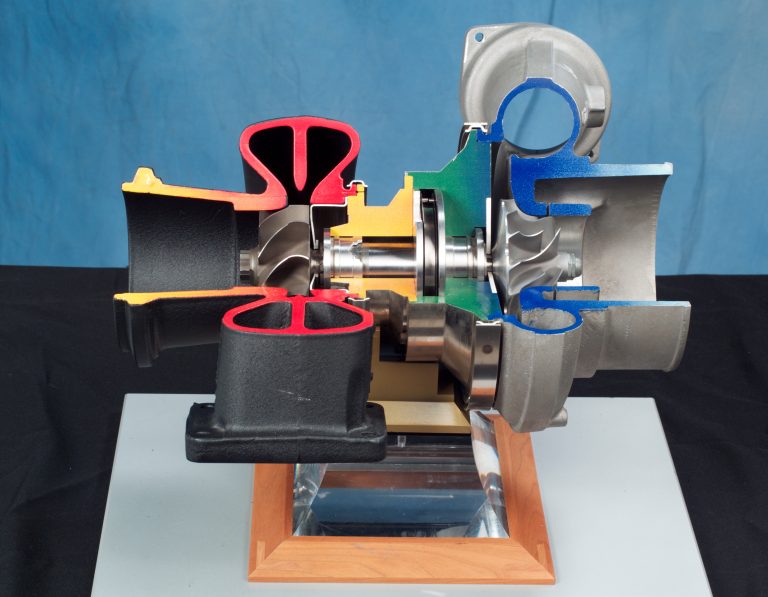
Complete single-turbo kits for the 5.3 platform typically bundle a T4-frame turbocharger, a cast T4 manifold, a front-mount intercooler with aluminum piping, a manual boost controller, and a turbo oiling kit, while retaining air conditioning and power steering on most applications (retailer kit listing, retrieved 2026-07-29). That is a reasonable baseline — the parts that get boost onto the engine safely.
What is routinely not in the box, and needs pricing separately:
- Fuel system upgrades. Stock injectors and pump are sized for a naturally aspirated engine. Boost without proportionally more fuel is how you get a lean condition and a burnt piston.
- A standalone or piggyback tune. A manual boost controller sets the boost target; it does not correct fueling, timing, or shift points for the new airflow. Every credible source on this build treats a proper dyno tune as non-negotiable, not optional.
- Wideband O2 monitoring. You need to see air-fuel ratio in real time once boost is on, not assume the tune is holding.
The Transmission Is Usually the Real Limit
This is the part most turbo kit shopping skips entirely, and it is often the first thing that actually breaks.
Most 5.3-equipped trucks from this era run a 4L60E automatic. Its stock torque capacity is commonly cited around 330–380 ft-lb, and its recognized weak points are the 3-4 clutch pack and the sun shell, which is prone to cracking under sustained load. A stock 4L60E is generally not considered suitable for sustained power beyond roughly 400–450 hp without internal upgrades — built units with a stronger clutch pack, band and shift kit are commonly cited as capable of holding 550–625 realistic horsepower (LS1TECH forum consensus, retrieved 2026-07-29).
Put plainly: a turbo kit alone can put the engine within reach of numbers the stock transmission was never built to hold. Budget for a transmission build, or a manual swap, alongside the turbo kit rather than after the transmission tells you it was needed.
The Legal Question Kit Listings Skip
Adding forced induction to a street-driven gasoline vehicle is not automatically illegal, but it is not automatically clear of federal emissions law either, and almost no kit listing mentions this.
The Clean Air Act prohibits tampering with emissions controls and prohibits manufacturing, selling or installing aftermarket devices intended to defeat those controls. EPA generally takes no enforcement action against aftermarket parts where the manufacturer or installer can demonstrate a “reasonable basis” for believing the part will not adversely affect emissions performance — for example, where emissions testing demonstrates no adverse effect, or where the part carries a California Air Resources Board Executive Order covering that specific device on that specific vehicle model (EPA Enforcement Alert, retrieved 2026-07-29).
A generic single-turbo kit built for a 20-year-old truck engine, sold without a CARB EO covering your specific vehicle and without emissions testing behind it, does not clear that bar. That does not mean every installer gets prosecuted — EPA has resolved just over 50 such cases since 2015, which is not a large number relative to how many kits are sold — but it does mean the legal footing is genuinely uncertain rather than settled, and state emissions testing programs are a separate and more immediate risk in states that run them.
If your truck is track-only, off-road-only, or otherwise exempt from on-road emissions requirements in your state, this section does not apply to you. If it is a daily driver in a state with emissions testing, budget the research time to find out what that testing program actually checks before you cut into the exhaust.
What to Verify Before You Buy a Kit
| Check | Why it matters |
|---|---|
| Block type (LM7 iron vs LM4 aluminum) | Determines realistic boost ceiling |
| Fuel system capacity at target boost | Stock injectors/pump are sized for NA power only |
| Transmission model and condition | 4L60E is often the first failure point, not the engine |
| Tuning plan and dyno access | A boost controller alone does not correct fueling or timing |
| State emissions testing requirements | Separate legal exposure from the federal tampering question |
| Fuel octane requirement at target boost | 91+ octane is the consistent recommendation once boost is added |
Frequently Asked Questions
Is turbocharging a 5.3 Vortec street legal?
It depends on jurisdiction and on whether the installation can meet EPA’s reasonable-basis standard or carry a CARB Executive Order for your specific vehicle. This is a genuinely unsettled area for generic aftermarket kits, not a solved one — verify your state’s emissions testing rules before installing.
How much horsepower can a stock 5.3 handle with a turbo?
Owner reports commonly put a healthy stock-bottom-end iron 5.3 in the 500–600 horsepower range with conservative boost, strong fueling and a proper tune. Higher figures are achievable but trade daily-driver reliability for peak numbers.
Do I need to upgrade my transmission for a turbo 5.3?
If it is a stock 4L60E, very likely yes before you reach the engine’s own limits. Its commonly cited stock torque capacity of roughly 330–380 ft-lb and known weak points make it the more probable failure point in a turbo build.
LM7 or LM4 for a turbo build?
LM7, the iron block. It tolerates cylinder pressure under boost better than the aluminum LM4, which is the better choice for a naturally aspirated, weight-conscious build instead.
What else do I need besides the turbo kit itself?
Budget separately for fuel system capacity at your target boost, a proper dyno tune, wideband AFR monitoring, and likely transmission work. The kit gets air into the engine; it does not handle the rest of the build on its own.
The Bottom Line
Confirm you have an iron LM7 before shopping kits at all. Plan your boost target around daily-driver figures reported by real owners — 7 to 11 psi — rather than the peak number on the box, unless this is a track-only build. Price the fuel system, the tune, and very likely the transmission alongside the turbo kit itself. And check your state’s emissions testing requirements before you assume a bolt-on kit is automatically legal for street use.
Exhaust and Engine Work in Keyport, NJ
Forced induction changes what your exhaust system needs to handle. Discount Brakes and Mufflers has served Keyport and Monmouth County for over 40 years, bending and fabricating custom exhaust in-house, and we repair rather than replace wherever the part allows.
Get a price in minutes with our instant estimate tool, see what is involved in muffler and exhaust repair, or contact our Keyport shop.
Note: this is a buyer’s guide compiled from manufacturer information, EPA enforcement guidance, and owner-reported figures on enthusiast forums; the boost and horsepower figures are not controlled engineering test data. It is not legal advice — verify current federal and state emissions requirements before modifying your vehicle. Discount Brakes and Mufflers specializes in brakes, mufflers, catalytic converters and custom exhaust; we do not install turbo kits or perform engine builds.