A replacement brake dust shield is inexpensive on its own — parts commonly run in the $30–$150 range depending on vehicle, with an example like a Dorman shield listed around $149.95 — but the real driver of failure is corrosion, not wear from friction, since the shield sits directly exposed to road salt, moisture, and debris thrown up by the wheel (AutoZone, retrieved 2026-08-08). A rusted-through shield eventually curls and rubs against the rotor, producing a scraping noise that’s often misdiagnosed as a worn brake pad.
This guide covers what a brake dust shield actually does, why corrosion is the primary failure mode rather than mechanical wear, how to tell a dust shield noise apart from a worn pad wear indicator, and what to check before replacing one.
Key Takeaways
- A brake dust shield (backing plate shield) protects the rotor from debris and helps manage heat dissipation, sitting just behind the rotor’s braking surface.
- Corrosion from road salt and moisture, not mechanical wear, is the primary reason dust shields fail and need replacement.
- A rusted, curled shield rubbing against the rotor produces a scraping sound that’s frequently mistaken for a worn brake pad wear indicator.
- Replacement parts commonly run $30–$150 depending on vehicle, with labor typically requiring wheel and sometimes caliper removal to access.
- Vehicles in road-salt regions see dust shield corrosion and failure far more often than vehicles in dry climates.
What a Dust Shield Actually Does
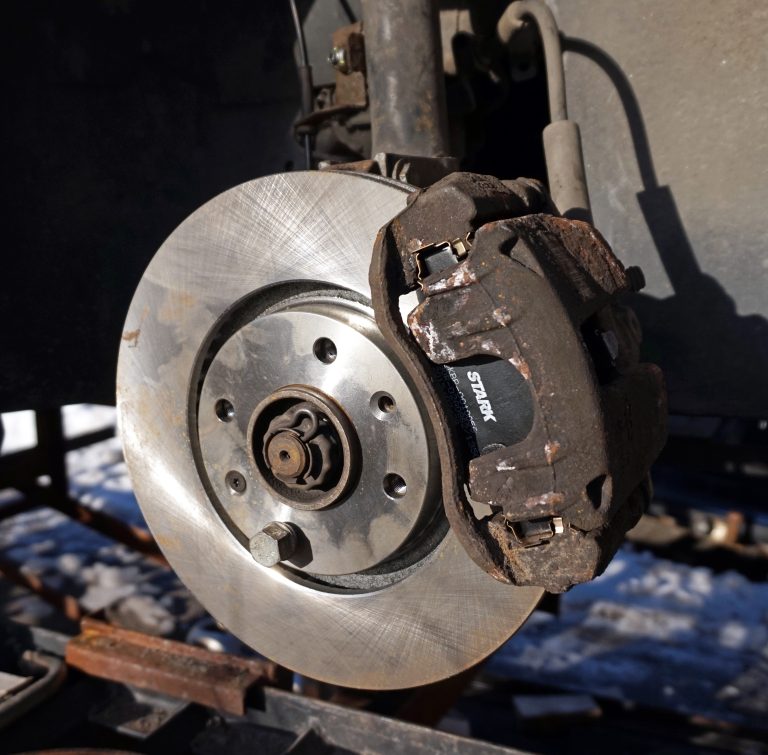
The dust shield (also called a backing plate shield or splash shield) is a thin metal plate mounted behind the rotor, between the rotor and the suspension knuckle. Its job is to block road debris, water, and dirt from directly contacting the rotor’s braking surface while also helping direct airflow for heat dissipation during braking. It’s not a structural or load-bearing part — its function is purely protective, but a failed shield can still cause real problems once it deforms enough to contact the spinning rotor.
Why Corrosion, Not Wear, Causes Failure
Unlike brake pads or rotors, which fail from mechanical friction wear over miles driven, a dust shield typically fails from corrosion working through thin sheet metal over years of exposure to road salt, moisture, and debris thrown up from the road surface (AutoZone, retrieved 2026-08-08). This is why vehicles in road-salt regions see dust shield failures far more often than vehicles in dry climates, regardless of mileage or driving style — the failure timeline tracks with corrosive exposure, not brake usage.
Dust Shield Noise vs. Worn Pad Indicator: Telling Them Apart
Both a rubbing dust shield and a worn brake pad wear indicator can produce a metallic scraping sound while driving, which is why this is a commonly misdiagnosed noise. A pad wear indicator tends to produce a consistent scrape that’s present at low speed and disappears completely when the brakes are applied firmly (since the indicator tab retracts from the rotor under pad pressure). A rubbing dust shield often produces an intermittent, lighter scraping or ticking noise that can vary with steering angle or suspension travel, since the deformed shield may only intermittently contact the rotor depending on wheel position. Visually inspecting the shield for visible rust-through or a warped, curled edge is the most reliable way to confirm which part is actually the source.
Can You Repair a Shield Instead of Replacing It?
Minor rust or a slightly bent shield can sometimes be corrected by hand-bending the metal back away from the rotor’s path and cleaning off surface rust with a wire brush, which is a reasonable temporary fix if a replacement part isn’t immediately available. This is only a stopgap, though — once corrosion has progressed enough to deform the shield, the underlying metal is typically weakened across a wider area than what’s visibly curled, and it tends to warp again within a relatively short time. For any shield with visible rust-through (actual holes, not just surface discoloration), replacement is the only reliable fix, since a hole-riddled shield has already lost the structural integrity needed to hold its shape long-term.
Inspecting for Early Signs Before Failure
Catching shield corrosion before it deforms enough to contact the rotor means periodically inspecting the shield during routine brake pad checks, looking specifically for surface rust bubbling under paint, visible pitting, or any section of the shield that’s started to separate slightly from its mounting points. Vehicles in road-salt states benefit from this inspection at every pad change at minimum, since the failure timeline in those regions can be considerably faster than in dry climates. If you catch early-stage corrosion, a rust-inhibiting coating applied to the shield’s exposed surfaces can meaningfully slow further deterioration, buying time before a full replacement becomes necessary.
What Replacement Actually Involves
Accessing a dust shield typically requires removing the wheel and, on many vehicles, the caliper and rotor as well, since the shield sits behind the rotor. This is why labor cost matters more than part cost in this category — the part itself is inexpensive, but the teardown to reach it is the same amount of work as a rotor or caliper job, so it’s often worth combining a dust shield replacement with other brake service happening on the same corner. If you’re already inspecting the wheel cylinder or backing plate on a drum brake vehicle, our brake wheel cylinder guide covers a related component worth checking during the same teardown.
Material and Coating Differences Between Brands
Replacement dust shields vary in base metal thickness and protective coating, and these differences directly affect how long the replacement lasts before facing the same corrosion issue that took out the original. Thicker-gauge steel resists deformation from minor impacts better and takes longer to rust through completely, while a quality e-coat or galvanized finish meaningfully slows the corrosion process compared to bare or minimally coated steel. Brands like Dorman and ACDelco typically specify their coating process in product documentation; when comparing options at different price points, check whether that documentation exists at all, since budget parts with no stated coating spec are more likely to use minimal or no additional corrosion protection beyond base metal.
Regional Climate and Replacement Frequency
Vehicles that spend their service life in dry, low-salt climates like the desert Southwest can go the life of the vehicle without ever needing a dust shield replacement, while the same vehicle model driven primarily in the Rust Belt or coastal salt-air regions might need replacement multiple times over the same mileage. This regional variance is worth factoring into whether it’s worth paying extra for a premium-coated shield versus a basic one — in a low-corrosion climate, the coating quality difference may never actually matter, while in a heavy road-salt region, the extra corrosion resistance can meaningfully extend the interval before the next replacement is needed.
Frequently Asked Questions
What causes a brake dust shield to fail?
Corrosion from road salt and moisture is the primary cause, not mechanical wear. Vehicles in road-salt regions see this failure far more often than vehicles in dry climates.
How do I know if it’s my dust shield or brake pads making noise?
A worn pad indicator produces a consistent scrape that disappears when you brake firmly. A rubbing dust shield often produces an intermittent noise that can vary with steering angle. Visual inspection for rust-through or curling confirms it.
Is dust shield replacement expensive?
The part itself is affordable, typically $30–$150, but labor can be significant since the wheel and often the caliper and rotor need removal to access it.
Can I drive with a bent or rusted dust shield?
It’s not immediately dangerous for braking performance since the shield isn’t structural, but a shield rubbing against a spinning rotor will wear a groove into both parts over time and the persistent noise makes it hard to identify other, more serious brake issues by sound.
Does a dust shield affect brake cooling?
Yes, indirectly. Part of its design purpose is directing airflow around the rotor for heat dissipation. A missing or severely deformed shield can slightly reduce that airflow management, though this effect is generally secondary to its main protective function.
Aftermarket vs. OEM Replacement Parts
Aftermarket dust shields from brands like Dorman and A-Premium generally cost less than OEM replacements sourced through a dealer, and for a part whose main job is corrosion resistance rather than precision fit tolerances, aftermarket options are usually a reasonable choice as long as the specific part is confirmed to match your vehicle’s exact application. Where OEM parts sometimes have an edge is in exact factory fitment and finish matching, which matters more on newer vehicles still under warranty or where a precise factory-correct appearance is a priority. For most drivers focused purely on function and corrosion resistance, a quality aftermarket shield with a documented coating process delivers comparable real-world durability at a lower price point.
DIY Replacement vs. Professional Service
Because accessing the shield typically requires wheel and often caliper or rotor removal, this job sits at a moderate DIY difficulty level — straightforward for anyone comfortable with basic brake work, but not a five-minute bolt-on task. If you’re already removing the caliper and rotor for a pad or rotor replacement, adding the dust shield to that same job costs relatively little extra time. If it’s the only reason for the teardown, weigh your own comfort level with caliper handling and brake system safety against the labor cost of having a shop combine it with your next scheduled brake service.
Preventive Measures to Slow Future Corrosion
After installing a replacement shield, a light coat of rust-inhibiting spray on the shield’s exposed surfaces can meaningfully extend its service life, particularly in road-salt regions where the replacement will otherwise face the same corrosive exposure that damaged the original. Reapplying this coating annually, ideally timed with seasonal tire changes when the wheel is already off, is a low-effort way to get more years out of a new shield before facing the same failure pattern again. Washing the undercarriage periodically during winter months to rinse accumulated road salt off the shield and surrounding components is another simple, low-cost habit that measurably slows corrosion-driven part failures across the whole brake and suspension system, not just the dust shield specifically.
The Bottom Line
A scraping noise doesn’t automatically mean worn brake pads — check the dust shield for rust-through or curling first, especially on vehicles that see regular road salt exposure. Since accessing the shield requires the same teardown as other brake work, it’s most cost-effective to replace it alongside pads, rotors, or a wheel cylinder rather than as a standalone job.