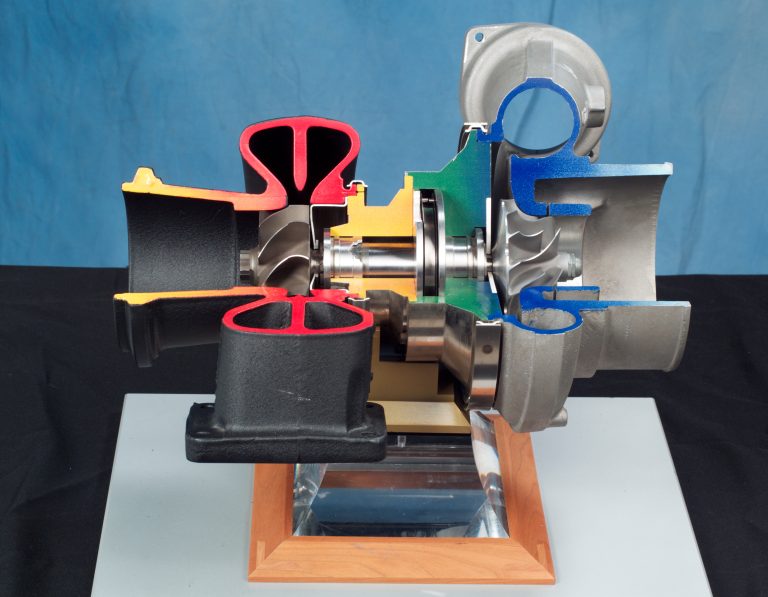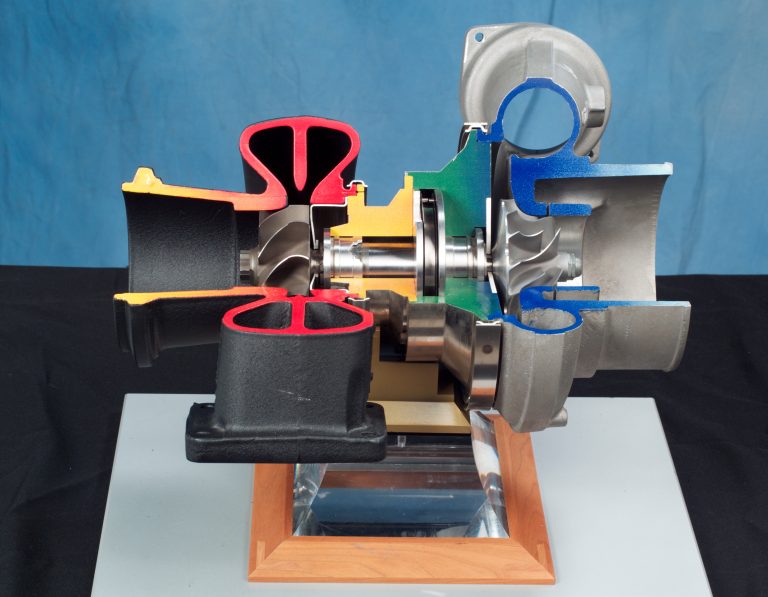
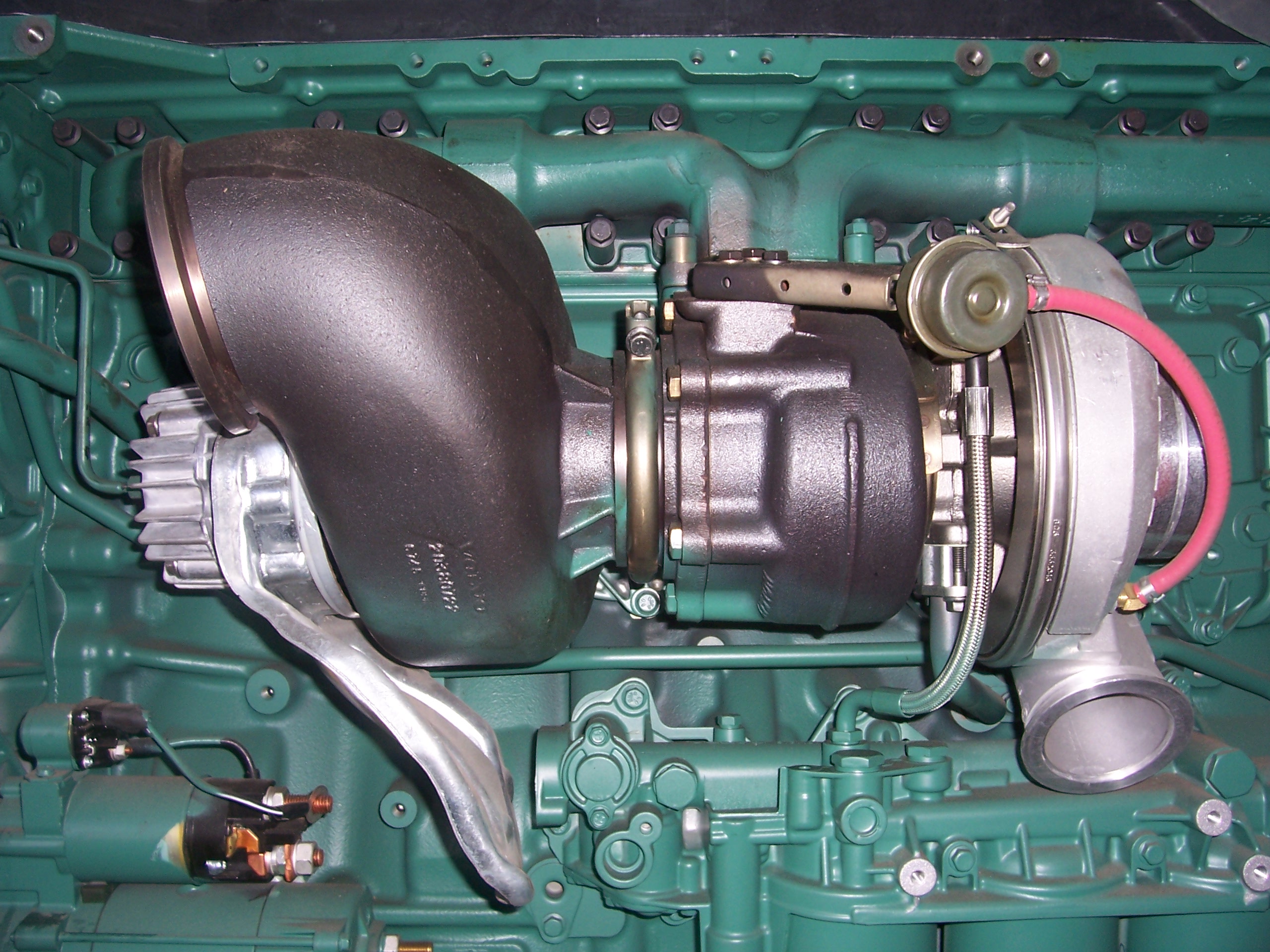
Marketing copy for ball bearing turbos loves the number 25% — as in, up to 25 percent more boost in the first 1.5 seconds off idle compared to a journal bearing turbo. That claim is real, but it’s usually comparing two different turbos, not the same turbo built two ways. Test the identical housing and wheel with only the bearing swapped, and the actual gain shrinks to somewhere around 150–300 RPM of quicker spool — a real, measurable improvement, and a much smaller one than the marketing number suggests.
This guide covers which ball bearing turbos are worth the premium, what the spool advantage actually looks like in a controlled comparison, and the oil system requirements that come with the upgrade whether you notice them or not. If you’re still deciding on turbo size and flange compatibility before bearing type even enters the picture, our universal turbo kit guide covers that groundwork first.
Key Takeaways
- Same-turbo, bearing-only comparisons show ball bearings spooling roughly 150–300 RPM faster than journal bearings — real, but far short of the 15–25% figures used to compare entirely different turbo models.
- Ball bearing turbos commonly carry a $500–$900 price premium over an equivalent journal bearing unit.
- Ball bearing center sections want 40–45 psi oil pressure at max engine speed, typically delivered through a roughly 0.040″ oil restrictor, and full synthetic oil is the standard recommendation, not a suggestion.
- Ball bearing cartridges are generally not field-rebuildable the way journal bearings are — a worn cartridge gets replaced as a unit, while journal bearings are precision brass sleeves a shop can service.
The Turbos Worth Buying
Garrett GTX Series
Garrett’s GTX line ships with ball bearing center sections as standard across the range, paired with Garrett’s forged mill compressor wheels and a broad spread of frame sizes from mild street builds up through serious power. Garrett has historically sat at the higher end of the price spectrum among the major turbo brands, which buyers generally attribute to the brand’s OEM manufacturing pedigree and consistent build quality.
Best for: builders who want a widely supported, well-documented turbo with strong resale and a large base of published compressor maps to tune against.
BorgWarner EFR Series
BorgWarner’s EFR series also runs ball bearings as standard, and is frequently cited by builders as offering strong spool and response for the money, particularly in drift and street applications within its power range. Pricing generally sits below Garrett’s for comparable frame sizes, which is part of why it shows up so often as the value pick in forum comparisons.
Best for: street and drift builds where quick spool at a lower price point matters more than chasing peak numbers.
Precision Pro Mod / CEA Ball Bearing Line
Precision sells both journal bearing (Sportsman) and ball bearing (Pro Mod/CEA) versions of many frame sizes, which makes it one of the easier brands to do a direct apples-to-apples bearing comparison within a single product line. Precision is commonly cited as the most budget-friendly of the major brands at a given frame size.
Best for: builders who want to stay within one brand’s ecosystem and explicitly choose between journal and ball bearing at the same turbo size.
Brand Positioning at a Glance
| Brand / line | Bearing default | General price position |
|---|---|---|
| Garrett GTX | Ball bearing standard | Highest of the major brands at a given frame size |
| BorgWarner EFR | Ball bearing standard | Mid-range, frequently cited value pick |
| Precision Sportsman | Journal bearing | Lowest of the major brands |
| Precision Pro Mod / CEA | Ball bearing option | Mid-range, undercuts Garrett at comparable sizes |
These are general market positions repeated across buyer forums, not a single manufacturer’s published price list, and actual pricing shifts by frame size, housing configuration, and internal wastegate options. Use the table to set expectations going in, then get an actual quote for your specific application before committing to a brand on price alone.
How to Tell What Bearing Type You’re Actually Buying
Not every listing states the bearing type clearly, and “ball bearing” is sometimes used loosely in budget and generic turbo listings. Check the manufacturer’s own spec sheet or part number breakdown rather than relying on a marketplace listing title — Garrett, BorgWarner, and Precision all publish bearing type as part of their official part number and spec documentation, and that’s the source to trust over a reseller’s product description.
If you’re buying used, a simple shake test on the compressor wheel gives a rough read: a small amount of tight, non-metallic play is normal for either bearing type, but a turbo that feels notably loose or gritty when the shaft is rocked has bearing wear worth investigating before it goes on an engine, regardless of which bearing type it started with.
How Much Faster Does a Ball Bearing Turbo Actually Spool?
The honest answer depends entirely on what’s being compared. Marketing material citing “up to 25% more boost in the first 1.5 seconds off idle” is typically describing a real-world test where the ball bearing turbo is also a different frame, wheel design, or housing — not a controlled, single-variable comparison.
The mechanism behind the real gain is straightforward: ball bearings roll rather than slide, which cuts friction and lets the shaft accelerate more freely, especially at low shaft speeds where a journal bearing’s oil film hasn’t fully developed. That’s a genuine advantage. It’s just a smaller one, in isolation, than the numbers used to sell entirely different turbo models against each other.
The Oil System Ball Bearing Turbos Actually Need
| Requirement | Common spec | Why it matters |
|---|---|---|
| Oil pressure at max engine speed | 40–45 psi | Too little starves the bearing; excess pressure can force oil past the seals |
| Oil feed restrictor | ~0.040″ orifice | Regulates feed pressure down from a high-pressure oiling system to what the cartridge wants |
| Oil type | Full synthetic, manufacturer-specified viscosity | Lower viscosity at operating temperature reduces drag on the balls and retainer, improving response |
None of this is exotic, but it’s not optional either. Confirm your actual feed pressure after any restrictor is installed rather than assuming a stock number applies, and don’t substitute a conventional oil for the manufacturer’s synthetic recommendation just because it’s cheaper — the bearing’s response and longevity both depend on getting this right.
Rebuildable or Not: The Real Ownership Cost Difference
Journal bearings are precision-machined brass sleeves, and a competent turbo shop can rebuild a worn journal bearing turbo relatively cheaply as routine service. Ball bearing cartridges generally aren’t field-rebuildable in the same way; when the cartridge wears out, the standard fix is replacing the cartridge as a complete unit rather than servicing individual components.
That doesn’t make ball bearing turbos less durable — published life expectancies commonly cite 100,000+ miles for a well-maintained unit, and load spread across multiple contact points is a genuine mechanical advantage. It does mean the eventual rebuild is a different kind of expense: a cartridge replacement rather than a bearing service. Journal bearing turbos, for their part, are more sensitive to oil quality and pressure lapses than their simpler construction might suggest — “cheaper to service” isn’t the same as “more forgiving of neglect.”
When the Premium Is Actually Worth Paying
On a small turbo in a daily-driven car, the 150–300 RPM real-world spool advantage is genuinely hard to feel behind the wheel, and the $500–$900 premium buys a smaller practical benefit than most buyers expect going in. On a larger turbo chasing serious power, where total rotating mass and friction losses compound, the same bearing swap has more to work with and the response difference becomes easier to notice, particularly in stop-and-go or road-course use where the turbo is constantly transitioning between speeds rather than sitting at a steady boost target.
If your build already needs a larger frame turbo for the power target, the ball bearing premium is a reasonable line item. If you’re choosing turbo size purely to get a ball bearing badge on a mild street build, the money is better spent elsewhere — a properly sized journal bearing turbo on the right exhaust manifold will usually outspool an oversized ball bearing unit on the wrong one. Compression ratio and fuel system limits matter here too; see our N54 and IS300 turbo kit guides for how those platform-specific ceilings interact with turbo sizing decisions.
Journal Bearing Isn’t Obsolete
It’s worth saying plainly: journal bearing turbos remain a completely reasonable choice, and the market keeps building them for a reason. They tolerate a wider range of oil quality and pressure situations without immediate damage, they’re cheaper to buy and cheaper to rebuild when they eventually wear, and on a budget build where every dollar is already accounted for, a well-matched journal bearing turbo on the correct manifold will beat a mismatched or oversized ball bearing turbo every time.
The decision isn’t “ball bearing is better” versus “journal bearing is worse.” It’s whether the specific, modest spool improvement a ball bearing offers is worth $500–$900 on your specific build, at your specific power target, given everything else that money could go toward instead — fuel system headroom, a properly sized manifold, or simply banking it for the tune.
Single vs. Dual Ball Bearing Configurations
Most ball bearing turbos use a single ball bearing cartridge supporting the shaft, but some higher-end options run dual ball bearings — one at each end of the shaft rather than a single combined cartridge. The dual configuration is generally associated with even tighter shaft control at extreme speeds, which matters most on the largest frame sizes running the highest shaft speeds, and correspondingly less on smaller street-sized turbos where a single cartridge already has more capability than the application needs.
Don’t chase a dual ball bearing spec on a turbo sized for a street build. It’s a real feature, but it solves a problem — shaft speed extremes at the top end of a frame size’s range — that a moderately sized street turbo isn’t going to encounter.
Frequently Asked Questions
How much faster does a ball bearing turbo actually spool?
In controlled, same-turbo comparisons where only the bearing changes, roughly 150–300 RPM faster is the commonly cited figure. Marketing claims of 15–25% gains are usually comparing entirely different turbo models, not an isolated bearing swap.
Do ball bearing turbos need special oil?
Full synthetic oil at the manufacturer’s specified viscosity is the standard recommendation, along with 40–45 psi feed pressure at max engine speed, typically regulated through a roughly 0.040″ restrictor.
How much more does a ball bearing turbo cost?
Commonly cited premiums run $500–$900 over an equivalent journal bearing turbo at the same frame size, brand and application dependent.
Can a ball bearing turbo be rebuilt?
Not in the same way a journal bearing can. Journal bearings are precision brass sleeves a shop can service; ball bearing cartridges are generally replaced as a complete unit when worn rather than rebuilt piece by piece.
Is a ball bearing turbo worth it for a daily driver?
Often marginal. On a small turbo at street power levels, the real spool advantage is a few hundred RPM, which is genuinely hard to feel. The premium tends to matter more on larger turbos and higher-power builds where the friction reduction has more total rotating mass to work against.
The Bottom Line
Buy the Garrett GTX or BorgWarner EFR if you want a well-documented, widely supported ball bearing turbo and don’t mind paying for the brand pedigree. Buy Precision’s Pro Mod/CEA line if you want the option to compare journal and ball bearing versions of the same frame size directly. But go in with realistic expectations: the same-turbo spool advantage is measured in hundreds of RPM, not tens of percent, and the premium pays off most clearly on larger turbos and serious power builds — not as a badge on a mild street car.