
Here’s the part most buyers skip past: a rear disc brake conversion kit doesn’t just bolt new hardware onto your axle and call it done. It changes how your entire hydraulic brake system behaves. Disc brakes need more fluid volume per stroke than drums, and they don’t need the residual pressure that keeps drum shoes from dragging. Bolt a disc kit onto a car that still has its original drum/drum master cylinder and combination valve, and you can end up with a spongy pedal, a rear brake bias that’s badly out of proportion, or both — even though every part in the kit is technically “correct” for your vehicle. It’s the single most common way a good conversion goes wrong, and most kit boxes don’t spell it out clearly.
This guide covers the conversion kits worth your money, what a kit actually includes, why drum-to-disc is worth doing on classic trucks and cars that came from the factory with rear drums, and — critically — how to get the master cylinder and proportioning valve side right so the new brakes actually work as designed. This post connects to several other guides on the site: if you’ve read up on how to check a brake drum’s discard diameter or shopped for brake shoes for the drums you’re about to retire, this is the next step up. And once the conversion is in, you’ll want to know where to land on ceramic brake pads for the new calipers, whether your master cylinder needs to change with the conversion, and what tool you’ll need in your box afterward for pad and caliper service.
Key Takeaways
- A quality drum-to-disc conversion kit for a classic truck or car typically runs from roughly $250 for a basic bolt-on rear kit up to $2,000+ for a complete four-wheel kit with a new master cylinder and booster — verify pricing at the retailer for your exact vehicle.
- The proportioning valve and master cylinder are the part of the job that gets skipped most often, and it’s the part most likely to leave you with a pedal that feels wrong or a brake bias that’s unsafe.
- Master Power Brakes, SSBC, Classic Performance Products (CPP), and Wilwood are the four brands with the deepest, best-documented application coverage for classic domestic vehicles.
- Disc brakes outperform drums mainly on heat dissipation, wet-weather bite, and how easy they are to inspect — not necessarily on raw stopping power at low speed.
- Installation complexity ranges from a Saturday-afternoon bolt-on rear kit to a multi-day job that touches spindles, brake lines, and the pedal assembly on some front conversions.
The Kits Worth Buying
Master Power Brakes Legend Series
Master Power Brakes has built its reputation specifically around drum-to-disc conversions for classic and muscle cars, and the Legend Series is its baseline conversion kit: OEM-style cast-iron calipers paired with vented rotors, sold as vehicle-specific kits rather than universal fit. It’s priced as the entry point in their lineup and is a straightforward upgrade path if you want factory-style looks and don’t need big-brake aesthetics. Master Power also offers the Legend Series HP with slotted/drilled rotors and ceramic pads, and the higher-end Rallye Series with 4-piston billet aluminum calipers for buyers who want a modern look behind their wheels. Best for: classic car and truck owners who want an OEM-appearance upgrade with minimal fuss. (Master Power Brakes, retrieved 2026-08-06)
SSBC Drum-to-Disc Rear Conversion Kits
SSBC-USA specializes heavily in rear drum-to-disc conversions for GM trucks and cars, with kits built around specific axle and bolt patterns (their listings are organized by application down to the half-ton 2WD C10/GMC truck level). SSBC markets its rear kits as delivering a meaningful jump in braking power over the stock rear drums they replace, and the company’s kits are designed as complete bolt-on packages rather than requiring you to source rotors and brackets separately. Best for: GM/Chevy truck and car owners who specifically need a rear-only conversion and want a kit engineered to their exact axle. (SSBC-USA, retrieved 2026-08-06)
Classic Performance Products (CPP) Spindle and Bracket Kits
CPP has one of the widest application ranges in the classic-vehicle conversion space, covering GM, Ford, and Mopar platforms from roughly the 1940s through the 1970s — including well-documented kits for 1963-70 Chevy/GMC trucks, 1968-72 Chevelle/El Camino, and 1960-62 C10 trucks. What sets CPP apart is that its more complete kits bundle the parts that actually solve the compatibility problem: a matched master cylinder and power booster assembly alongside the spindles, brackets, rotors, and calipers, rather than leaving you to source the hydraulic side separately. Best for: builders who want spindles, brackets, and a correctly matched master cylinder/booster in one box instead of piecing it together. (Classic Performance Products, retrieved 2026-08-06)
Wilwood Bolt-On Rear Kits
Wilwood isn’t a classic-car specialist in the same way as the three above — its catalog spans street, drag, and race applications — but its bolt-on rear conversion kits are organized by axle flange type (12-bolt, Ford 9-inch/”Big Ford,” and others) and axle offset, which makes it possible to find a precise fit for hot rod and muscle car rear ends outside the mainstream classic-truck market. Wilwood kits skew toward performance-caliper designs rather than OEM-look cast-iron pieces. Best for: builders working from a swapped or aftermarket rear axle who need a kit matched to flange type and offset rather than a specific factory VIN. (Wilwood Disc Brakes, retrieved 2026-08-06)
Why Convert From Drum to Disc
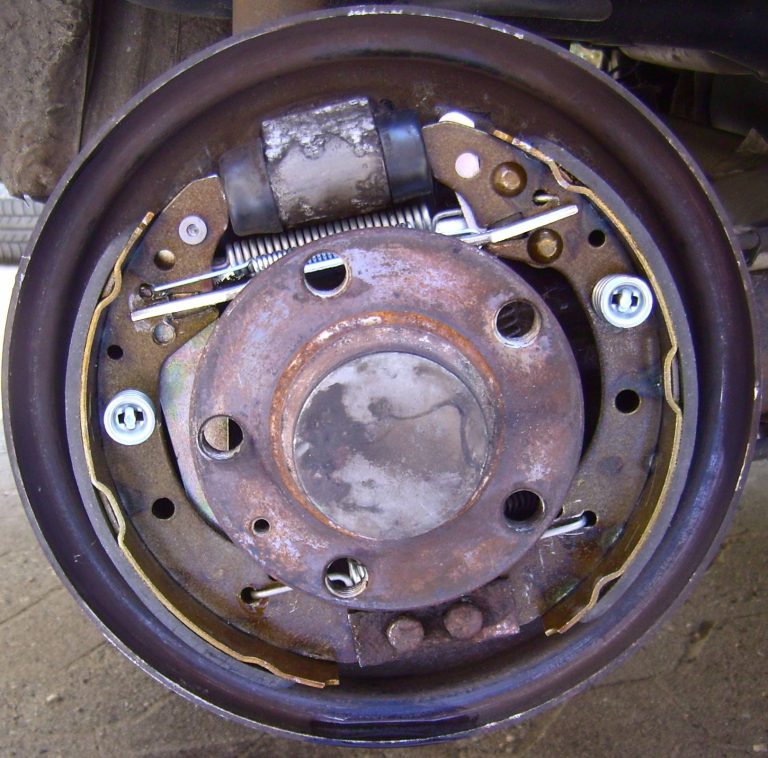
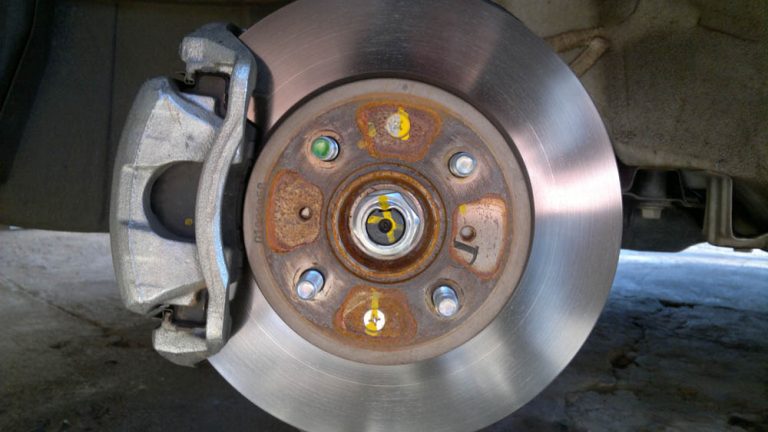
Drum brakes aren’t inherently unsafe — plenty of vintage vehicles ran them from the factory for decades without incident — but disc brakes have three real advantages that matter most under hard or repeated use. First, heat dissipation: a disc rotor sits exposed to open air and many are vented internally, so heat escapes quickly, while a drum’s enclosed design traps heat inside the assembly and contributes to brake fade on long descents or repeated hard stops. Second, wet-weather performance: an open rotor spins water off with every revolution, while a drum’s closed design can trap water and reduce initial bite until it clears. Third, inspection and maintenance: you can often glance at a disc brake’s pad wear without removing the wheel, while checking drum shoe wear requires pulling the drum off entirely (Rush Truck Centers; AutoZone, retrieved 2026-08-06).
What’s Included in a Typical Conversion Kit
A basic rear conversion kit generally includes vented or solid rotors sized for your axle, calipers (cast-iron OEM-style or aluminum performance units), caliper mounting brackets, semi-metallic or ceramic pads, and the hardware to bolt it all together — plus a parking brake cable adapter if your vehicle has a mechanical parking brake, since that has to integrate with the new caliper instead of the old drum shoe. Basic rear kits usually stop there; they don’t include spindles, because spindles are a front-end component (Speedway Motors; hhclassic.com, retrieved 2026-08-06).
Front conversion kits and full spindle-swap kits go further. Because many classic trucks and cars used spindles designed around a drum backing plate, a front conversion often needs new spindles (or spindle brackets that adapt the stock spindle to accept a caliper), along with wheel bearings, seals, and sometimes different-offset wheels to clear the larger rotor and caliper. The more complete kits from CPP and Master Power bundle a matched master cylinder and, in some cases, a power brake booster into the box specifically because those hydraulic components are so often the missing piece that buyers don’t realize they need (Classic Performance Products, retrieved 2026-08-06).
The Master Cylinder and Proportioning Valve Gotcha
This is the part of a drum-to-disc conversion that causes the most comeback calls in a shop. A drum-brake master cylinder is built around a residual valve that maintains a small amount of pressure in the line so the return springs don’t have to fully retract the shoes against pressure — but a disc caliper piston doesn’t need or want that residual pressure, since it can cause the pads to drag against the rotor. Disc calipers also require more fluid volume per stroke than drum wheel cylinders do, so a stroke calibrated for drums on both ends often can’t move enough fluid to fully apply a disc caliper. The practical fix is a disc/drum (or disc/disc, if you’re converting all four corners) master cylinder matched to your new setup, not the one your car came with (Team Chevelle forum discussion; Vintage Mustang Forums, retrieved 2026-08-06).
The second half of the problem is brake bias. Factory GM and Mopar vehicles commonly used a combination valve that bundles a proportioning valve, a residual valve for the rear drums, and a pressure-differential warning switch into a single unit. Converting the rear to disc without addressing that valve means the rear circuit is still being metered as if it were feeding drums, which throws off the front-to-rear brake bias your vehicle was engineered around. The fix is either a disc/disc combination valve that drops the residual valve function, or a separate adjustable aftermarket proportioning valve plumbed into the rear circuit so you can dial in the correct bias for the new hardware (First Place Auto Parts; For A Bodies Only Mopar Forum, retrieved 2026-08-06). If your build already needs a new master cylinder, it’s worth reading through our brake master cylinder buying guide for how bore sizing interacts with pedal feel before you order one blind.
Installation Complexity and What to Budget For
A rear-only bolt-on kit on a live axle with a factory-supported application is realistically a weekend job for someone comfortable with basic brake work: pull the drums, remove the backing plates, bolt on the new brackets and calipers, bleed the system, and you’re done in an afternoon to a day. Where the job gets longer is anywhere you’re also swapping spindles, adapting brake lines to a different caliper location, or adding a new master cylinder and proportioning valve — each of those adds real time and, in the case of the hydraulic components, requires a full system bleed and careful attention to pedal feel before the vehicle is safe to drive. Budget for new brake lines or at least new flex hoses at the calipers, fresh brake fluid, and a way to properly bleed a system that may now have a different bias than before (whether that’s a helper, a pressure bleeder, or a vacuum bleeder). Once the conversion is done, keep a brake caliper compression tool on hand — the new calipers you just installed will need pad service down the road, and disc calipers compress differently than the drum hardware you’re used to.
| Kit Tier | Typical Coverage | Includes Master Cylinder/Booster? | Install Difficulty |
|---|---|---|---|
| Basic rear bolt-on (e.g. SSBC rear kits) | Specific axle/bolt pattern, GM/Ford truck applications | No — hydraulic upgrade sold separately | Low — weekend job |
| OEM-style full kit (e.g. Master Power Legend Series) | Vehicle-specific classic car/truck applications | Sometimes, depending on package | Moderate |
| Complete spindle/bracket kit (e.g. CPP) | 1940s-1970s GM, Ford, Mopar platforms | Often yes, in higher-tier packages | Moderate to high — front spindle work |
| Performance flange-matched kit (e.g. Wilwood) | Matched by axle flange type/offset, not vehicle-specific | No — hydraulic upgrade sold separately | Moderate — requires flange/offset verification |
Frequently Asked Questions
Do I need to convert all four wheels, or is rear-only enough?
Most classic vehicles that came with front disc/rear drum from the factory don’t strictly need a rear conversion — the front brakes do the majority of the stopping work on a typical car. Rear-only conversions are usually chosen for looks, for parking-brake improvements, or as part of a broader rear axle swap, not because rear drums alone represent a safety problem on an otherwise stock front-disc car.
Can I reuse my factory master cylinder after a rear disc conversion?
Generally no, if your factory master cylinder and combination valve were calibrated for a rear-drum system. As covered above, disc calipers need more fluid volume and no residual pressure, so a drum-calibrated master cylinder is a common source of soft pedal and poor rear bias after conversion.
What’s the difference between a proportioning valve and a combination valve?
A combination valve is a multi-function factory part that typically bundles a proportioning valve, a residual valve, and a pressure warning switch in one housing. A standalone proportioning valve does only the proportioning job and is often the simpler aftermarket fix when you’re specifically correcting front/rear bias after a conversion.
Are cast-iron OEM-style calipers worse than aluminum performance calipers?
Not necessarily worse — cast-iron calipers are heavier but are proven, inexpensive to service, and look factory-correct, which matters for restoration-focused builds. Aluminum multi-piston calipers reduce unsprung weight and often clamp more evenly, which matters more for performance-focused builds.
Will a disc brake conversion kit fit my exact year and model?
Only if you buy a kit specifically listed for your make, model, year, and axle type — conversion kits are not universal. Both SSBC and CPP organize their catalogs by specific vehicle application, and Wilwood organizes by axle flange and offset, so check the fitment listing carefully before ordering.
Do I need new brake lines for a conversion?
Often yes, at minimum new flex hoses at the caliper locations, since drum wheel cylinders and disc calipers frequently mount in different positions. Some conversions also require rerouting or replacing hard lines depending on how far the caliper sits from the original wheel cylinder.
How do I know if my proportioning valve is set correctly after a conversion?
The practical test is pedal feel and stopping behavior: a system with too much rear bias can lock the rear wheels under hard braking, while too little rear bias leaves stopping distances longer than they should be. An adjustable aftermarket proportioning valve lets you dial this in gradually rather than guessing, and this is a job worth having a shop verify if you’re not confident diagnosing brake bias yourself.
The Bottom Line
A drum-to-disc conversion is a genuinely worthwhile upgrade for heat management, wet-weather confidence, and how easy your brakes are to inspect going forward — but the kit itself is only half the job. The brands with the strongest track record here — Master Power Brakes, SSBC, CPP, and Wilwood — all built their catalogs around vehicle-specific or flange-specific fitment for exactly this reason: getting the mechanical side right is straightforward, but it only pays off if the master cylinder and proportioning valve on the hydraulic side are matched to what you just bolted on. Buy a kit rated for your exact vehicle, budget honestly for the hydraulic components most basic kits leave out, and don’t skip the bias check before you call the job finished.