
Type “best GT45 turbo” into a search bar and you’ll get product listings, not a warning. Nobody selling a GT45 is going to tell you that it’s the wrong turbo for your car — and for the overwhelming majority of engines it ends up bolted to, it is. This is a frame size built to flow air for engines making four-digit horsepower, and the single most common mistake buyers make with it isn’t picking the wrong brand. It’s picking the right brand for the wrong build.
This guide covers the real Garrett GT45 and GT45R variants (plus the compressor-wheel and A/R options within them), what a reputable aftermarket “GT45 clone” actually is and how it differs from genuine Garrett hardware, the horsepower range this frame size is actually meant for, the difference between the journal-bearing GT45 and the ball-bearing GT45R, and the supporting modifications — fuel system, bottom end, exhaust housing sizing — that a build needs before this turbo can spool at all. If you’re cross-shopping bearing types generally rather than frame size, our Best Ball Bearing Turbo guide covers journal-vs-ball-bearing tradeoffs in more depth.
Key Takeaways
- Genuine Garrett GT45-family turbos are rated in the 1,000–1,200+ hp range, with the ball-bearing GT4508R (GT45R) commonly cited around 1,100–1,200 hp — this is not a “big turbo for a street car” purchase, it’s a purpose-built race-engine component.
- The GT45 and GT45R are different turbos, not trim levels: the base GT45 uses a smaller 70mm-class journal-bearing cartridge, while the true GT45R (GT4508R) is an 80mm-wheel, dual-ball-bearing unit — mixing these terms in an eBay listing is one of the most common sources of buyer confusion.
- Spooling this frame size on the street means living with turbo lag measured in full seconds, not tenths — it typically requires a large-displacement or heavily built engine (big-block, stroked LS, or similar) just to make boost show up before redline.
- Aftermarket “GT45 clone” turbos from brands like CXRacing are genuinely inexpensive and can work in budget drag builds, but they are not interchangeable with genuine Garrett hardware on bearing life, balance quality, or compressor efficiency.
- A GT45-class turbo is only one part of the parts list — fuel delivery, forged internals, head gasket sealing, and a properly sized exhaust housing/manifold all have to scale up with it, or the turbo becomes the least of the build’s problems.
The GT45-Class Turbos Worth Buying
Garrett GT4508R (GT45R) — The Genuine Ball-Bearing Standard
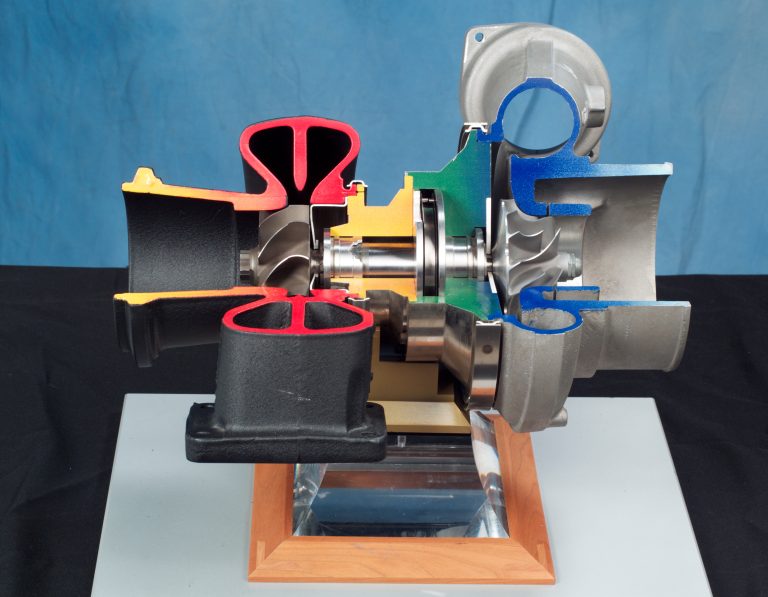
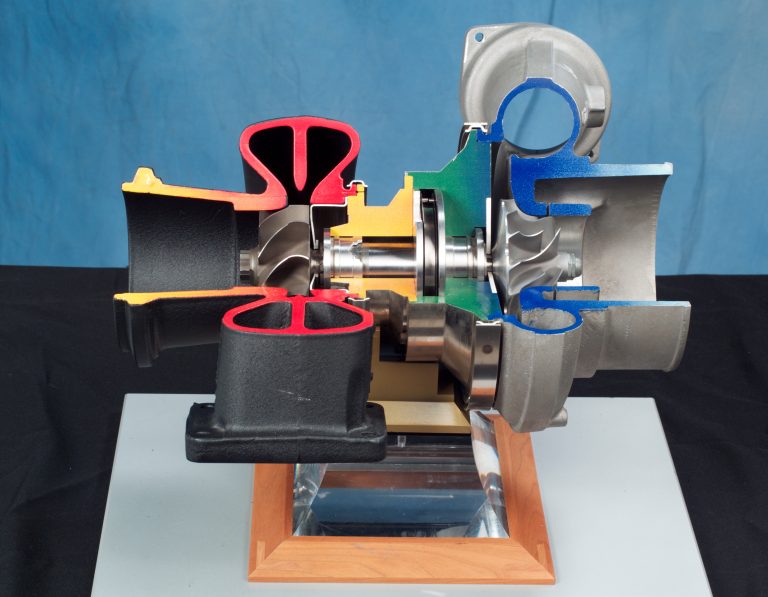
When racers say “GT45R,” they almost always mean the Garrett GT4508R: an 80mm-inducer, dual ceramic ball-bearing compressor wheel paired with a turbine housing commonly specified at 1.15 A/R on a T4 divided flange. Distributors and Garrett resellers commonly cite this unit as capable of roughly 1,100 to 1,200 horsepower, which puts it solidly in “big-block or heavily built small-block” territory rather than anything resembling a daily-driven street car. The ball-bearing cartridge spools meaningfully faster than a journal-bearing turbo of similar size and tolerates the oil-starvation risk of hard launches better, which is part of why it became the default choice for drag-radial and no-prep builds that need this much airflow. Housing options vary by reseller — some offer a 6-inch anti-surge inlet, others a more compact 5-inch inlet with a V-band outlet — so confirm compressor housing and A/R match your intended boost curve before ordering.
Best for: dedicated drag-radial or race-only big-block and stroked-LS builds targeting four-digit horsepower with a budget for genuine Garrett hardware.
Garrett GT45 (Journal Bearing) — The Original, Smaller-Wheel Version
The plain GT45 predates the R designation and uses a smaller-diameter compressor wheel (commonly described as a 70mm-class journal-bearing unit) rather than the 80mm ball-bearing cartridge in the true GT45R. It’s still a large-frame turbo capable of serious power, but it spools slower than the ball-bearing version and is intended for engines that can sustain enough exhaust volume to keep it in its efficient range. Because “GT45” gets used loosely by sellers to describe both the original journal-bearing unit and 80mm ball-bearing clones, confirm the exact bearing type and wheel diameter in the listing — this is the single most common point of confusion in GT45 shopping, and it matters more than brand.
Best for: buyers who specifically want the original journal-bearing GT45 platform, typically at a lower price point than the GT45R, on a large-displacement engine that doesn’t need ball-bearing spool response.
CXRacing GT45/GT45R-Style Ball Bearing Turbo — The Budget Clone
CXRacing and similar sellers (Rev9, Godspeed, and comparable listings) offer turbos marketed under the GT45 and GT45R names with 76mm or 80mm compressor wheels, ball bearing cartridges, and T4 1.15 A/R turbine housings — specs that closely mirror the genuine Garrett units on paper, at a fraction of the price. These are generally understood in the enthusiast community to be Chinese-manufactured products sold under various storefront names rather than a single proprietary design, and forum consensus is mixed: some budget drag builders report acceptable results, while others report bearing wear, balance issues, or housing fitment problems well short of what genuine Garrett hardware delivers. They can be a reasonable entry point for a low-buck, low-stakes drag project where a turbo failure isn’t catastrophic, but they are not a like-for-like substitute for genuine Garrett engineering, and the horsepower and durability claims on the listing should be treated with the same skepticism you’d apply to a generic universal turbo kit claiming a fitment or power number it hasn’t independently verified.
Best for: budget-conscious drag builders who understand the quality tradeoff and are not staking a high-dollar engine build on turbo reliability.
What Horsepower Range Actually Needs a GT45-Class Turbo
Garrett’s own resellers describe the GT45 family as suited to engines north of roughly 450 cubic inches, and the horsepower figures attached to these turbos — 1,000 to 1,200-plus — reflect that. This is not a turbo you put on a build targeting 500 or 600 horsepower; a turbo this large, fed by an engine that small, will sit off-boost most of the time and then hit like a switch when it finally comes in, which is both slow in a straight line and unpleasant to drive. The GT45-class frame earns its keep specifically on engines that can supply enough exhaust energy to spin an 80mm-class wheel quickly: big-block Chevys and Fords, stroked and built small-blocks (see our Best SBC Turbo Kit guide for how block choice caps boost on the small-block side), and heavily built LS platforms running on drag radials or slicks, almost always in a chassis built around consistent quarter-mile passes rather than daily commuting.
The chart below illustrates the relationship in general terms: as compressor wheel size increases, spool time (and the RPM at which boost actually arrives) increases too, unless engine displacement and exhaust volume scale up to match. A GT45-class turbo on a small-displacement engine simply never reaches the airflow needed to spool efficiently.
Note how the GT45-class bar extends past most of the usable rev range on a small or mid-size engine — that’s the practical problem in one picture. The turbo isn’t “bad,” it’s simply sized for a larger air pump than most engines can provide.
Journal Bearing vs. Ball Bearing GT45 Variants
The bearing cartridge is where the GT45 and GT45R genuinely diverge, not just in naming. The journal-bearing GT45 relies on a floating sleeve and thrust bearing lubricated by engine oil pressure, the same fundamental design Garrett has used across most of its GT-series lineup for decades. It’s durable and inexpensive to rebuild, but it spools more slowly and is more sensitive to oil pressure drops during hard cornering or launches. The GT45R’s dual ceramic ball-bearing cartridge uses a single sleeve holding angular-contact bearings at each end, which reduces oil volume requirements, tightens shaft control, and is commonly cited as spooling meaningfully faster than an equivalent journal-bearing unit — a real advantage when you’re already fighting the lag inherent to an 80mm wheel. The tradeoff is cost: genuine ball-bearing GT45R cores run well above journal-bearing GT45 pricing, and rebuilds require more specialized parts and tooling. For a deeper comparison of what ball bearing actually buys you in spool response versus journal bearing turbos generally — independent of frame size — see our Best Ball Bearing Turbo guide.
Supporting Mods a GT45-Class Build Actually Needs
Buying the turbo is the easy part. An engine that can actually use a GT45-class frame needs the rest of the combination built to match, and skipping any of the following is how a five-figure turbo purchase turns into a destroyed engine on the first pull:
- Forged internals. At the boost levels required to make this turbo work — commonly well north of 20 psi on a big-power build — factory cast pistons and rods are not a safe bet. Forged pistons, rods, and a stud girdle or main studs are standard on engines paired with this frame size.
- Fuel system sized for four-digit horsepower. A GT45-class turbo capable of supporting 1,000+ hp needs injectors, fuel pump, and lines sized well beyond a typical bolt-on turbo kit — often a dedicated fuel system built around the target power number rather than an off-the-shelf kit.
- Head gasket and clamping upgrade. High-boost, high-cylinder-pressure builds routinely need O-ringed heads or multi-layer steel head gaskets rated for the boost level, plus ARP head studs, to keep the seal intact.
- Exhaust manifold and housing sized to match. A GT45-class turbine housing needs an exhaust manifold or header (commonly a T4 log-style or equal-length design) built to route enough exhaust volume without excessive backpressure — see our Best LS Turbo Headers guide for how flange and runner sizing changes at this power level.
- Engine management capable of tuning for it. A standalone ECU with boost control, knock detection, and enough injector/fuel-pump duty-cycle headroom is essentially mandatory; factory engine management on most platforms was never designed for the airflow a GT45-class turbo can deliver.
If any of these is missing, the turbo isn’t the bottleneck — everything downstream of it is, and it will find the weakest link quickly.
Genuine Garrett vs. Clone: What the Quality Gap Actually Means
The specs on a budget clone listing can look identical to a genuine Garrett core on paper — same wheel diameter, same A/R, same “ball bearing” claim — but the manufacturing behind those numbers isn’t equivalent. Genuine Garrett turbos are balanced and quality-controlled to tolerances that keep shaft motion and bearing wear predictable at sustained high boost and high RPM, which matters enormously on a turbo spinning fast enough to support four-digit horsepower. Budget clones, generally understood to come from a handful of overseas manufacturers sold under different storefront brand names, vary in build quality between individual units, not just between brands — two turbos from the same listing can perform differently. That variability is a manageable risk on a low-buck build where a turbo failure means ordering a replacement, and a much less acceptable risk on a build with a $15,000+ engine underneath it. If the engine investment is significant, the price difference between genuine and clone hardware is a small fraction of the total build cost, which is the practical argument most experienced drag racers make for buying genuine Garrett cores on serious combinations.
| Variant | Bearing Type | Compressor Wheel | Common Turbine A/R | Cited HP Range |
|---|---|---|---|---|
| Garrett GT45 (journal bearing) | Journal bearing | ~70mm inducer class | 1.15 A/R (T4) | Roughly 700–900 hp |
| Garrett GT4508R (GT45R) | Dual ceramic ball bearing | 80mm inducer / 108mm exducer | 1.15 A/R (T4) | ~1,100–1,200 hp |
| Garrett G45-1500 (G-Series successor) | Dual ceramic ball bearing | 76mm inducer / 109mm exducer | Model-specific G-Series housing | Up to 1,500 hp (Garrett-rated) |
| Aftermarket “GT45/GT45R” clone (e.g., CXRacing) | Ball bearing (claimed) | 76–80mm wheel (claimed) | 1.15 A/R (T4) | Advertised 800–1,000+ hp; treat as unverified |
Specs above reflect manufacturer and reseller listings retrieved August 6, 2026; always confirm current specifications directly with the seller before ordering, as housing and wheel options vary between listings.
Frequently Asked Questions
Is a GT45 too big for my car?
For most street cars and even most mild-to-moderate turbo builds, yes. This frame size is designed around engines making four-digit horsepower with the displacement and exhaust volume to spool it. If your build target is under 700–800 hp, a smaller frame will spool faster, drive better, and likely make similar or better real-world power.
What’s the actual difference between GT45 and GT45R?
The GT45 typically refers to the original, smaller-wheel journal-bearing version, while the true GT45R (Garrett’s GT4508R) is an 80mm-wheel, dual-ball-bearing unit rated meaningfully higher for horsepower. Sellers frequently blur this distinction, so confirm bearing type and wheel diameter directly rather than relying on the model name alone.
How much horsepower can a GT45R really support?
Garrett resellers commonly cite approximately 1,100 to 1,200 horsepower for the genuine ball-bearing GT4508R, which lines up with its intended use on big-block or heavily built engines in drag applications.
Are CXRacing or other clone GT45 turbos safe to run?
They can function adequately on lower-stakes budget builds, and some users report acceptable results, but build quality is reported to vary between individual units, and they should not be assumed equivalent to genuine Garrett hardware on bearing life or balance quality — especially on an engine with significant money invested in it.
Do I need a bigger fuel system for a GT45-class turbo?
Yes, almost certainly. A turbo capable of supporting four-digit horsepower requires injectors, a fuel pump, and fuel lines sized to match that power target — well beyond what a typical bolt-on turbo kit fuel system provides.
What engine displacement actually needs this size of turbo?
Garrett’s own guidance points to engines above roughly 450 cubic inches, or heavily built/stroked engines with comparable exhaust output, as the realistic floor for spooling a GT45-class frame in a reasonable RPM range.
Should I buy the ball-bearing GT45R or the journal-bearing GT45?
If budget allows, the ball-bearing GT45R spools faster and holds up better under the sustained high-RPM, high-boost conditions this frame size is built for. The journal-bearing GT45 is a lower-cost option that still works, provided the engine has the displacement to overcome its slower spool.
The Bottom Line
A GT45-class turbo is not a “bigger is better” upgrade — it’s a purpose-built component for a specific category of build: big-displacement or heavily built engines, drag-focused chassis setups, and horsepower targets in four digits. If that describes your engine, the genuine Garrett GT4508R (GT45R) is the well-documented, ball-bearing standard, with the journal-bearing GT45 as a lower-cost alternative for builds that can tolerate slower spool. A reputable clone can work as a budget entry point on a low-stakes drag project, but the quality gap versus genuine Garrett hardware is real and worth weighing against what’s riding on the turbo not failing. And regardless of which variant you choose, the turbo is the last piece of the puzzle, not the first — fuel system, internals, head sealing, exhaust housing, and engine management all need to be built to the same power target before the turbo can do its job.