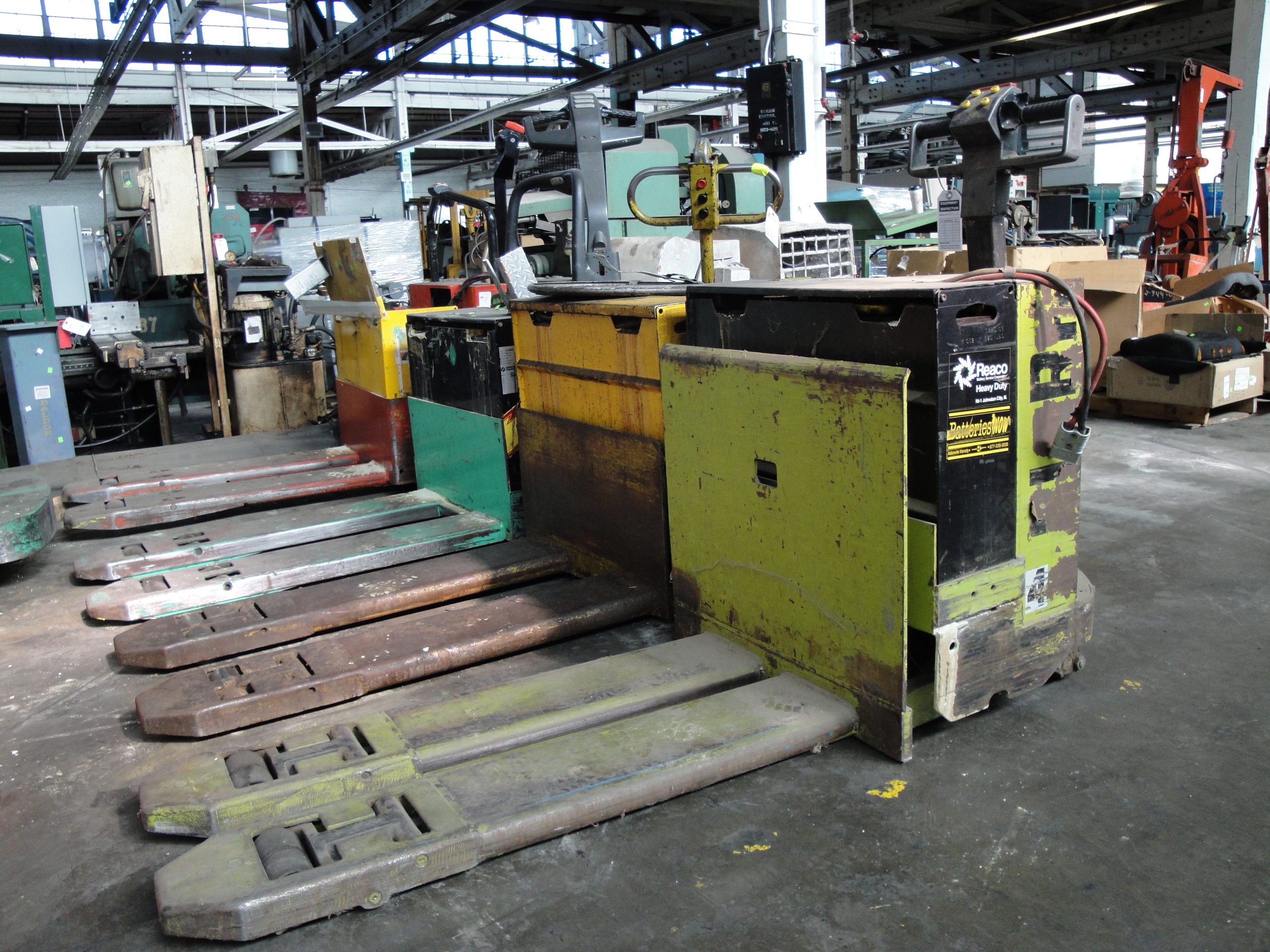
A manual pallet jack has no parking brake — set it down on a dock plate, ramp, or any sloped warehouse floor and nothing stops it from rolling except friction and luck. That’s the entire reason wheel chocks exist for this equipment. This guide is about pallet jack and warehouse wheel chocks specifically, not the trailer or RV wheel chocks most “best wheel chock” articles cover — different equipment, different failure mode, and a different product category entirely.
Key Takeaways
- Manual pallet jacks have no parking brake, so any grade — a dock plate, ramp, or sloped floor — is a rolling risk once the jack is set down and left.
- No OSHA standard specifically requires pallet jack wheel chocks; the closest binding rule (29 CFR 1910.178(k)(1)) covers trailer wheels during dock loading, and many warehouses extend that “chock everything that rolls” logic to pallet jacks as best practice.
- Several budget rubber pallet jack chocks on the market share near-identical 14.2″x11-12″x2″ dimensions — likely the same OEM product sold under different brand names.
- The Vestil PTC-8 is the best heavy-duty pick with suction-grip feet; the Mytee Products rubber chock is the best value with a built-in carry handle.
Not the Same as an RV or Trailer Wheel Chock
If you searched “wheel chock” and landed here, confirm you’re looking for the right category first. Vehicle wheel chocks — for trailers, RVs, and trucks — are typically larger, rated for thousands of pounds, and made from cast rubber or urethane wedges sized to a tire diameter; see our best wheel chocks for RV and best camper wheel chocks guides for that category. Pallet jack wheel chocks are a different product: smaller, flat rubber or plastic blocks sized for a pallet jack’s small steering or load wheels, used on warehouse floors and loading docks rather than under a parked vehicle’s tire.
The Best Pallet Jack Wheel Chocks Compared
We compared these on material, load capacity, and whether they chock one wheel or both — a real differentiator once you look past the packaging, since several budget listings turn out to be the same product under different brand names.
1. Vestil PTC-8 Pallet Truck Chock — Best Heavy-Duty Pick
Material: Solid molded plastic | Dimensions: 27-3/16″L x 15-3/8″W x 3-1/8″H, usable width 6-3/4″ | Weight: 9 lb
Rubber suction-cup grip feet and a design that chocks both wheels plus the fork heels in one unit make this the most complete solution here, at the cost of being noticeably larger and heavier than the simple rubber wedge options below. Reasonable if you want one chock per jack rather than a pair.
2. Mytee Products Rubber Pallet Jack Wheel Stopper — Best Value with Handle
Material: Rubber | Dimensions: 13-3/8″L x 11-5/8″W x 2″H | Sold as: Single or 4-pack
A built-in carry handle makes this easier to move and position than a plain wedge, and buying the 4-pack covers multiple jacks or dock doors at once without repeat shipping costs.
3. ROBLOCK Rubber Pallet Jack Wheel Chock — Widely Available Budget Option
Material: Rubber | Dimensions: 14.2″L x 11.2″W x 2″H
A straightforward black rubber wedge at a low price point — worth noting its dimensions are nearly identical to several other “different brand” listings on Amazon, a strong signal these are the same OEM product white-labeled multiple ways rather than genuinely distinct designs. Shop by price and shipping speed among these rather than expecting real differentiation.
4. Noblelift Pallet Jack Wheel Chock — Best from an Established Equipment Brand
Brand context: Sold by Noblelift, an established pallet jack and material-handling equipment manufacturer
Buying from a brand that also makes the pallet jacks themselves is a reasonable trust signal if you’d rather match equipment and accessories from one manufacturer than shop generic listings.
Why Pallet Jacks Roll: The Grade Problem
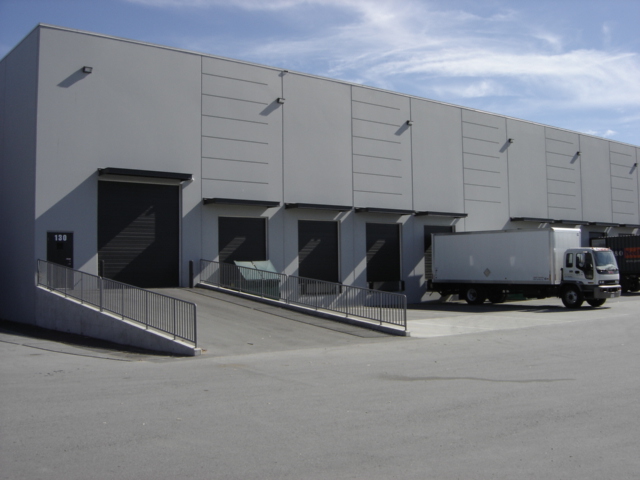
Manual pallet jacks are generally limited to roughly a 5-10% grade before they become difficult to control, with some heavy-duty models tolerating slightly more when lightly loaded — a rough consensus across multiple material-handling equipment vendors rather than one single published standard. Unlike a forklift or an electric walk-behind jack, a manual jack has nothing holding it in place once you let go: no parking brake, no automatic wheel lock. On a dock plate, a loading ramp, or any warehouse floor with even a slight slope, that means a parked or staged pallet jack can start rolling under its own weight or a shifted load, especially if bumped.
What OSHA Actually Requires (and Doesn’t)
No OSHA standard specifically mandates wheel chocks for pallet jacks. The closest binding federal rule, 29 CFR 1910.178(k)(1), requires that “the brakes of highway trucks shall be set and wheel chocks placed under the rear wheels to prevent the trucks from rolling” while being loaded by powered industrial trucks at a dock (OSHA). That rule is written for trailer wheels during dock loading, not pallet jacks directly — but it’s the regulatory logic many warehouses extend to any equipment left standing near a dock edge or ramp, pallet jacks included, as an internal best practice rather than a cited requirement. Don’t assume a pallet jack chock is legally mandated; treat it as risk management your safety program chooses to adopt, not a box OSHA is checking for you.
Workplace injury data underscores why that caution matters: in 2024, 84 workers died in incidents involving forklifts, order pickers, or platform trucks — a broader equipment category that includes pallet-truck-adjacent machinery — and that same equipment category was tied to 25,110 nonfatal recordable injuries in 2023-2024, 15,460 of which involved days away from work (U.S. Bureau of Labor Statistics).
Source: U.S. Bureau of Labor Statistics, Census of Fatal Occupational Injuries and Injuries, Illnesses, and Fatalities data. Category covers forklifts, order pickers, and platform trucks broadly, not pallet jacks in isolation.
Material and Placement: Rubber vs. Plastic, One Wheel vs. Both
Rubber chocks are the most common option and grip well on concrete or asphalt at a moderate price, but can degrade faster with prolonged outdoor UV exposure than solid molded plastic. Plastic chocks like the Vestil PTC-8 hold up better in that scenario and in cold-storage warehouses where rubber can stiffen, at a higher price and larger footprint. For placement, the same logic that governs OSHA’s trailer-chocking rule applies informally to pallet jacks: chock a jack left standing on any dock plate, ramp, or sloped floor, and chock both wheels where the product allows it rather than relying on a single wedge to hold the full load.
For related shop equipment, see our best 3 ton floor jack and best 10 ton jack stands guides.
Frequently Asked Questions
Is a pallet jack wheel chock legally required by OSHA?
Not specifically. OSHA’s wheel-chocking requirement (29 CFR 1910.178(k)(1)) applies to trailer wheels during dock loading, not pallet jacks directly. Chocking a pallet jack on a ramp or dock plate is a best-practice safety measure many warehouses adopt, not a standalone federal mandate.
What grade is too steep for a manual pallet jack?
Most manual pallet jacks are limited to roughly a 5-10% grade before control becomes difficult, per general guidance across material-handling equipment vendors. Beyond that, an electric walk-behind jack rated for steeper grades, or avoiding the incline entirely, is the safer choice.
Do I need to chock one wheel or both?
Chock both wheels where the product design allows it, especially on any grade or near a dock edge — a single wedge under one wheel doesn’t fully prevent the jack from pivoting or rolling if the load shifts.
Bottom Line
The Vestil PTC-8 is the strongest heavy-duty pick if you want one unit that chocks both wheels and the fork heels, while the Mytee Products rubber chock offers solid value with an easier-to-handle design. Whichever you choose, remember this is a different product category than vehicle wheel chocks, and treat chocking as a genuine safety practice for any pallet jack left standing on a ramp, dock plate, or sloped floor — not a step covered by a specific OSHA mandate.