A 3000-watt inverter is the size people buy when 1500 watts starts feeling limiting — enough to run a table saw, a welder on light duty, or a full jobsite setup off the truck. It is also the size where a straightforward accessory purchase turns into an electrical system project, because 3000 watts at 12 volts is roughly 250 amps of DC current, and almost nothing on a stock truck is built to supply that continuously.
This guide covers which inverters are worth buying, and more importantly, what has to be true about your truck’s electrical system before any of them will actually deliver 3000 watts without draining your battery in minutes.
Key Takeaways
- 3000W ÷ 12V = 250 amps of DC draw at full load. A stock alternator, typically rated around 100–145A, cannot sustain that alongside the truck’s own electrical loads.
- Wire and fuse sizing is not optional at this wattage. Common guidance for a 3000W 12V inverter is 1/0 to 2/0 AWG cable and a 300A fuse, with exact sizing dependent on cable run length.
- At idle, an alternator produces roughly 55–60% of its rated output; full output needs engine RPM up around 2200. Running a 3000W load at idle is the scenario most likely to leave you stranded.
- For sustained 3000W use, plan a secondary deep-cycle battery of roughly 200Ah and a proper isolator or DC-DC charger — not a straight tap off the starting battery.
The Inverters Worth Buying
Renogy 12V 3000W Pure Sine Wave Inverter
Renogy publishes 3000W continuous with 6000W surge, over 90% efficiency, pure sine output with total harmonic distortion under 3%, and five-stage protection with CE/RoHS certification (Renogy, retrieved 2026-07-29). Several variants in the range add Bluetooth monitoring and a built-in UPS transfer function, which is useful if the inverter also backs up anything that cannot tolerate a power interruption.
Best for: builders who want app-based monitoring and a mainstream brand with wide parts and support availability.
AIMS Power PWRI300012120S
AIMS specifies 3000W continuous with 6000W surge, a 9.5–16V DC input window, 60 Hz output, 25 AC amps, pure sine waveform, and a low-voltage alarm at 9.8V ±0.5V. The unit is UL 458 and CSA 22.2 listed, with dual outlets, a USB port, and a direct-connect terminal block for hardwiring the full rated capacity (AIMS Power instruction manual, retrieved 2026-07-29).
The terminal block matters more than it sounds. Running the inverter’s full 3000W through anything other than a proper hardwired lug connection is how connections overheat at this current level.
Best for: a hardwired, permanent installation where UL/CSA listing matters for insurance or commercial use.
Budget Options
Sub-$300 3000W inverters exist and some genuinely work for intermittent use. Treat published surge figures on budget units with more skepticism than on the two above, and check independently whether the unit is true pure sine or a stepped approximation before assuming it will run sensitive electronics safely.
Why 3000 Watts Means 250 Amps, and Why That Number Matters
Watts divided by voltage gives amps. At 12V, 3000W is 250A — before accounting for the roughly 10% conversion loss any inverter has, which pushes real draw slightly higher. That is more current than most vehicle wiring, fuses, or charging systems are designed to carry.
For comparison, most late-model stock alternators are rated in the 65–145A range. Even at the high end of that range, a 145A alternator cannot supply 250A to an inverter while also running the truck’s own systems. The gap between what the inverter wants and what the charging system provides gets filled by the battery, and a battery discharging at that rate does not last long.
Idle Is the Danger Zone
An alternator’s output scales with RPM. At idle — roughly 600–800 RPM — output is typically only about 55–60% of the rated figure; full output arrives closer to 2200 RPM. That is the opposite of what most people assume when they picture “running the truck to power the inverter.”
Practically: if you run a 3000W load with the engine idling in a parking lot, you are drawing 250A from a system producing well under its rated capacity, and the shortfall comes straight out of your starting battery. This is the single most common way people end up with a dead truck battery after using a big inverter — not from a wiring fault, but from a genuine power deficit that idle RPM cannot cover.
Wire Gauge and Fuse Sizing
Get this wrong and the failure mode is a fire, not an inconvenience. Common guidance for a 3000W 12V inverter is 1/0 to 2/0 AWG welding cable between the battery and the inverter, with a 300A fuse sized to protect that cable — the exact gauge depending on how long the cable run is, since voltage drop and heating both increase with length.
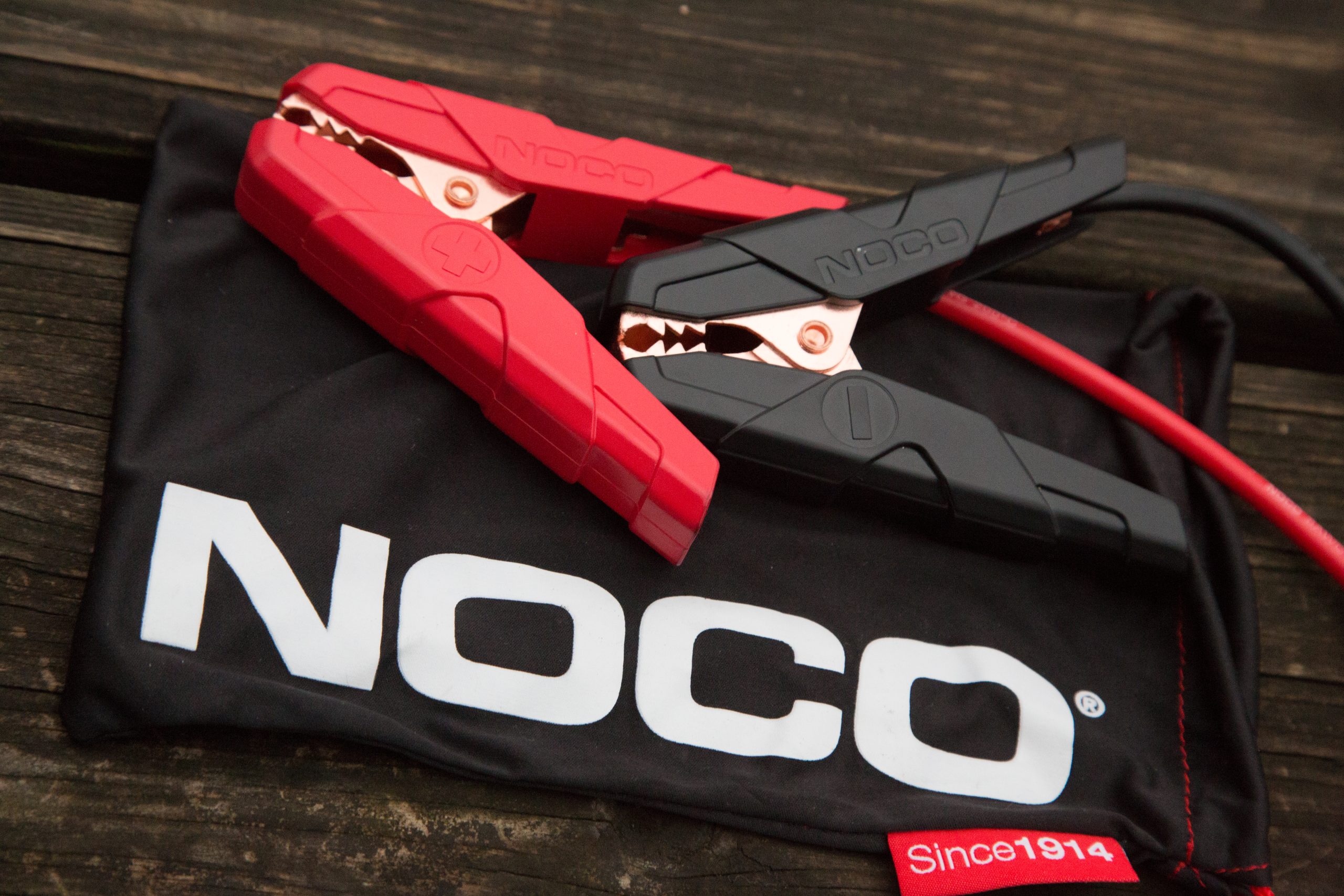
The rule that matters: the fuse protects the wire, not the inverter. Size the fuse to what the cable can safely carry, close to the battery, so a fault anywhere downstream trips the fuse before the cable overheats. A fuse rated higher than the wire can handle defeats the entire purpose of having one.
Two details people skip and shouldn’t: use marine-grade or welding cable with fine-strand copper rather than standard automotive wire at this gauge, since it flexes and terminates far more reliably at 1/0-2/0 size. And keep the run as short as practical — every extra foot is resistance you are fighting.
Sizing the Battery Bank
A stock starting battery is built for a brief, high-current cranking pulse, not sustained deep discharge. Feeding a 3000W inverter from it directly is hard on the battery and risks leaving you unable to start the truck.
The commonly cited sizing rule is a true deep-cycle AGM or LiFePO4 battery at roughly 100Ah for a 2000W inverter, scaling to around 200Ah for a 3000W inverter (APU Center, retrieved 2026-07-29). That figure assumes meaningful runtime at real load; if you only need short bursts, you can run leaner, but the maths should be based on your actual duty cycle, not a guess.
Chemistry affects usable capacity. Lead-acid batteries (flooded, AGM, gel) should be kept to roughly 50% depth of discharge to protect cycle life, so a 200Ah lead-acid bank gives you about 100Ah of real, healthy use. LiFePO4 tolerates 80–90% depth of discharge, so a 200Ah lithium bank delivers closer to its full rating — part of why lithium is increasingly the default choice for anyone running a 3000W load regularly.
Isolate the Secondary Battery Properly
Do not simply parallel a second battery to your starting battery with a switch. Install a voltage-sensing relay, smart isolator, or DC-DC charger between the alternator circuit and the secondary battery, so the two are connected for charging only while the alternator is actually producing, and isolated the rest of the time. That protects your starting battery from being pulled down by inverter loads.
If the secondary battery is lithium, a DC-DC charger is not optional. LiFePO4 needs a specific charge profile that a basic voltage-sensing relay cannot deliver correctly, and charging it incorrectly shortens its life significantly.
Matching Inverter Size to What You Actually Run
| Load | Typical draw | Fits in 3000W? |
|---|---|---|
| Laptop, phone chargers, LED work lights | Under 300W | Comfortably, with margin to spare |
| Circular saw, mid-size compressor | 1200–1800W running, higher surge | Yes, if surge headroom is checked |
| Table saw, light-duty welder | 1800–2500W plus surge | Tight — this is where 3000W earns its keep |
| Multiple simultaneous 15A tools | 3000W+ | No — step up in size or stage the loads |
Peak/surge wattage covers the first moment a motor starts, not sustained running. Size against your continuous load and confirm the surge rating covers your single largest startup event — not the sum of everything running at once.
Frequently Asked Questions
Will a 3000 watt inverter drain my truck battery?
Running it from the stock starting battery without a proper secondary battery bank, yes, especially at idle. The alternator cannot supply 250A continuously, so the deficit comes from the battery.
What wire gauge do I need for a 3000 watt inverter?
Common guidance is 1/0 to 2/0 AWG cable with a 300A fuse sized to protect that cable, with exact gauge depending on the length of the run between battery and inverter. Confirm against a cable sizing chart for your specific run length.
Can I run a 3000 watt inverter off my truck’s alternator alone?
Not reliably. Most stock alternators are rated well below the 250A a 3000W load draws, and output drops further at idle. A dedicated deep-cycle battery bank, sized to your runtime needs, is the practical solution.
Do I need a bigger alternator?
For occasional, short-duration use with an adequately sized battery bank, usually not. For sustained heavy use, a high-output alternator upgrade becomes worth evaluating alongside the battery bank.
Pure sine or modified sine for a 3000W truck inverter?
Pure sine if you plan to run anything with a microprocessor, a sensitive power supply, or a motor you want to protect from extra heat and noise. Both inverters in this guide are pure sine, which is the sensible default at this price point regardless.
The Bottom Line
Buy the Renogy or AIMS 3000W unit based on whether you want app monitoring or UL/CSA-listed hardwiring. But budget for the electrical work alongside it: 1/0-2/0 AWG cable, a 300A fuse sized to the wire, a roughly 200Ah deep-cycle battery bank, and a proper isolator or DC-DC charger. Skip any of those and the inverter’s rated 3000W is a number you will not actually get to use.
If your loads run under 1500W, our guide to smaller vehicle-mounted inverters covers the sizes where a hardwired install is simpler and the electrical system upgrade is unnecessary.
Work Truck Brakes and Exhaust — Keyport, NJ
A truck carrying a jobsite electrical system still needs brakes that stop it and an exhaust that passes inspection. Discount Brakes and Mufflers has served Keyport and Monmouth County for over 40 years as an NJ State Inspection Facility, and we repair rather than replace wherever the part allows.
Get a price in minutes with our instant estimate tool, see what is involved in muffler and exhaust repair, or contact our Keyport shop.
Note: this is a buyer’s guide compiled from manufacturer specifications and published electrical sizing guidance. It is not a substitute for a qualified installer’s review of your specific vehicle and wiring. Discount Brakes and Mufflers specializes in brakes, mufflers, catalytic converters and custom exhaust; we do not install electrical accessories.