Plastic and composite ramps eventually crack. Not from overloading — from sitting in a garage or driveway for a few summers while UV light slowly turns the resin brittle. Steel doesn’t have that failure mode. A welded or formed steel ramp is a single rigid structure with no folding hinge, no adjustable height mechanism, and no polymer to degrade in sunlight, and it typically delivers more rated capacity per dollar than a comparable plastic or composite ramp of the same size. What it doesn’t do is fold flat, weigh next to nothing, or feel as grippy underfoot as a textured composite surface unless the tread itself is diamond plate or a purpose-added grip coating.
This guide is about steel as a material category, not about a specific use case tied to one body style or one mechanism. If you want a fixed angle, lightweight, budget-friendly plastic wedge for an occasional oil change, our car ramps for oil change guide covers that ground, including the approach-angle problem that trips up low cars. If you want adjustable working height instead of a fixed rise, our hydraulic car ramps guide covers QuickJack-style lift systems. And if your vehicle is a full-size truck or van pushing toward commercial GVWR, our heavy duty truck ramps guide covers capacity and tread-width sizing for that class of vehicle. This guide is for the reader deciding whether steel construction itself — rigid, non-folding, non-adjustable — is the right material for a fixed shop setup, high-repetition commercial use, or the highest raw capacity per dollar spent.
Key Takeaways
- Welded and stamped steel ramps commonly deliver 4,000–9,000 lb of rated capacity for $80–$130 a pair, a higher capacity-per-dollar ratio than most plastic or composite ramps of similar size (Harbor Freight, Discount Ramps, retrieved 2026-08-03).
- Steel ramps are immune to the UV degradation and cracking that eventually affects plastic and composite ramps left outdoors, but bare or painted steel can rust if stored wet; hot-dip galvanized steel resists corrosion without that risk.
- Grip on a steel ramp comes from punched or extruded traction holes, raised safety ribs, diamond-plate tread, or an added grip coating — smooth or worn painted steel can be noticeably slicker under tires than a textured composite surface.
- Steel ramps run roughly 29–44 lb per ramp, heavier and bulkier to store than folding or nesting plastic ramps, which is why they suit a fixed shop spot better than a trunk that needs to carry them.
- Steel holds up to repeated daily loading without the wear plastic eventually shows, making it a common choice for shops running ramps under multiple vehicles a day rather than a driveway used a few times a year.
The Ramps Worth Buying
Pittsburgh 4,000 lb. Capacity Solid Steel Auto Ramp Set
Harbor Freight’s Pittsburgh-branded steel ramp set is rated to 4,000 lb total capacity (2,000 lb per ramp), supporting vehicles up to an 8,000 lb GVWR, with raised safety ribs on the sides and punched-and-extruded traction holes on the incline face under a powder-coat finish. Each ramp measures 35″ long by 12-3/4″ wide by 9″ high, reaches a maximum lift height of roughly 7.5–8″, and weighs about 28.8 lb, with the set listed at $79.99 (Harbor Freight, retrieved 2026-08-03).
Best for: a fixed spot in a home garage where the ramps stay in one place under one car, and raw capacity per dollar matters more than portability or a nesting storage profile.
Discount Ramps Tru-Cut Ultra-Ramps Steel Truck Service Ramps
Built from stamped, one-piece steel with heavy-duty raised grip holes rather than a molded traction pattern, this line is sold in tiers up to a 9,000 lb-rated model (5,400 lb per axle), with the pair listed in the roughly $90–$130 range depending on the capacity tier and current promotions. Each ramp measures 35″ long by 13″ wide by 9-1/4″ high, includes an 11″ by 9″ platform at the top, lifts a vehicle about 7.25″, and is manufactured in the USA (Discount Ramps, retrieved 2026-08-03).
Best for: shops and technicians running ramps under multiple trucks or vans in the same day, where the stamped-steel structure and raised grip holes need to hold up to repeated loading rather than occasional home use.
Best Metal Products Heavy-Duty Galvanized Steel Ramps
These are hot-dip galvanized rather than painted, which is the detail that matters most for anyone storing ramps outdoors or in a damp shop — galvanizing bonds a zinc coating to the steel that resists rust in a way painted steel simply can’t once the paint chips. The pair is rated to 9,000 lbs, each ramp measures 59″ long by 11-3/4″ wide by 13″ high and weighs about 44 lb, and the set is made in the USA and priced at $499 (Best Metal Products, retrieved 2026-08-03).
Best for: outdoor, humid, or coastal storage conditions where corrosion resistance is worth paying a real premium over a painted or powder-coated steel ramp.
Capacity Per Dollar: Steel vs. Plastic and Composite
Steel’s biggest advantage over plastic and composite ramps isn’t peak capacity — some resin ramps like the RhinoRamps MAX reach 16,000 lb GVW for the pair, well above most steel models in this price range. It’s what that capacity costs. The Pittsburgh 4,000 lb steel set runs $79.99, and Discount Ramps’ 9,000 lb steel tier runs roughly $90–$130, both landing well under $0.02 per pound of rated capacity. A comparable plastic or composite ramp generally costs more per pound of capacity once you’re past the cheapest wedge-shaped budget ramps, because the injection-molded or fiberglass-reinforced construction that makes those ramps light and UV-stable also makes them more expensive to produce at high capacity ratings.
That math flips once you pay for galvanizing: the Best Metal Products galvanized set costs roughly $499 for 9,000 lb, which works out to about $18 of capacity per dollar — still respectable, but well below the bare or powder-coated steel options above it. Galvanizing is a real cost added for a real benefit, not a markup without a reason, and buyers choosing steel purely to chase capacity-per-dollar should stick to painted or powder-coated tiers unless corrosion resistance specifically matters for where the ramps will live.
Grip Surface Options and Traction
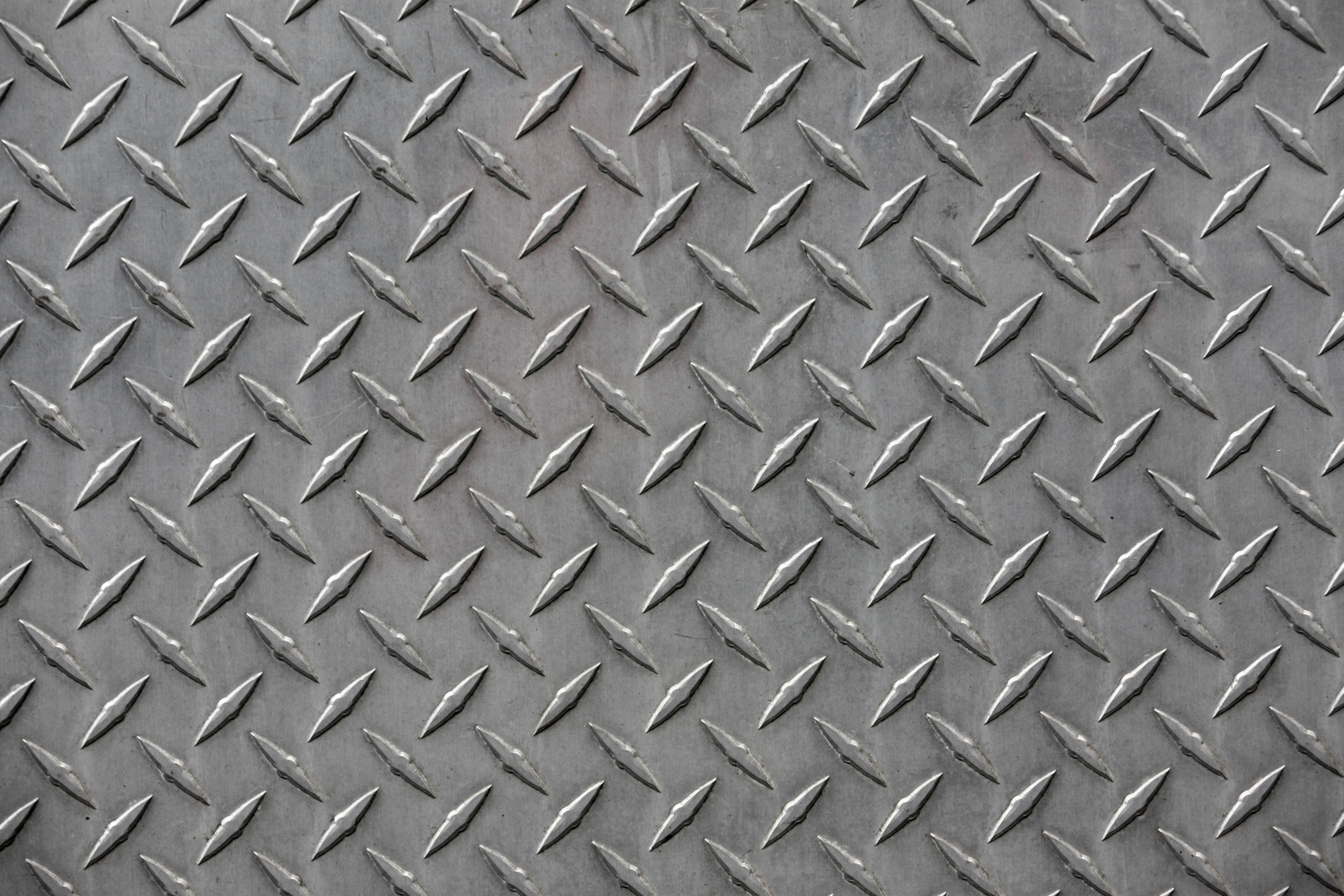
Bare steel, especially painted steel that’s picked up a light film of oil or moisture, can be more slippery under a tire than a textured composite ramp face. Manufacturers address this a few different ways, and the option on a given ramp matters more for wet or oily shop floors than it does for a dry driveway. Punched or extruded traction holes, like those on the Pittsburgh and Discount Ramps models above, create raised metal edges around each perforation that bite into a tire’s tread without needing an added coating. Raised safety ribs running along the ramp’s sides add a secondary traction line beyond the main climbing surface. True diamond-plate tread, the same raised-diamond pattern shown above, is a heavier-gauge option more common on higher-capacity commercial ramps and trailer-loading ramps than on budget passenger-vehicle sets. Some steel ramps also add rubberized grip coatings or anti-skid paint additives as a fourth option, trading a bit of raw durability for meaningfully better wet-weather grip.
None of these fully close the traction gap with a composite ramp’s molded-in texture, which is baked into the material itself rather than stamped or coated onto a flat steel face. For a shop floor that regularly sees oil, coolant, or water underfoot, it’s worth specifically checking which traction method a steel ramp uses rather than assuming “steel” implies one standard surface.
Weight and Storage: The Real Tradeoff Against Plastic
Steel’s rigidity comes from mass, and that mass is the honest downside of the category. The ramps above run from about 29 lb per ramp on the lightest budget set up to 44 lb per ramp on the galvanized model — a pair at the heavy end is pushing 90 lb combined, versus a plastic wedge ramp that a single person can carry with one hand. Steel ramps also don’t nest or fold flat the way many composite ramps do; a solid steel wedge keeps its full footprint in storage, whereas hollow-body plastic ramps commonly stack for a smaller storage profile.
This is exactly why the “fixed shop installation” use case matters more for steel than for any other ramp category. A steel ramp that lives permanently under one lift point in a home garage, or gets rolled out once and left in place at a commercial bay, never has to be carried, loaded into a trunk, or hauled to a different work site. The moment portability becomes a real requirement — a mobile mechanic, a ramp that has to travel in the car it services, or a garage with genuinely tight storage — a lighter plastic or composite ramp, or a folding hydraulic system, starts making more practical sense than steel’s raw capacity advantage.
Rust and Corrosion vs. UV Degradation: Each Material’s Weak Point
Every ramp material has a failure mode tied to how it’s stored, and steel and plastic fail in opposite ways. Plastic and composite ramps degrade from UV exposure: sunlight breaks down the polymer over months and years of outdoor storage, eventually leaving the ramp brittle and prone to cracking under load even if it was never overloaded a single time. Steel doesn’t have a UV problem at all — sunlight doesn’t meaningfully weaken structural steel. Its failure mode is moisture instead. Bare or painted steel left wet, whether from rain, snow melt, or a damp garage floor, will rust once the surface finish is compromised, and once rust starts eating into the metal it reduces the ramp’s effective strength at the corroded section, not just its appearance.
The fix for each material’s weak point is different. For plastic and composite ramps, that means storing them out of direct sunlight when not in use. For steel, it means either keeping ramps dry and storing them somewhere they won’t sit in standing water, or stepping up to hot-dip galvanized steel like the Best Metal Products set, which bonds a zinc layer to the steel specifically to stop rust before it starts rather than relying on a paint film that can chip and expose bare metal underneath.
| Ramp | Capacity | Weight/ramp | Finish | Price | Best for |
|---|---|---|---|---|---|
| Pittsburgh Solid Steel Auto Ramp Set | 4,000 lb (pair) | ~28.8 lb | Powder-coat | $79.99 | Fixed home-garage install, budget capacity/$ |
| Discount Ramps Tru-Cut Ultra-Ramps | 9,000 lb (5,400 lb/axle) | ~35 lb (est.) | Bare stamped steel | ~$90–$130 | High-repetition commercial/shop use |
| Best Metal Products Galvanized Ramps | 9,000 lb (pair) | ~44 lb | Hot-dip galvanized | $499 | Outdoor/humid storage, rust resistance |
Frequently Asked Questions
Are steel car ramps stronger than plastic or composite ramps?
Not automatically. The highest-capacity ramps at the passenger-vehicle end, like the resin RhinoRamps MAX at 16,000 lb GVW, actually outrate most steel ramps in this price range. Steel’s real advantage isn’t peak capacity, it’s capacity per dollar — budget steel sets commonly deliver 4,000–9,000 lb of rating for $80–$130, a lower cost per pound of rated capacity than most plastic or composite ramps at similar sizes.
Do steel ramps rust?
Bare or painted steel can rust if the finish is compromised and the ramp is stored wet, since once rust reaches the metal underneath it reduces the ramp’s structural strength at that spot. Hot-dip galvanized steel, which bonds a zinc coating to the steel, resists that corrosion far better and is worth the price premium for outdoor or humid storage.
Are steel ramps slippery?
They can be, more so than a textured composite ramp, especially if the surface is smooth painted steel that’s picked up oil or moisture. Look for punched or extruded traction holes, raised safety ribs, diamond-plate tread, or an added grip coating rather than assuming any steel ramp has adequate traction by default.
How much do steel car ramps weigh compared to plastic ramps?
The models covered here run roughly 29–44 lb per ramp, meaningfully heavier than a plastic wedge ramp that one person can carry easily. Steel ramps also generally don’t nest or fold flat for storage the way hollow-body plastic ramps do, which is why steel suits a fixed installation better than a ramp that needs to travel.
Do steel ramps wear out with heavy commercial use?
Far more slowly than plastic. Plastic and composite ramps eventually show wear and, more importantly, UV-related brittleness from repeated outdoor exposure over years. Steel’s structural strength doesn’t degrade from sunlight at all, which is why stamped-steel commercial models are common in shops running ramps under multiple vehicles a day.
Should I buy steel ramps for a lowered car?
Not based on material alone. The incline angle, not the material, decides whether a ramp clears a low front bumper or splitter, and most steel ramps in this category use a similar incline to standard plastic ramps rather than the shallower angle built into low-profile designs. Our car ramps for oil change guide covers the angle problem specifically for lowered vehicles.
Is a steel ramp or a hydraulic lift ramp better for a home garage?
It depends on what you value more. A steel ramp is cheaper up front, has no moving parts to maintain, and delivers strong capacity per dollar, but gives you one fixed lift height. A hydraulic system lets you adjust working height after the vehicle is positioned and stores in a much smaller footprint; our hydraulic car ramps guide covers that category and how the adjustable mechanism works.
The Bottom Line
Buy steel when the ramps are going to live in one spot, get used often, and need to survive years of outdoor storage without the cracking risk plastic eventually carries — a Pittsburgh 4,000 lb set or a Discount Ramps stamped-steel model delivers strong capacity per dollar for a fixed home or shop installation. Step up to hot-dip galvanized steel like the Best Metal Products set specifically if that storage spot is damp, coastal, or otherwise hard on bare metal. Steel isn’t the right call if you need to carry the ramps somewhere, want the shallowest possible approach angle for a lowered car, or need adjustable height instead of a fixed rise — those needs are better served by the plastic, hydraulic, and truck-specific ramps covered in our other guides. Whatever material you choose, confirm whether the rating you’re reading is per ramp, per axle, or per pair, and match it to your vehicle’s actual weight rather than its class.