Most 1/2-inch impact wrenches need 4–5 CFM at 90 PSI for intermittent use, and a compressor sized only for tire inflation will bog down, cycle constantly, and shorten its own motor life the first time it meets a stuck lug nut or a spray gun (Air Compressor Zone, retrieved 2026-08-11). A stationary garage compressor is a different category of tool from the 12V unit in your trunk — bigger tank, higher sustained airflow, and a purchase that’s supposed to last a decade of brake jobs, sanding, and inflating.
This guide covers what tank size, CFM, and PSI actually mean for a home garage or small shop, the oil-free vs. oil-lubricated tradeoff, pancake vs. vertical vs. wheelbarrow styles, and which real compressors from California Air Tools, DeWalt, Ingersoll Rand, Porter-Cable, Campbell Hausfeld, Makita, and Quincy are worth buying in each category.
Key Takeaways
- CFM at 90 PSI, not tank size or max PSI, is the spec that determines whether a compressor can actually run an impact wrench or spray gun without stalling.
- A 6-gallon pancake compressor (Porter-Cable C2002, ~$140) covers trim nailing and occasional inflation; a 60-gallon two-stage unit (Ingersoll Rand SS3F2-GM or Quincy QT-54, $1,400–$1,600) is built for sustained impact wrench and spray gun work.
- Oil-free compressors (California Air Tools, most Porter-Cable and Campbell Hausfeld models) need no maintenance but run louder and wear faster under continuous duty than oil-lubricated pumps.
- Oil-lubricated compressors (Ingersoll Rand, Quincy, some Makita models) last longer under heavy or continuous use but need periodic oil changes like a small engine.
- For most home garages, a 20–30 gallon compressor delivering 6–8 CFM at 90 PSI is the practical sweet spot — enough for an impact wrench and tire work without the cost or 240V wiring a large two-stage unit often needs.
Tank Size, CFM, and PSI: What Actually Matters for a Shop Compressor
Three numbers show up on every spec sheet, and only one of them predicts whether a compressor can actually run your tools.
CFM (cubic feet per minute) at 90 PSI is the number that matters most. It measures how much air the compressor’s pump can deliver continuously, which is what keeps an impact wrench or spray gun running instead of stalling out mid-task. A 3/8-inch impact wrench needs roughly 3–4 CFM at 90 PSI; a 1/2-inch impact wrench needs 4–5 CFM for intermittent use and 5–7 CFM if you’re running it continuously on a full brake job (Air Compressor Zone, retrieved 2026-08-11). Spray guns and sanders typically need even more sustained CFM than an impact wrench.
PSI (pounds per square inch) is the pressure ceiling. Nearly every shop compressor on the market can reach 90–150 PSI, so max PSI is rarely the limiting factor — it’s whether the pump can sustain enough CFM at your tool’s working pressure (usually 90 PSI) without the tank pressure crashing.
Tank size (gallons) is a buffer, not a throughput spec. A bigger tank stores more compressed air so the motor cycles less often and you get a longer burst of high-CFM air before the pump has to catch up, but it doesn’t change the compressor’s actual CFM output. For occasional home garage work — tire rotations, basic brake jobs, the occasional impact wrench task — a 20 to 30 gallon tank with 5 to 6.5 CFM at 90 PSI is a workable starting point. For more serious or frequent automotive use, a 30 to 60 gallon tank paired with 6.5 to 8+ CFM at 90 PSI gives noticeably more consistent tool performance and less waiting for the pump to catch up (Air Compressor Zone, retrieved 2026-08-11).
If you only ever need to top off tires on the go rather than run shop tools, a stationary compressor is overkill — see our guide to the best portable air compressors for cars for a 12V unit that plugs into your vehicle instead.

Oil-Free vs. Oil-Lubricated: Which Pump Type Fits Your Garage
Oil-free compressors use a pump with a permanently lubricated or PTFE-coated cylinder, so there’s no oil to check, change, or spill. That makes them the simpler choice for a home garage used occasionally — grab it, plug it in, no maintenance schedule. The tradeoff is noise (oil-free pumps typically run louder, sometimes 78–90 dB) and a shorter service life under continuous, heavy-duty use, since the pump has less lubrication to dissipate heat and reduce wear.
Oil-lubricated compressors use a splash- or pump-lubricated crankcase, similar in principle to a small engine. They run quieter, handle continuous duty cycles better, and generally last longer under real shop use — but they need periodic oil changes and level checks, and they should be stored upright to avoid leaks. For a small shop running an impact wrench and spray gun regularly, or a two-stage 60-gallon unit meant to last a decade, oil-lubricated is usually the better long-term investment. For an occasional-use home garage compressor under 30 gallons, oil-free keeps things simple.
Pancake vs. Vertical vs. Wheelbarrow: Picking a Style
Pancake compressors are flat, low-profile tanks (typically 1–6 gallons) that sit stable on the floor without tipping. They’re the go-to for trim carpentry, occasional tire topping, and light-duty tasks, but their small tank and modest CFM make them a poor match for an impact wrench doing real automotive work.
Vertical (upright) compressors stand on a tall cylindrical or twin-tank base, usually 20–80 gallons, and are the standard shape for a garage-dedicated compressor. The upright design keeps the footprint small while allowing a bigger air reserve, and most mid-size to large shop compressors use this layout.
Wheelbarrow-style compressors mount a horizontal tank on two wheels with a handle, trading some floor footprint for portability around a shop or job site. They’re common in the 20–30 gallon range and are a good fit if you need to roll the compressor between a garage bay and an outdoor project rather than leaving it fixed in one spot.
The Best Garage Air Compressors Worth Buying
Porter-Cable C2002 (6-Gallon Pancake, Oil-Free)
Porter-Cable’s C2002 is a 6-gallon pancake unit rated at 150 max PSI and roughly 2.6 CFM at 90 PSI, priced around $140. It’s a light-duty compressor built for trim nailing, staple guns, and occasional tire or ball inflation rather than sustained impact wrench work.
Best for: buyers who mainly need a compact, low-cost compressor for finish nailers and light inflation tasks, not automotive tool work.
Makita MAC2400 Big Bore (4.2-Gallon Twin Stack, Oil-Lubricated)
The MAC2400 uses a twin-stack tank design and an oil-lubricated Big Bore pump to deliver about 4.2 CFM at 90 PSI from a 4.2-gallon tank, priced around $330. Its oil-lubricated pump gives it better duty-cycle stamina than most oil-free units in its size class.
Best for: mobile or bench use where you want oil-lubricated durability without stepping up to a full-size vertical tank.
California Air Tools 10020C (20-Gallon Vertical, Oil-Free, Ultra-Quiet)
California Air Tools built its reputation on low-noise oil-free pumps, and the 10020C delivers about 5.3 CFM at 90 PSI from a 20-gallon steel tank at roughly 70 dB, priced around $450. That’s meaningfully quieter than most compressors in its class, which matters in an attached garage.
Best for: home garages where noise is a real concern — shared walls, early-morning projects, or a shop next to living space.
DeWalt DXCMLA1983012 (30-Gallon Vertical, Oil-Free, Wheeled)
DeWalt’s 30-gallon unit pairs a wheeled, portable vertical tank with an oil-free pump rated around 5.5 CFM at 90 PSI and 155 max PSI, priced around $430. It’s positioned as a step up from pancake-class units for buyers who want real impact-wrench capacity without going to a two-stage industrial pump.
Best for: DIYers who want one wheeled, mid-size compressor that covers impact wrench, sander, and inflation duty in a typical home garage.
Campbell Hausfeld VT6271 (26-Gallon Wheelbarrow, Oil-Free)
The VT6271 uses Campbell Hausfeld’s horizontal wheelbarrow tank layout, holding 26 gallons and delivering roughly 5.5 CFM at 90 PSI, priced around $300. The wheelbarrow footprint makes it easier to roll between a garage bay and a driveway or job site than an upright tank of similar capacity.
Best for: buyers who need to move the compressor around a property regularly rather than leaving it fixed in one corner of the garage.
Ingersoll Rand SS3F2-GM (60-Gallon Two-Stage, Oil-Lubricated)
Ingersoll Rand’s SS3F2-GM is a two-stage, oil-lubricated industrial-grade compressor with a 60-gallon vertical tank, delivering around 11.7 CFM at 90 PSI and up to 175 max PSI, priced around $1,400. Two-stage pumps compress air in two steps for higher sustained output and better heat management under continuous load.
Best for: serious home mechanics or small shops running impact wrenches and spray guns for extended sessions, not just occasional tasks.
Quincy QT-54 (60-Gallon Two-Stage, Oil-Lubricated, Splash Lube)
The Quincy QT-54 is a long-standing favorite among serious home-shop owners, using a cast-iron, splash-lubricated two-stage pump rated around 11.6 CFM at 90 PSI from a 60-gallon tank, priced around $1,600. Its industrial-grade construction is built to run for years under continuous automotive and fabrication use.
Best for: buyers who want a compressor built to commercial-shop standards and are willing to pay a premium for pump longevity and repairability.
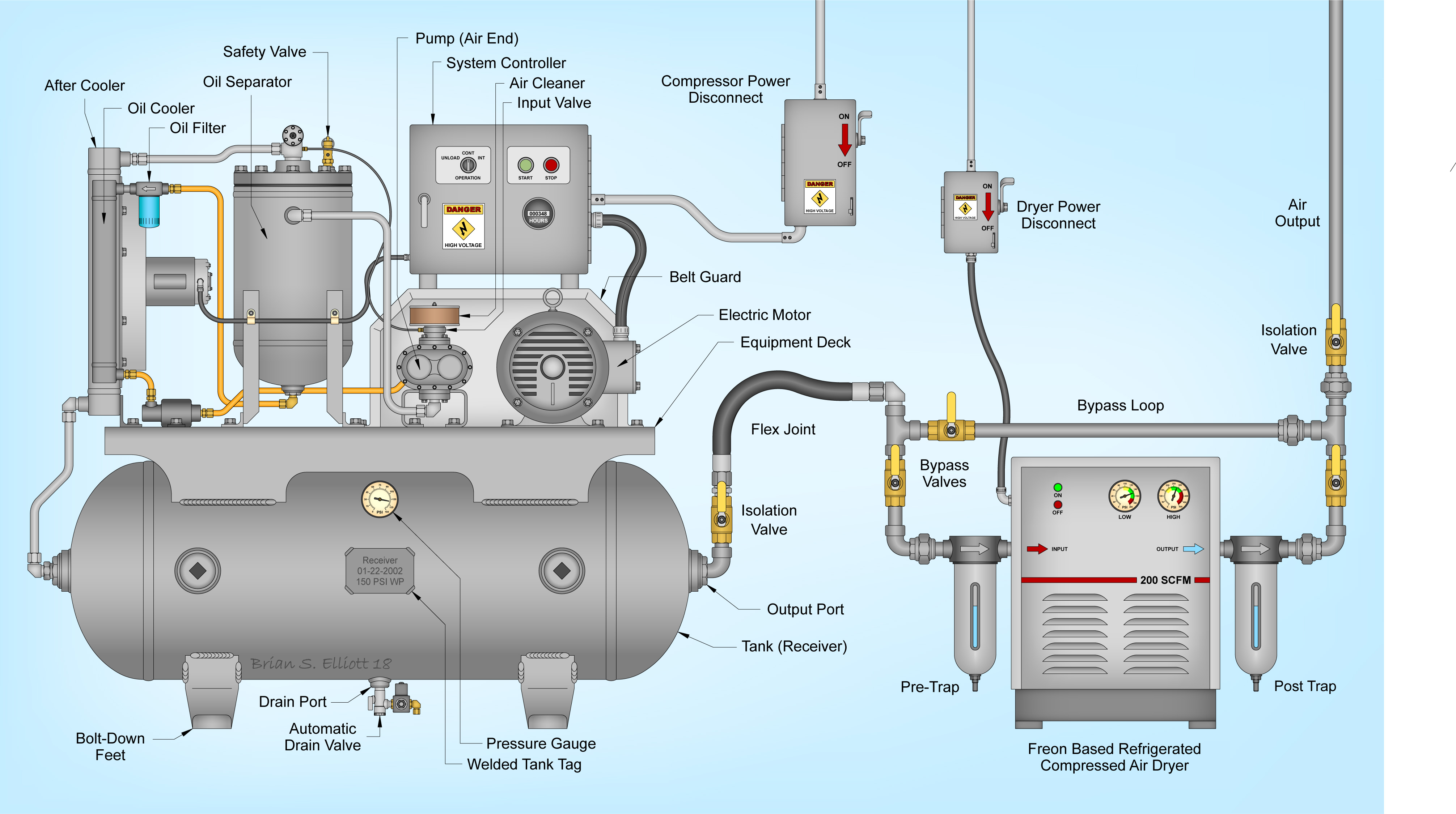

Comparing Tank Size, CFM, and Price at a Glance
| Model | Style | Tank | CFM @ 90 PSI | Pump Type | Approx. Price |
|---|---|---|---|---|---|
| Porter-Cable C2002 | Pancake | 6 gal | 2.6 | Oil-free | $140 |
| Makita MAC2400 | Twin stack | 4.2 gal | 4.2 | Oil-lubricated | $330 |
| California Air Tools 10020C | Vertical | 20 gal | 5.3 | Oil-free | $450 |
| Campbell Hausfeld VT6271 | Wheelbarrow | 26 gal | 5.5 | Oil-free | $300 |
| DeWalt DXCMLA1983012 | Vertical | 30 gal | 5.5 | Oil-free | $430 |
| Ingersoll Rand SS3F2-GM | Vertical, two-stage | 60 gal | 11.7 | Oil-lubricated | $1,400 |
| Quincy QT-54 | Vertical, two-stage | 60 gal | 11.6 | Oil-lubricated, splash | $1,600 |
For related shop equipment that pairs with a garage compressor build-out, see our guides to the best 3-ton floor jack, the best heavy-duty jack stands, and the best disc brake caliper tool for rear-caliper work that often follows an impact-wrench wheel-off.
Frequently Asked Questions
What size air compressor do I need for a home garage?
For occasional home use covering tire work and an impact wrench, a 20–30 gallon compressor delivering 5–6.5 CFM at 90 PSI is a practical starting point. For frequent or continuous automotive work, step up to a 30–60 gallon two-stage unit with 6.5–8+ CFM.
Do I need a two-stage compressor, or is single-stage enough?
Single-stage oil-free or oil-lubricated compressors under 30 gallons handle intermittent home garage work fine. Two-stage compressors, like the Ingersoll Rand SS3F2-GM or Quincy QT-54, are built for sustained, continuous-duty airflow and are worth the extra cost if you’re running impact tools or a spray gun for extended sessions regularly.
Is oil-free or oil-lubricated better for a garage compressor?
Oil-free is simpler (no maintenance) and fine for occasional use, but runs louder and wears faster under heavy use. Oil-lubricated pumps run quieter and last longer under continuous or frequent duty but need periodic oil changes, similar to a small engine.
Will a pancake compressor run an impact wrench?
A small pancake compressor like the Porter-Cable C2002 (about 2.6 CFM) can turn an impact wrench briefly, but its low CFM and small tank mean it will stall or need frequent recovery cycles on anything beyond a single stuck bolt. For real impact wrench work, look at 20+ gallon units delivering at least 5 CFM at 90 PSI.
What’s the difference between a wheelbarrow and vertical compressor?
A wheelbarrow compressor lays the tank horizontally on two wheels for easy rolling between locations. A vertical compressor stands the tank upright on a smaller footprint, which is the more common layout for a fixed garage installation. Both come in similar tank-size ranges — the choice is mostly about whether you need to move the unit around regularly.
The Bottom Line
For most home garages, the practical sweet spot is a 20–30 gallon oil-free compressor delivering 5–6.5 CFM at 90 PSI — the California Air Tools 10020C, DeWalt DXCMLA1983012, or Campbell Hausfeld VT6271 all fit that bracket and cover impact wrench, sander, and inflation duty without the cost or 240V wiring a large two-stage unit often needs. Light-duty buyers doing occasional nailing or inflation can save money with a pancake unit like the Porter-Cable C2002 or a twin-stack Makita MAC2400. Serious home mechanics and small shops running tools continuously should size up to a 60-gallon two-stage compressor like the Ingersoll Rand SS3F2-GM or Quincy QT-54 — the higher upfront cost buys meaningfully more sustained airflow and pump longevity. And if tire inflation on the go is genuinely all you need, skip the shop compressor entirely and check our best portable air compressor for car guide instead.