
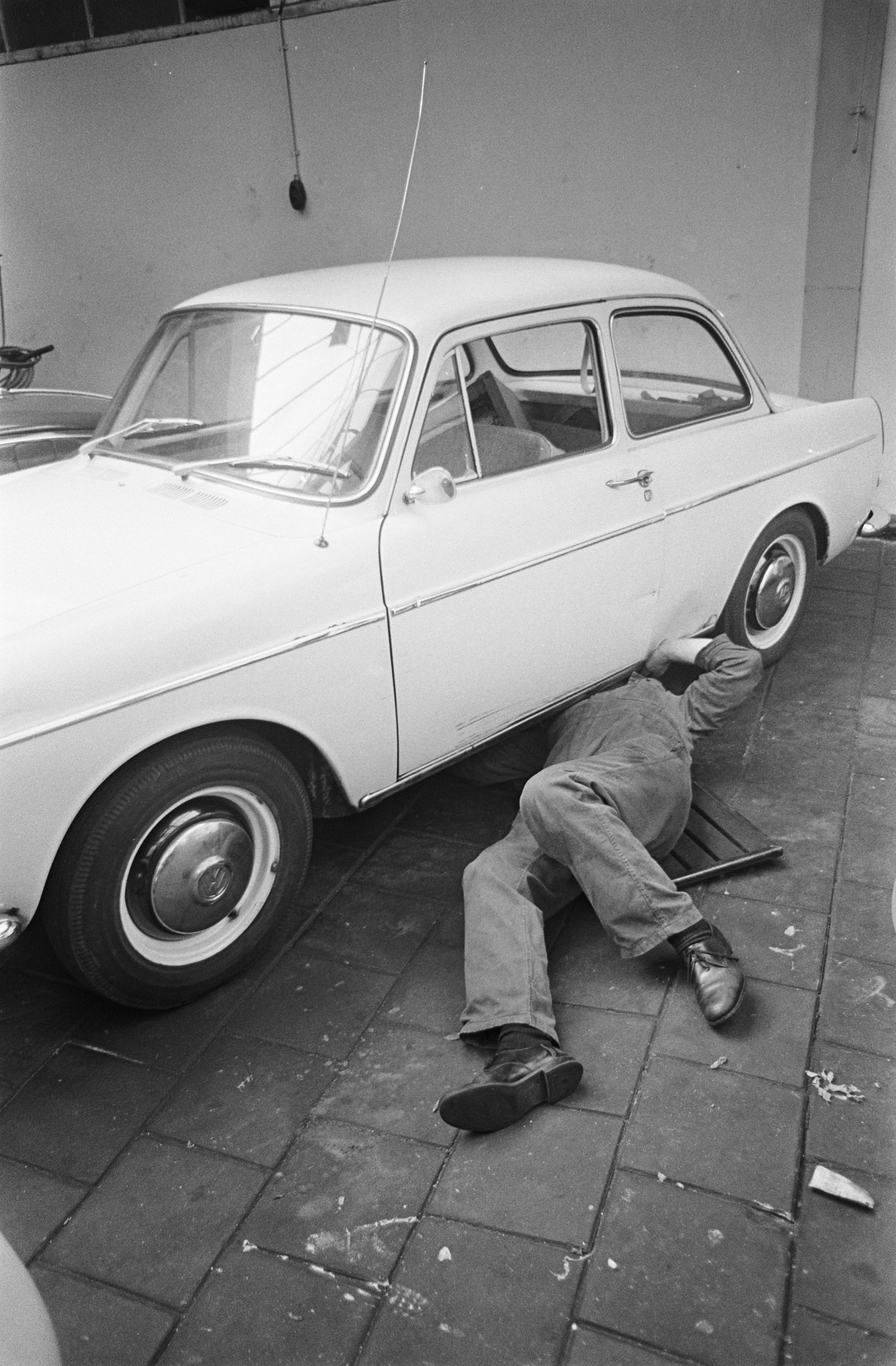
The Bureau of Labor Statistics counts roughly 750,000 automotive service technicians and mechanics working in the United States as of its most recent Occupational Outlook Handbook update, and a large share of that job happens flat on the back, sliding in and out from under a vehicle dozens of times a shift. A basic rolling creeper is one of the cheapest ways to cut down on that wear and tear, and it remains the single most common piece of shop equipment mechanics reach for when a lift, a set of ramps, or nothing at all is the alternative. Most general-purpose creepers run somewhere between $30 and $150, hold 300 to 1,000 pounds, and roll on four to six casters across a deck between 36 and 44 inches long.
Key Takeaways
- A standard garage creeper is a flat, wheeled board or padded platform, usually 36-44 inches long, that lets you lie down and roll under a vehicle instead of kneeling or lying directly on the floor.
- Padded vinyl decks cost more but are dramatically more comfortable for anything longer than a quick fluid check; hard plastic and wood decks are cheaper and more durable against solvents and sharp debris.
- Weight capacity, caster size, and deck height are the three specs that matter most — a 6-inch caster rolls over garage-floor debris far more smoothly than a 3-inch caster.
- If you need extra ground clearance under a lifted truck, want to sit upright instead of lying flat, or you’re working on top of the vehicle instead of underneath it, a specialized creeper variant will serve you better than a general one.
- Most general creepers land in the $30-$150 range and support 300-1,000 lbs, making them one of the most affordable pieces of shop equipment a home mechanic can own.
What a Garage Creeper Actually Is (and When You Want a Specialized One Instead)
A garage creeper, in its plainest form, is a rigid board with casters bolted to the corners and a headrest at one end. You lie face-up on top of it, push off with your feet or hands, and roll underneath the car. That’s it — no motor, no adjustment mechanism, nothing to charge or calibrate. The category has existed largely unchanged since the early days of the automobile, and the reason it’s survived is simple: lying on a rolling board under a vehicle is faster to get in and out of than crawling on a mat, and a lot easier on your spine than lying directly on concrete.
Within that broad category there’s real variety. Some decks are bare wood or injection-molded plastic, built to shrug off dropped tools, spilled brake fluid, and years of shop-floor grit. Others are wrapped in an inch or more of foam padding under vinyl upholstery, trading a bit of durability for genuine comfort on jobs that run long. Deck height varies too — a standard creeper sits around 3.5 to 4.5 inches off the ground, which is fine for most sedans, SUVs, and trucks with stock ride height.
That said, a general creeper isn’t always the right tool. If you’re regularly working underneath a lifted truck or lowered sports car where every half-inch of clearance counts, a dedicated low-profile design will get you under vehicles a standard creeper simply can’t reach — see our guide to the best low profile creepers for models built around minimal deck height. If your work is mostly at wheel-well height rather than flat on your back — brake jobs, wheel bearings, lug work — you may actually be more productive sitting upright on a rolling stool than lying prone; our guide to the best mechanic creeper seats covers that alternative in depth. And if your job is on top of the vehicle rather than underneath it — reaching deep into an engine bay without leaning your ribs against a fender — that’s a completely different tool, covered in our guide to the best topside creepers. This article focuses on the general-purpose, lie-down, roll-underneath creeper that covers the other 90% of jobs.
The Best Garage Creepers Worth Buying
The models below represent the standard general-purpose creeper market — the ones that show up on the shelf at any auto parts store and in the toolbox of any home garage. Prices are approximate street prices as of 2026 and will shift with retailer and sale timing.
1. Pro-Lift C-9080 40-Inch Padded Creeper
Pro-Lift’s 40-inch model is the padded creeper most home mechanics land on by default. The deck is a full inch of foam under a tear-resistant vinyl cover, the headrest is contoured rather than flat, and it rolls on six 3-inch swivel casters. Weight capacity is rated at 350 lbs. Street price is typically $45-$60.
Best for: home garages doing regular oil changes, brake work, and general maintenance where comfort on a 30-60 minute job matters more than shaving every dollar off the price.
2. Torin Big Red TR6452 44-Inch Steel Creeper
Torin’s Big Red line is a shop staple, and the TR6452 is the classic 44-inch steel-frame creeper with a padded headrest and vinyl-covered foam deck. It’s slightly longer than average, which taller mechanics appreciate, and it holds up to 350 lbs on six casters. Expect to pay around $50-$70.
Best for: taller users who find a 36-inch deck leaves their shoulders or head hanging off the end.
3. Big Red TR6452B Low-Cost Wood Deck Creeper
For shops that don’t want to babysit a padded creeper around chemical spills, a plain wood-deck version like this one skips the foam entirely in favor of a sealed hardwood board. It’s less comfortable but effectively immune to punctures and easy to hose off. Six 3-inch casters, roughly 300 lb capacity, and typically $25-$35.
Best for: budget buyers and shops where the creeper gets abused — dropped tools, solvent spills, outdoor storage.
4. Traxion 3-100 ProGear Creeper
Traxion’s ProGear model upgrades the caster hardware most other creepers skimp on, using larger-diameter casters with sealed bearings so the board rolls smoother and quieter over a rough concrete floor. The deck is padded vinyl over a steel frame rated to 350 lbs. It runs a bit higher than entry models, typically $65-$90.
Best for: mechanics on older or cracked shop floors who are tired of creepers that catch and stall on every seam.
5. Whiteside Manufacturing Original Creeper
Whiteside has built creepers in the U.S. since the 1940s, and its original steel-frame model is closer to a rebuildable piece of equipment than a disposable one — replacement casters and pads are sold separately. Capacity runs up to 350 lbs, and pricing sits around $70-$100 depending on the deck material chosen.
Best for: buyers who want a creeper they can keep repairing indefinitely instead of replacing every few years.
6. Omega 91004 42-Inch Creeper
Omega’s 42-inch model splits the difference between the Pro-Lift and Torin — a padded vinyl deck, six casters, 350 lb rating — but adds a slightly wider deck (18 inches) that gives broader-shouldered users more room to lie flat without their arms hanging off the sides. Typical price is $55-$75.
Best for: larger-frame mechanics who find standard 16-inch-wide decks cramped.
7. AFF (American Forge & Foundry) 4-Wheel Wood Creeper
AFF’s wood-deck creeper is a straightforward, no-frills 40-inch board on four heavy-duty casters, rated to 350 lbs, aimed squarely at commercial shops that go through equipment fast and would rather replace a $30 board than repair a $90 one. It’s usually the cheapest option on this list at $25-$40.
Best for: multi-bay shops stocking several creepers where low per-unit cost matters more than long-term durability of any single unit.
Weight Capacity Compared
Weight capacity is the spec buyers overlook most often, and it matters more than it looks — a rated capacity close to your actual body weight (plus whatever tools are in your pockets) means more deck flex and faster caster wear. Here’s how the seven creepers above compare.
Deck Material and Caster Size Compared
| Model | Deck Material | Caster Size | Length | Approx. Price |
|---|---|---|---|---|
| Pro-Lift C-9080 | Padded vinyl | 3 in. | 40 in. | $45-$60 |
| Torin Big Red TR6452 | Padded vinyl | 3 in. | 44 in. | $50-$70 |
| Big Red Wood Creeper | Sealed hardwood | 3 in. | 40 in. | $25-$35 |
| Traxion 3-100 ProGear | Padded vinyl | 4 in. | 40 in. | $65-$90 |
| Whiteside Original | Steel/pad options | 3 in. | 40 in. | $70-$100 |
| Omega 91004 | Padded vinyl | 3 in. | 42 in. | $55-$75 |
| AFF Wood Creeper | Sealed hardwood | 3 in. | 40 in. | $25-$40 |

How to Choose the Right General Creeper
Start with your floor. A garage with smooth, sealed concrete is fine with 3-inch casters; a floor with cracks, expansion joints, or loose debris rolls much better under 4-inch or larger casters, since bigger wheels bridge gaps instead of catching on them. Next, consider how long you’ll actually spend on it per session — a five-minute oil filter swap doesn’t need an inch of foam padding, but a two-hour exhaust job absolutely does. Deck width matters more than most buyers expect too: a 16-inch-wide deck is standard, but if you’re broad-shouldered or wear a heavy winter coat in an unheated garage, the extra two inches on a wider model like the Omega 91004 is noticeable.
Weight capacity should have real margin above your body weight, not just clear it. A 200-lb mechanic on a creeper rated for exactly 200 lbs is loading the frame and casters at their limit on day one, before tools in pockets or a shift in position add load. Finally, check headrest design — a rigid foam block is fine for most people, but if you’re on the creeper often, a contoured headrest reduces neck strain noticeably over a padded flat one.
None of this needs to be complicated. For the vast majority of home garages and independent shops, any padded vinyl creeper from a name-brand maker in the $45-$75 range with 3- to 4-inch casters and a 350-lb rating will do the job well for years. The differences between the models above are real but incremental — the bigger decision is whether a general creeper is even the right category, versus the low-profile, seat, or topside variants linked above.
Frequently Asked Questions
How much weight can a standard garage creeper hold?
Most general-purpose creepers on the market today are rated between 300 and 350 lbs. Heavier-duty models exist but are less common in the standard category; if you need more capacity, check the manufacturer’s spec sheet rather than assuming.
Is a padded creeper worth the extra cost over a plain wood or plastic one?
For anything beyond quick five- or ten-minute jobs, yes. An inch of foam padding makes a real difference in comfort on your back and shoulders over a 30-plus minute repair, and most padded models only cost $15-$25 more than an equivalent bare-deck version.
What caster size should I look for?
3-inch casters are standard and fine for smooth garage floors. If your shop floor has cracks, seams, or debris, 4-inch or larger casters roll more smoothly and get stuck less often.
Can I use a standard creeper under a lifted truck?
You can, but ground clearance under a lifted truck is rarely the limiting factor — a standard creeper’s 3.5-4.5-inch deck height clears most lifted vehicles easily. Low-profile creepers matter more for lowered cars and vehicles with minimal factory clearance; see our best low profile creepers guide for that use case specifically.
Do I need a creeper if I have a lift?
Many shops keep one anyway. Even with a two-post or four-post lift, jobs that require reaching low components at chest height or below are often faster and more comfortable on a creeper than crouching under a raised vehicle.
The Bottom Line
A general-purpose garage creeper is one of the least glamorous tools in a shop and one of the most used. Get the basics right — a padded vinyl deck if you’re on it for more than a few minutes at a time, casters sized to your floor, and a weight rating with real margin above your body weight — and any of the seven models above will serve a home garage or independent shop well for years. If your work regularly falls outside the general case — chasing extra clearance under a lifted or lowered vehicle, sitting upright for wheel and brake work, or reaching into an engine bay from above rather than working underneath — the specialized guides linked throughout this article will point you to a better-fit tool than a standard creeper can offer.