
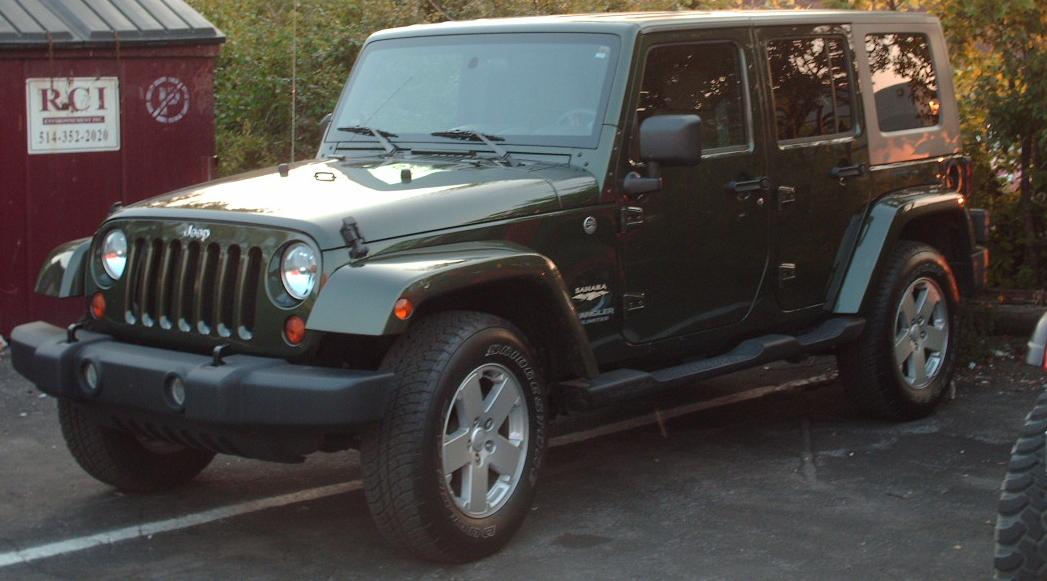
A stock hardtop on a two-door Wrangler runs roughly 130 to 150 pounds, and four-door Unlimited and Gladiator tops push closer to 175 pounds according to aftermarket fitment data published by parts retailers like Quadratec and 4 Wheel Parts. That is well outside what one person should be muscling onto a set of floor stands alone, which is exactly why garage-ceiling hoist systems exist: they turn a two-person wrestling match into a slow, controlled, solo pulley pull. This guide covers the ceiling-mounted lift systems built specifically for that job — not roof racks, which mount on top of the vehicle for hauling cargo, but hoists that store the top itself, overhead, out of the way.
Key Takeaways
- A hardtop hoist is a garage-ceiling pulley or crank system that lifts and stores the removed top overhead — it is not a roof rack, which bolts to the vehicle for cargo.
- Most hoists rate between 145 and 220 lbs, comfortably covering two-door and four-door hardtops with margin for hinges and hardware.
- Joist-mounting (not drywall alone) is non-negotiable; every reputable hoist manufacturer requires anchoring into ceiling joists or added blocking.
- Ceiling clearance requirements range from about 8 feet to 10 feet depending on the system, so measure before you buy.
- Rope-and-cleat hoists (Harken, Lange crank) cost less than powered or all-aluminum rail systems (Lange Power, J-BARR) but require more manual effort per lift.
How a Hardtop Hoist Actually Works
Every hardtop hoist on this list uses one of two mechanical approaches: a rope-and-pulley block system, or a crank/winch system riding on a rail or cable. Both exist to multiply your pulling force so that lifting 150 lbs of fiberglass or steel feels like lifting 20 to 30 lbs of rope tension.

Rope-and-pulley (block and tackle) systems
Harken’s Hoister and the Lange crank models are both variations on a block-and-tackle: a set of pulleys reduces the effort needed to lift the load, and a self-locking cam cleat grips the rope automatically so the top can’t free-fall if you let go mid-lift. A 6:1 mechanical advantage, which is roughly what the Harken 4-point system provides, means a 150 lb top takes about 25 lbs of pull force at the rope — manageable for most adults working solo.
Crank and rail systems
J-BARR and some Lange configurations instead use an aluminum rail or crank-driven cable that the top’s mounting hardware rides on. These tend to feel more “mechanical” and precise, since the top travels on a fixed track rather than swinging on ropes, but they typically cost more and take longer to install because the rail has to be leveled and through-bolted to the ceiling structure.
Ceiling clearance and joist-mounting requirements
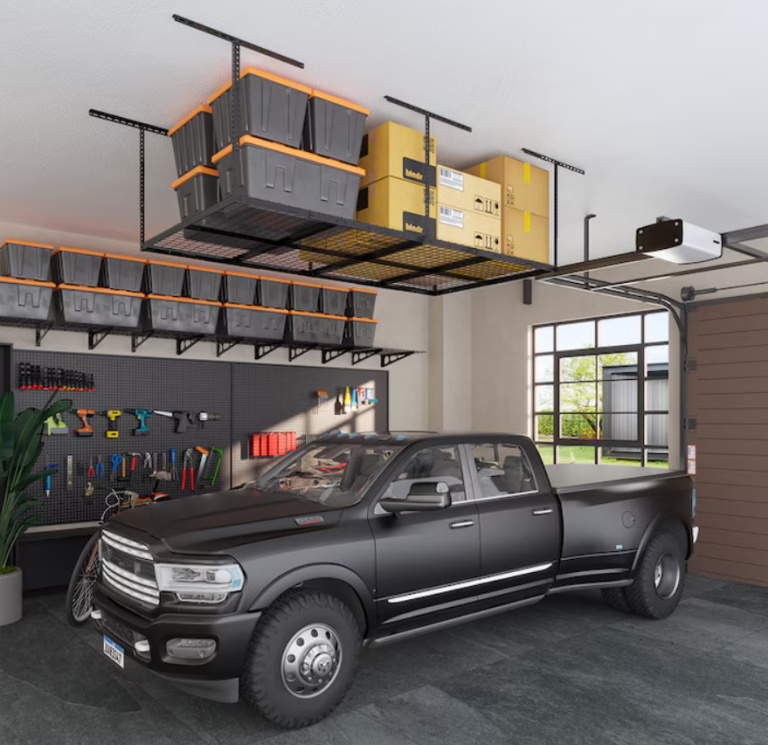
Every manufacturer in this space specifies a minimum ceiling height, usually measured from the garage floor to the bottom of the joist or truss, because the hoist needs enough vertical travel to clear the vehicle roofline before the top is fully stowed. Compact rope systems like the Harken 4-point work in garages with as little as 8 feet of clearance in some configurations, while others want a full 10 feet of unobstructed height. Just as important: every hoist in this roundup requires mounting hardware to be anchored into ceiling joists (or engineered blocking added between them) rather than drywall alone. A loaded hardtop swinging on drywall anchors is a real drop hazard, and manufacturer instructions and warranty terms are explicit that joist mounting is mandatory, not optional.
Ceiling Clearance and Weight Capacity, Compared
The Best Jeep Hardtop Hoists Worth Buying
These seven cover the range from budget rope kits under $150 to premium powered systems well north of $500. Prices are street-level approximates and move around with sales.
1. Harken Hoister 4-Point Lift System (7803B) — approx. $279
The Harken Hoister is the name most Jeep forums default to, and for good reason: it is made in the USA, uses marine-grade ball-bearing blocks borrowed from Harken’s sailing hardware business, and its self-locking cam cleat genuinely stops the rope from running if you let go. It’s rated to 145 lbs, which covers a two-door JL or JK hardtop with room to spare, and fits ceilings up to 10 feet.
Best for: solo two-door Wrangler owners who want the most field-proven rope system on the market.
2. Harken Hoister XL (75-200 lb, 7806.Jeep) — approx. $429
Harken’s higher-capacity version steps the rating up to 200 lbs and adds a self-leveling feature so the top doesn’t tip forward or aft as it rises, which matters more on the heavier four-door and Gladiator tops. It uses the same anti-drop cleat design as the standard Hoister, just scaled for more mechanical advantage.
Best for: Wrangler Unlimited and Gladiator owners whose tops exceed the standard Hoister’s rating.
3. Lange Originals Hoist-A-Top Crank (JK/JL) — approx. $294
Lange has been building Jeep-specific removal hardware for decades, and its crank-style Hoist-A-Top swaps rope-pulling for a geared hand crank, which some owners find easier on the shoulders than a sustained rope pull. It’s rated around 150 lbs and mounts on a compact bracket set rather than a full rail.
Best for: owners who’d rather turn a crank handle than haul on a rope.
4. Lange Originals Hoist-A-Top Power (120V Electric) — approx. $549
The electric version of Lange’s system replaces the hand crank with a 120V motor, so lifting the top is a button-press instead of physical effort entirely. It’s the most expensive rope/cable-based option here, but for anyone with shoulder or back limitations it removes the labor question altogether. Rated to roughly 200 lbs.
Best for: buyers who want push-button operation and don’t mind paying for it.
5. J-BARR Hardtop Removal Hoist and Storage System — approx. $449.95
J-BARR takes a different mechanical approach: an all-aluminum, black powder-coated rail system that the hardtop’s hardware rides along, rather than ropes or a crank cable. It’s rated around 150 lbs, ships with a full install kit, and Jeep owners report the rail-guided motion feels more controlled than a free-swinging rope hoist. Installation runs about an hour and it carries a 1-year warranty.
Best for: owners who want a rail-guided lift instead of a rope-and-pulley system.
6. FrameFirm Hardtop Hoist — approx. $159
FrameFirm is one of the budget-tier four-rope pulley kits that has become common on Amazon, and it punches above its price with a 220 lb rated capacity and compatibility with ceilings from 8 to 16 feet — a wider range than the premium brands offer. It uses stainless hardware and a double-braided rope similar in spec to the pricier systems, just without the brand name.
Best for: budget-conscious owners who still want a high weight rating and flexible ceiling height range.
7. ALLCOS Hard Top Removal Lift — approx. $139
ALLCOS is another budget four-point rope hoist, built for JK/JL Wranglers and Ford Broncos alike, with an anti-drop system and the same wide 8-16 foot ceiling compatibility as FrameFirm. It ships with bonus T-knobs for quick top removal, which some premium kits charge extra for.
Best for: first-time hoist buyers who want the lowest entry price without giving up an anti-drop cleat.
Spec Comparison Table
| Hoist | Mechanism | Max Rated Load | Min. Ceiling Height | Approx. Price |
|---|---|---|---|---|
| Harken Hoister 4-Point | Rope and pulley | 145 lb | 10 ft | $279 |
| Harken Hoister XL | Rope and pulley, self-leveling | 200 lb | 10 ft | $429 |
| Lange Hoist-A-Top Crank | Geared hand crank | 150 lb | 8 ft | $294 |
| Lange Hoist-A-Top Power | 120V electric motor | 200 lb | 8 ft | $549 |
| J-BARR Hoist and Storage | Aluminum rail | 150 lb | 8 ft | $449.95 |
| FrameFirm Hardtop Hoist | 4-rope pulley | 220 lb | 8 ft | $159 |
| ALLCOS Hard Top Lift | 4-point rope pulley | 200 lb | 8 ft | $139 |
Need a rack for your hardtop-equipped Jeep too? A hoist only handles storage of the removed top — it does nothing for cargo hauling once the top is back on or if you’re running a soft top instead. See our guide to the best Jeep roof racks for vehicle-mounted rack options and the hardtop-versus-soft-top fitment issues that come with them.
Frequently Asked Questions
Is a Jeep hardtop hoist the same thing as a roof rack?
No. A roof rack mounts on top of the vehicle to carry cargo like cargo baskets, bikes, or kayaks, and stays attached while you drive. A hardtop hoist is a garage-ceiling fixture that lifts the hardtop off the vehicle entirely and stores it overhead, out of the way, while you drive around with the top off or a soft top on.
Can I mount a hoist into drywall instead of a joist?
No. Every hoist covered here requires mounting into ceiling joists or added blocking. A loaded hardtop swinging from drywall anchors alone is a genuine drop hazard, and it will void the manufacturer’s warranty.
How much does a Jeep hardtop actually weigh?
A stock two-door hardtop typically weighs 130 to 150 lbs; four-door Unlimited and Gladiator hardtops run closer to 150 to 175 lbs, per aftermarket parts retailer fitment data. Add a few pounds for hardware and any add-ons like a Freedom Panel rack.
Can one person really lift a hardtop alone with these systems?
Yes, that’s the entire point of the mechanical advantage these systems provide. A 6:1 pulley ratio, for example, turns a 150 lb top into roughly 25 lbs of pull force at the rope, which is manageable solo for most adults.
What ceiling height do I need for a hardtop hoist?
It varies by system, from about 8 feet on compact rail and budget rope kits up to 10 feet on the full-size Harken systems. Measure your garage’s clear height from floor to the bottom of the joist before buying, and check the specific model’s spec sheet since this is the single most common return reason.
The Bottom Line
If you’re buying your first hoist and just want the most field-proven option, the Harken Hoister 4-Point is the safe default for a two-door top. Heavier four-door or Gladiator tops push you toward the Harken XL, Lange Power, or J-BARR’s rail system. And if budget is the deciding factor, FrameFirm and ALLCOS both deliver real weight capacity and anti-drop hardware for well under $200 — just double-check your garage’s ceiling height and joist locations before you drill a single hole.