
Search “air bag lift jack” and you get two products that have almost nothing in common. One is a fabric bladder you inflate from your tailpipe to lift a stuck 4×4 out of sand. The other is a steel-framed triple-bag jack that runs on shop air and raises a car in about four seconds.
Buying the wrong one is an expensive mistake, because neither substitutes for the other. This guide separates them, gives the published specifications for each, and covers the one safety rule that applies to both.
Key Takeaways
- Exhaust jacks (ARB Bushranger X-Jack Series II) lift 2 tonnes / 2,000 kg to a total lift height of 78 cm (30 inches). They exist to get a vehicle out of sand, mud or snow — not to change a tyre on tarmac.
- Shop pneumatic bag jacks typically rate 3 ton / 6,600 lb with about 16 inches of lift, and raise a vehicle in roughly 3–5 seconds on standard shop air.
- Exhaust jacks give far more height; shop bag jacks give far more capacity and speed. Neither one wins on both axes.
- Both are lifting devices, not supports. Nothing goes under a vehicle held only by an inflated bag.
Two Different Tools, One Name
The confusion is worth clearing up before you spend money.
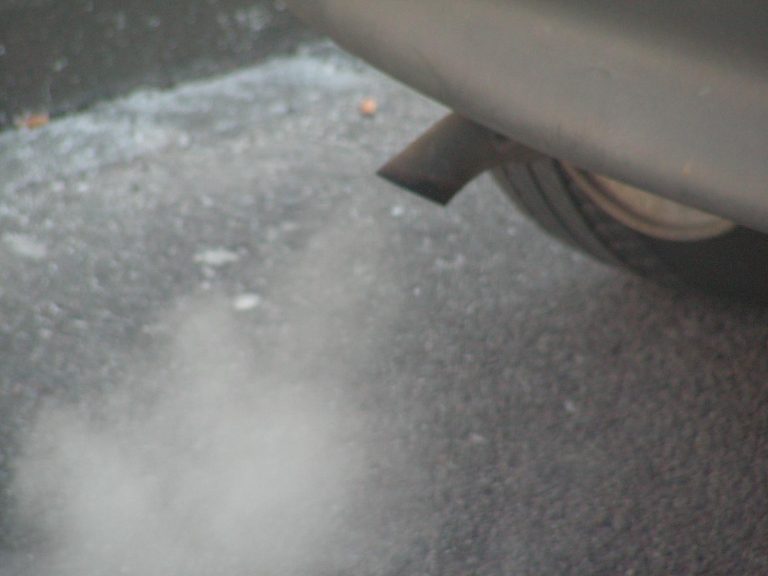
An exhaust jack is a reinforced inflatable bladder. You slide it under the vehicle, connect a hose to the exhaust tip, and engine exhaust gas inflates it. It works where a bottle jack or a scissor jack would simply sink — soft sand, deep mud, snow. The spread footprint is the entire point.
A shop air bag jack is a rigid-framed tool with two or three stacked rubber bladders, fed from a compressor. It lives in a tyre bay or workshop, lifts fast, and is prized because it has no hydraulic seals to leak and no pump handle to work.
Type 1: Exhaust Recovery Jacks
ARB Bushranger X-Jack Series II
ARB publishes a “Total lift weight: 2 tonnes (2,000kg)” and a “Total lift height of 78cm (30″)” for the Series II. The complete kit includes the exhaust jack, three protective mats, gloves, coated instructions and a carry bag, and ARB describes it as “Suitable for use on vehicles, trailers, caravans or farming implements” designed to assist lifting in “sand, mud, snow or soft ground” (ARB, retrieved 2026-07-28).
US retail listings for the same product describe a two-way inflation system that accepts either exhaust gas or a portable air compressor, a triple-layer top with a hard core insert and side curtains for puncture resistance, and note it is designed to work with round exhaust tips. Those listings also carry a qualifier worth repeating: it is not intended for changing tyres.
That last point surprises people. Thirty inches of lift sounds ideal for a wheel change, but an inflatable bladder is compliant by design. It moves under load. A jack that shifts while a wheel is off is exactly the scenario the warning exists to prevent.
Best for: overlanding and recovery in terrain where a rigid jack has nothing solid to push against.
What the Protective Mats Are Actually For
ARB ships three mats in the kit and they are not padding for comfort. Anything sharp under the bag — a rock, a stick, a broken exhaust hanger — will puncture it under two tonnes of load. Sequence matters: clear the ground, lay the mats, then position the bag.
Type 2: Shop Pneumatic Bag Jacks
These are the triple-bag jacks common in tyre shops. The widely sold 3-ton class rates 6,600 lb with lift up to roughly 16 inches, and the appeal is speed: full lift in about 3–5 seconds from a standard compressor, with typical working pressure quoted around 0.8–1.0 MPa (roughly 115–145 psi).
At the professional end, ESCO’s Pro Series 3-Stage Bladder Jack is a 2-ton unit built for low-profile access, while ESCO’s larger airbag jacks reach much higher capacities with a maximum inflation height around 10 inches. Notice the pattern: as capacity climbs, available lift height falls.
The Safety Rule Both Share
An air bag jack is a lifting device. It is not a support. Air is compressible, bladders can be punctured, and a fabric bag under load will move if the ground shifts.
The sequence never changes: lift with the jack, place rated jack stands or cribbing, lower the vehicle onto the stands, then work. Two additional points specific to these tools:
- Exhaust jacks get hot. You are filling a bladder with engine exhaust. Keep hands clear of the fill hose and the tailpipe connection.
- Carbon monoxide is a real hazard. Running an engine to inflate a bag in an enclosed space, or lying beside the vehicle while exhaust vents at ground level, is genuinely dangerous. Outdoors only, and stay upwind.
Which One Should You Buy?
| Your situation | The right tool |
|---|---|
| Stuck in sand, mud or snow, away from help | Exhaust jack — spreads load, huge lift height |
| Tyre bay or busy home shop, flat concrete | Triple-bag shop jack — fast, no hydraulics to leak |
| Roadside tyre change on pavement | Neither — use a proper bottle or trolley jack |
| Low-clearance car, limited access | Low-profile bladder jack such as the ESCO 3-stage |
| Working underneath the vehicle | Any jack plus rated stands, always |
One more consideration for exhaust jacks specifically: they need a round exhaust tip to seal against. Oval, rectangular, or heavily angled tips are a fitment problem, and a diesel with a large-diameter outlet may not seal at all. Check before buying, not in a sand pit.
Frequently Asked Questions
How much weight can an exhaust air jack lift?
ARB rates the Bushranger X-Jack Series II at 2 tonnes (2,000 kg, roughly 4,400 lb) with a total lift height of 78 cm / 30 inches. That is a recovery rating for lifting one corner clear of soft ground, not a workshop lifting capacity.
Can I use an air bag jack to change a tyre?
Retail listings for the X-Jack state it is not intended for tyre changes, and that guidance is sound — an inflatable bladder is compliant and can shift under load. Shop triple-bag jacks are used for wheel work in trade settings, always in combination with stands.
What air pressure does a shop bag jack need?
Typical working pressure for the 3-ton triple-bag class is quoted around 0.8–1.0 MPa, roughly 115–145 psi. Most shop compressors cover this; a small pancake compressor may struggle to keep up over repeated lifts.
Do air bag jacks work on uneven ground?
That is what the exhaust type is designed for. The large footprint spreads load across soft or irregular surfaces where a rigid jack would sink or topple. Shop bag jacks assume flat, solid concrete.
Are air bag jacks safer than hydraulic jacks?
Different failure modes, not safer. Bag jacks have no hydraulic seals to fail slowly, but they can be punctured suddenly. Either way, the vehicle should rest on stands before anyone goes underneath.
The Bottom Line
If your problem is a vehicle buried in soft ground, buy an exhaust jack and check your exhaust tip is round first. If your problem is lifting cars quickly on flat concrete, buy a triple-bag shop jack in the 3-ton class. If your problem is a flat tyre on the shoulder of a highway, neither of these is the answer.
And whichever you buy, it lifts. Stands hold.
Exhaust Work in Keyport, NJ
An exhaust jack is only as good as the tailpipe it seals against — and a rusted, blowing exhaust is a problem long before that. Discount Brakes and Mufflers has served Keyport and Monmouth County for over 40 years, fabricating and bending custom pipe in-house, and we repair rather than replace wherever the part allows.
Get a price in minutes with our instant estimate tool, see what is involved in muffler and exhaust repair, or contact our Keyport shop.
Note: this is a buyer’s guide compiled from manufacturer specifications and retail product documentation. Always follow the manufacturer’s instructions and use rated jack stands. Discount Brakes and Mufflers specializes in brakes, mufflers, catalytic converters and custom exhaust; we do not sell lifting equipment.