
The B20 has a reputation problem that’s mostly earned: the factory cylinder liners are commonly reported to crack or break around the 300-horsepower mark, and once one goes, the block is usually done. That single fact shapes almost every real decision in a B20 turbo build — how much boost you run, whether you sleeve the block before or after it lets go, and why so many builders skip the stock B20 head entirely and bolt on a B16A or B18C VTEC head instead. None of that makes the B20 a bad turbo candidate; it makes it a platform where the smart money goes into the block and the head decision before it goes into the turbo itself.
This guide covers which B-series turbo kits are worth buying for a B20-based build, why the stock sleeves are the real limiting factor rather than the turbo size, how the B20/VTEC head-swap approach changes the equation, and what fuel system and ECU tuning have to change once boost enters the picture. The same “know your platform’s actual limiting factor before you shop for a turbo” logic runs through our K24 turbo kit guide, where compression ratio rather than block strength is the variable that changes everything.
Key Takeaways
- The B20’s factory cylinder liners are widely reported to fail around 300 horsepower, and low boost doesn’t fully prevent it — sleeving is the only real fix if you’re building past mild power.
- Community consensus generally caps stock, unsleeved B20 blocks at roughly 10 psi, treated as a ceiling to manage risk rather than a number that guarantees reliability.
- The B20/VTEC hybrid — a B20 bottom end paired with a B16A or B18C (GSR) VTEC head — is a well-established, real community practice that trades some of the B20’s low-end torque advantage for a head that flows and revs better.
- A VTEC head swap onto a non-VTEC B20 block requires a dedicated oil-routing kit, since the B20 block has no VTEC oil pressure switch or the internal passages a VTEC head needs.
- Hondata’s OBD1 platform (commonly sold as the S300) tunes many B-series ECUs directly; serious or high-power builds commonly move to a full standalone like AEM EMS instead.
The Kits Worth Buying
PLM (Private Label Mfg) T3 Top Mount Manifold Kit
PLM’s Power Driven top-mount manifold is one of the more commonly recommended B-series manifolds, built for B16/B18/B20 applications and designed to spool a T3-based turbo quickly in the tight confines of a B-series bay. Top-mount kits like this are a natural fit for the B20/VTEC hybrid builds this platform is known for, since packaging around the VTEC oil lines and conversion hardware is already a factor in the engine bay layout.
Best for: builders doing a top-mount, moderate-boost build who want a widely used, well-documented manifold rather than an unknown quantity.
Speed Factory Racing Top Mount Turbo Manifold
Speed Factory is a frequently cited name in the B-series turbo space, and its top-mount manifold for B16/B18/B20 engines follows the same top-mount logic as PLM’s kit while being another commonly recommended, well-supported option in the same price range. Choosing between the two often comes down to specific turbo flange compatibility and whatever your engine bay’s existing accessory layout allows.
Best for: builders who want a second well-established manifold option to cross-shop against PLM before committing to hardware.
Entry-Level T3/T4 Kits (Milky Motorsports, 1320 Performance, JDMYARD-style budget kits)
Budget-tier B-series kits bundling a T3 or T3/T4 hybrid turbo, log-style manifold, and a basic intercooler are widely available and commonly used as a first step into forced induction on a B-series swap. These kits are a reasonable entry point for a mild, low-boost build, but the manifolds and turbos in this tier are generally less refined than the PLM or Speed Factory options above, and the included wastegate and piping are often the first things upgraded once a build moves past its initial power target.
Best for: builders on a tight budget who want to get a B-series swap boosted at low pressure before deciding whether to invest further.
The Sleeves Are the Real Limiting Factor, Not the Turbo
Every B-series block uses cast-in iron liners rather than the pressed-in sleeves found in some other engine families, and the B20’s liners in particular are widely regarded in the Honda community as thinner and weaker than the B16A’s or B18C’s. The commonly cited failure point is right around 300 horsepower, and it isn’t a gradual wear-out — a liner cracks or a piston partially breaks through, and the block is typically finished as-is. Keeping boost conservative slows down when that happens, but it doesn’t reliably prevent it on a stock, unsleeved B20 short block.
The community-standard workaround is straightforward: sleeve the block before pushing meaningfully past stock power, which replaces the factory liners with proper aftermarket sleeves designed to handle sustained boost. Builders who plan to stay well under the failure point sometimes skip sleeving and treat the stock block as a limited-life part, but that’s a deliberate risk trade-off, not a way of avoiding the underlying weakness.
How Much Boost Is Actually Safe on a Stock B20 Block?
Community consensus generally treats roughly 10 psi as a practical ceiling on a stock, unsleeved B20 block, framed as a way to manage risk rather than a number that guarantees the liners will hold. Even at that level, some builders still see failures, which is why “stock B20 turbo” builds are frequently described in Honda forums as a temporary or budget stage rather than a long-term plan. If the goal is a durable build meant to be driven and boosted for years, sleeving the block before final assembly is the path most experienced builders actually take, and it removes the liner question from the equation entirely rather than just pushing the ceiling higher.
The B20/VTEC Hybrid: Why Builders Swap Heads
The B20 was never sold with a VTEC head from the factory — it’s a torque-oriented, non-VTEC design meant for daily-driver Accords, Preludes, and CR-Vs, not high-rpm performance. Because the B-series bottom end is largely interchangeable across displacements, a common practice is to keep the B20’s 2.0-liter bottom end for its extra displacement and torque advantage over a 1.6 or 1.8-liter B-series block, then bolt on a B16A or B18C (GSR) VTEC head to get better-flowing intake and exhaust ports plus VTEC’s high-rpm cam profile. The result, generally called a B20/VTEC or “B20 hybrid,” is meant to combine the B20’s low-end torque with a head that breathes and revs the way a stock B20 head never could.
The swap isn’t a simple bolt-on. The B20 block has no VTEC oil pressure switch or internal oil routing for a VTEC head, so a dedicated VTEC oil conversion kit — typically including oil feed lines, a sandwich plate, and dowel pins — is required to supply oil pressure to the VTEC solenoid correctly. The B20 bottom end also lacks the oil squirters some VTEC blocks use for piston cooling, and it isn’t rated to spin as safely to redline as a B16A or B18C bottom end. Builders pushing higher revs or serious boost commonly pair the head swap with higher-compression pistons matched to the new head, a balanced rotating assembly, and an engine girdle for added bottom-end rigidity — all before the turbo kit itself becomes the priority.
Fuel System and Injector Sizing
Stock B-series injectors are undersized the moment boost enters the picture. 550cc injectors are a commonly cited starting point for B16/B18/B20 applications and are generally considered adequate up to roughly 300 horsepower; builds targeting higher output commonly step up to 850cc or larger injectors paired with a higher-flow fuel pump, since running an injector near its duty-cycle limit is a common source of a lean, unreliable tune. A Walbro-style 255lph (or larger, E85-rated pump for ethanol-blend builds) in-tank pump swap is a standard companion upgrade once injector size increases, since the stock pump is sized for the factory naturally aspirated fuel demand, not a turbocharged one.
ECU Tuning: Hondata Versus a Full Standalone
Hondata’s OBD1 platform, commonly sold as the S300, plugs into the USDM rectangular OBD1 ECUs found in early-90s Civics and 1994–2001 Integras and gives full control over fuel, ignition, and boost-related parameters without replacing the factory computer; adapter harnesses extend similar functionality to some OBD0 and OBD2 applications. It’s a reasonable, comparatively affordable path for a moderate turbo B20 build. Serious builds, especially ones running a B20/VTEC hybrid head with more aggressive cam timing and a wider rev range to manage, commonly move to a full standalone like AEM EMS, trading Hondata’s relative simplicity for more complete control over ignition and fueling strategy at the cost of a steeper tuning learning curve. Either path assumes a competent tuner is doing the actual calibration — neither system makes safe power on its own.
Manifold and Turbo Sizing for the B-Series Bay
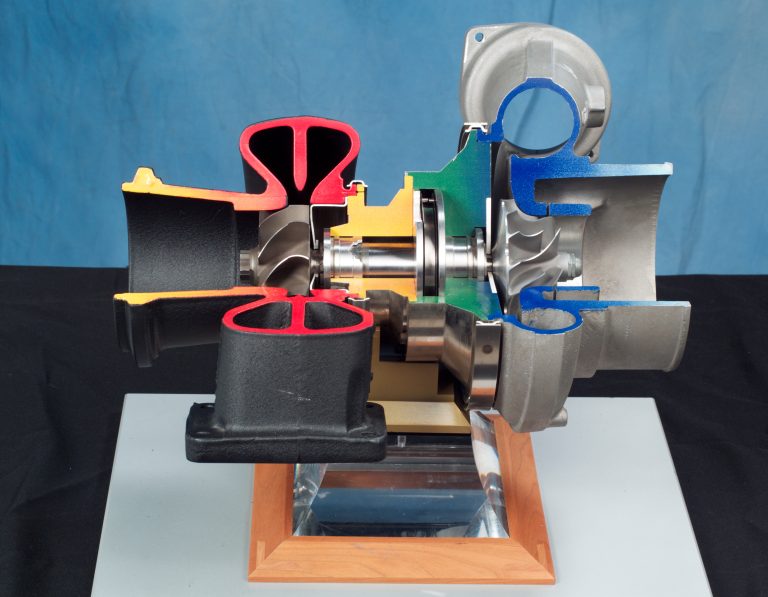
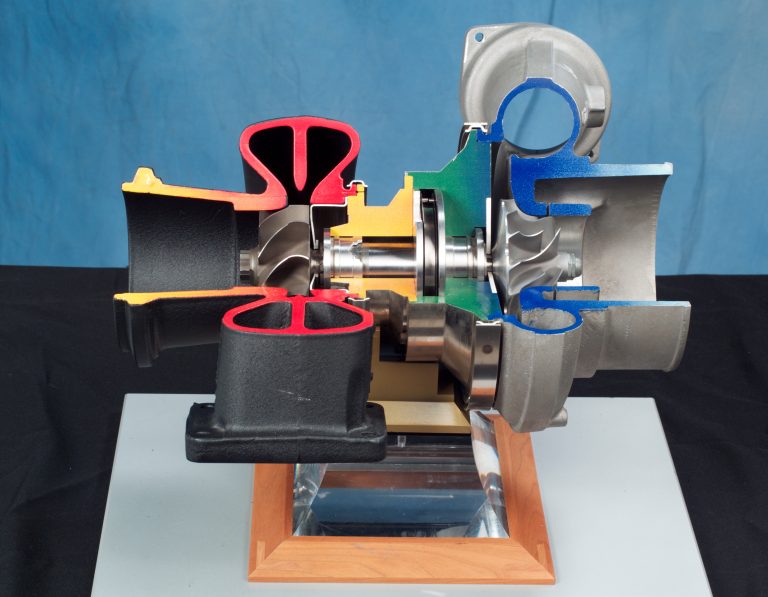
Most B-series turbo manifolds are log-style, single-scroll designs mounted either top-side or facing forward, and turbo sizing follows the same logic as any small-displacement four-cylinder: a smaller T3-frame turbo spools quickly and suits a daily-driven, lower-boost B20/VTEC build, while a larger T3/T4 hybrid or larger frame turbo trades low-rpm response for a higher ceiling suited to a car built more around peak power than street driveability. Top-mount manifolds are common on B-series swaps specifically because they package well around the VTEC oil conversion hardware and factory accessory placement in an already tight engine bay; forward-facing manifolds can simplify certain intercooler piping runs at the cost of needing more front-end clearance work. Whichever manifold you choose, confirm its turbo flange (T3 versus T3/T4 versus T4) matches the turbo you’re planning to run before ordering, since mismatched flanges are one of the more common return-and-reorder mistakes in B-series turbo builds. If you’re still deciding between a journal-bearing and ball-bearing center cartridge for that turbo, our ball bearing turbo guide covers the spool-up and durability tradeoffs independent of which engine platform you’re bolting it to.
Frequently Asked Questions
How much horsepower can a stock B20 block handle before it breaks?
The factory cylinder liners are widely reported to fail around 300 horsepower, and low boost alone doesn’t reliably prevent it. Builds meant to last past that range commonly sleeve the block first.
What boost level is safe on a stock, unsleeved B20?
Community consensus generally treats roughly 10 psi as a practical ceiling, framed as a way to manage risk rather than a guarantee the liners will hold at that pressure indefinitely.
What is a B20/VTEC hybrid build?
It’s a B20 bottom end paired with a B16A or B18C (GSR) VTEC head, combining the B20’s extra displacement and torque with a head that flows better and revs higher than the stock B20 head.
Do I need special parts to put a VTEC head on a B20 block?
Yes. The B20 block lacks the oil routing a VTEC head needs, so a dedicated VTEC oil conversion kit with feed lines, a sandwich plate, and dowel pins is required to supply oil pressure to the VTEC solenoid correctly.
What injectors do I need for a turbo B-series build?
550cc injectors are a common starting point good to roughly 300 horsepower; higher targets commonly move to 850cc or larger injectors along with a higher-flow fuel pump.
Should I use Hondata or a full standalone ECU for a turbo B20?
Hondata’s OBD1 platform (commonly sold as the S300) is a reasonable, more affordable choice for moderate builds. Higher-power or B20/VTEC builds with wider rev ranges commonly move to a full standalone like AEM EMS instead.
Is the B20 or the K24 the better Honda turbo swap platform?
They solve different problems. The B20’s limiting factor is liner strength before big power, addressed by sleeving; the K24’s limiting factor is compression ratio, which varies by which chassis the engine came from. Neither is strictly “better” — the right choice depends on the chassis you’re building and whether you want the B-series’s higher-revving character or the K-series’ larger factory displacement.
The Bottom Line
Buy a PLM or Speed Factory top-mount manifold kit for a well-supported B-series turbo build, or a budget entry-level kit if you’re testing the waters at low boost first. But address the B20’s actual weak point before chasing turbo size: sleeve the block if you’re building past roughly 300 horsepower, and if you’re doing the popular B20/VTEC head swap, budget for the oil conversion kit and supporting bottom-end work up front rather than as an afterthought once the head is already bolted on.