An engine support bar and an engine hoist solve two different problems, and using the wrong one is how engines end up damaged or workers end up hurt. A support bar holds an engine in place while you disconnect motor mounts, pull a transmission, or work on a timing chain — it’s rated for partial, static support, not full removal. This guide compares the best engine support bars for 2026 by weight capacity, mount style, and price, and explains the one distinction — support bar vs. hoist — that determines whether you’re using the right tool for the job at all.
Key Takeaways
- An engine support bar holds an engine in place for partial work (motor mounts, clutch, timing chain); it is not rated for fully lifting an engine out of the bay — that’s a hoist’s job.
- Weight capacity ranges from 700 lb (OTC 1725, 3-point) to 1,100 lb (OTC 4324 Stinger, Cal-Van, 2-point designs) across the models compared here.
- Fender-hook mounts without protective padding can scratch or dent paint — look for PVC-coated or rubber-padded contact points.
- The OTC 4324 Stinger is the best all-around pick for wider engine bays and higher-capacity jobs; the OTC 1725 is the best choice for lighter unibody FWD cars.
Engine Support Bar vs. Engine Hoist: Which Do You Actually Need?
An engine support bar spans across the engine bay, resting on the fenders or frame rails, and holds the engine in place from above while you disconnect motor mounts, transmission bolts, or subframe components — the engine stays in the vehicle, just temporarily unsupported by its normal mounts. An engine hoist (cherry picker) is a completely different tool built to fully lift an engine out of the bay for removal, teardown, or a full swap.
Confusing the two is a real safety issue: a support bar’s 700-1,100 lb rating is for static, partial support inside the bay, not the dynamic lifting load of hoisting an engine free of its mounts entirely. If your job is a full engine-out rebuild, you need a hoist — our best rotating engine stand guide covers what to do with the engine once it’s out. If your job is motor mount replacement, a clutch job, or timing chain work with the engine staying in the bay, a support bar is the right tool and a cheaper one.
The 6 Best Engine Support Bars in 2026
We compared these on weight capacity, mount style, and adjustability — the details that actually determine whether a bar fits your specific engine bay and job.
1. OTC 4324 “Stinger” — Best Overall
Capacity: 1,100 lb | Width: 27″–57″ adjustable | Mount: Frame-rail/fender clamp with padded legs, two 36″ chain assemblies
The 2-point Stinger’s wide adjustability range covers everything from compact cars to full-size trucks, and its 1,100 lb rating gives real headroom for transmission and clutch jobs that need more capacity than a basic 3-point bar. Tubular steel construction holds up under repeated shop use.
2. OTC 1725 — Best for Light Unibody Cars
Capacity: 700 lb | Mount: Fender-rail hook legs, PVC-coated pads, self-centering 3-point design
The third support point resists tipping on inclines better than a simple 2-point bar, and the PVC-coated legs protect paint on lighter unibody FWD cars where 700 lb of capacity is plenty for motor mount and timing chain work.
3. Cal-Van Tools 1100 lb Engine Support Bar — Best Budget High-Capacity
Capacity: 1,100 lb | Mount: Two-hook fender assembly
Cal-Van matches the OTC 4324’s capacity at a more accessible price point with a simpler two-hook design, making it a reasonable choice for independent shops or DIYers who don’t need the Stinger’s full adjustability range.
4. Astro Pneumatic 5820 Transverse Support Arm — Best for FWD Transverse Engines
Mount: Fender-mount with stabilizer arm, built for transverse-engine layouts
Purpose-built for front-wheel-drive cars with transverse-mounted engines, the added stabilizer arm addresses the off-center loading these layouts create — a detail generic bars don’t account for. It’s directly comparable to the OTC 4324 in capability, with the transverse-specific design as its main differentiator.
5. TraXion Engineered Products Support Bar — Best US-Made Option
Mount: Fender-well span, adjustable across vehicle widths
TraXion’s shop-equipment lineup (including its Topside Creeper) is US-made and built for repeated professional use, making this a reasonable pick for a shop that prioritizes domestic manufacturing and durability over the lowest sticker price.
6. Harbor Freight / Pittsburgh 1000 lb Bar — Best Budget Entry Point
Capacity: 1,000 lb | Mount: Generic adjustable fender hooks
The most widely reviewed entry-level option in this category, this bar covers occasional DIY use at the lowest price point here. It won’t match the OTC or TraXion bars on long-term durability under daily shop use, but for a job or two a year, it does the job.
Weight Capacity Compared
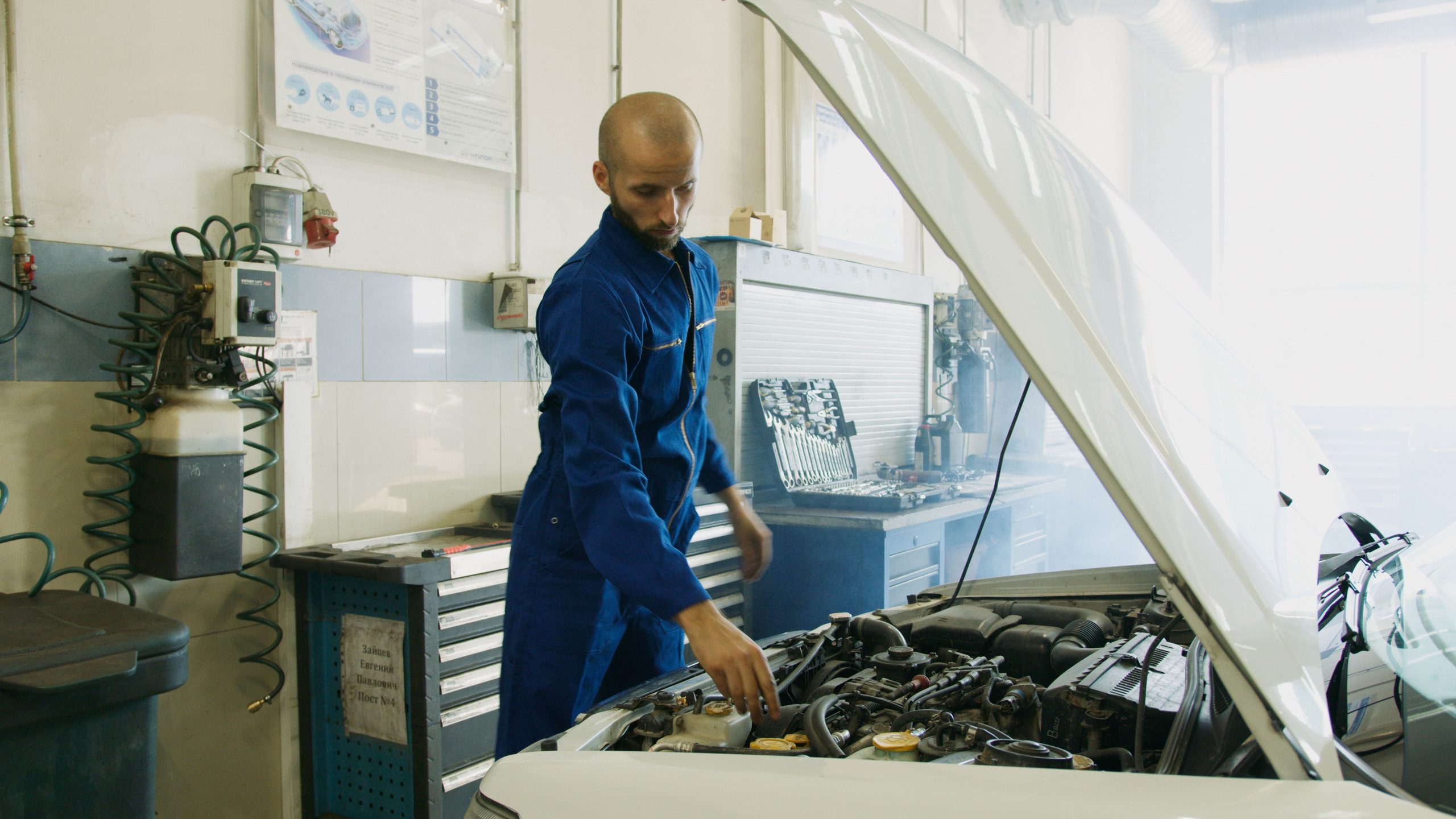
Capacity splits into two tiers across this list: 700 lb 3-point bars built for lighter cars, and 1,000-1,100 lb 2-point bars with wider adjustability for trucks and bigger engine bays.
Manufacturer-rated static support capacity. Source: OTC Tools, Cal-Van Tools, and retailer product listings.
For the rest of a home engine-work setup, see our best garage air compressor and best disc brake caliper tool guides.
Fender-Mount Damage: The Detail Most Buyers Overlook
A support bar’s fender-hook or clamp legs rest directly on your fenders or frame rails, and without protective padding, that contact point can scratch paint or dent thin sheet metal under load. The OTC 1725’s PVC-coated legs are a direct response to this risk; if a bar you’re considering doesn’t specify rubber or PVC padding on its contact points, plan to add your own protective covering — a folded shop towel or dedicated fender cover — before setting the bar down.
2-Point vs. 3-Point Bars: What’s the Real Difference?
A 3-point bar (like the OTC 1725) adds a third contact point that resists tipping, particularly useful on an incline or when the load isn’t perfectly centered. A 2-point bar (like the OTC 4324 or Cal-Van) is simpler and often more adjustable in width, but relies on careful centering of the load to avoid tipping toward one side. Neither is universally better — a 3-point design adds stability at the cost of some setup complexity, while a 2-point design is faster to set up but demands more attention to load balance.
Frequently Asked Questions
Can I use an engine support bar to fully remove an engine?
No. Support bars are rated for partial, static support while the engine stays in the vehicle — motor mount replacement, clutch work, timing chain jobs. Fully removing an engine from the bay requires an engine hoist (cherry picker), which is built and rated for that dynamic lifting load.
Will an engine support bar damage my car’s paint?
It can, if the bar’s fender-contact legs aren’t padded. Look for PVC-coated or rubber-padded legs (like the OTC 1725), or add your own protective covering under any bar’s contact points before setting it down.
Do I need a 700 lb or 1,100 lb support bar?
It depends on your vehicle and job, not just engine weight — most passenger car and light truck engines fall well within a 700 lb rating for the kind of partial support these bars are used for. Step up to a 1,100 lb 2-point bar mainly for wider engine bays (trucks, larger V6/V8 layouts) where the extra width adjustability matters as much as the capacity number.
Bottom Line
The OTC 4324 Stinger is the strongest all-around engine support bar for its wide adjustability and 1,100 lb capacity, while the OTC 1725 covers lighter unibody cars well at a lower price. Whichever you choose, confirm it’s padded to protect your fenders, and remember what this tool is actually rated for — partial in-bay support, not full engine removal, which still needs a proper hoist.