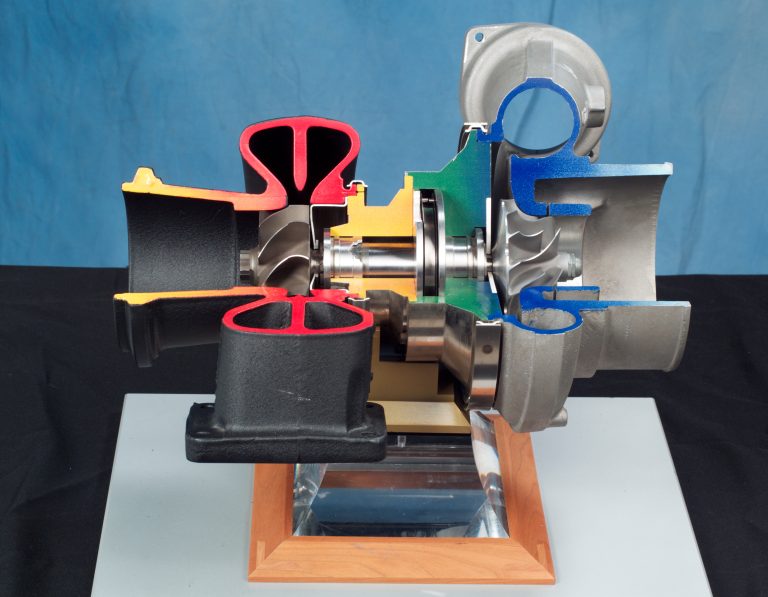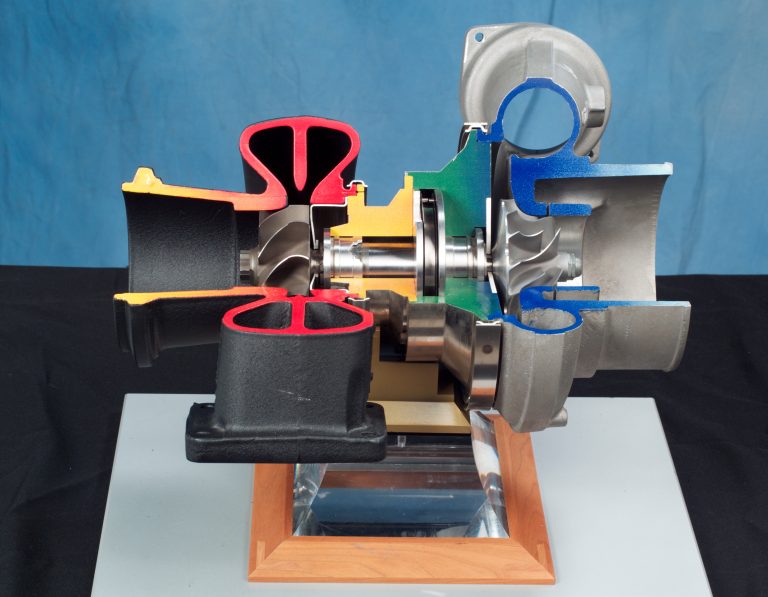
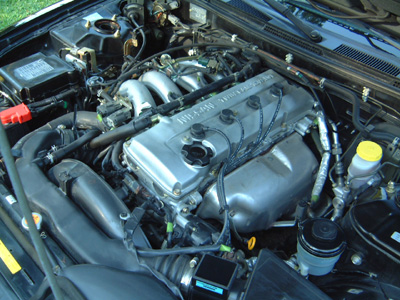
The KA24DE is the reason the S13 and S14 240SX became the default drift chassis in the U.S. long before anyone imported an SR20 or RB. It’s a cast-iron-block 2.4L four-cylinder that’s cheap, plentiful, and genuinely tough by naturally aspirated standards — and that iron block is also exactly why a KA-T (turbo KA24DE) build has become one of the most common ways to get real power out of a 240SX without a full SR or LS swap. The catch is the same one that shows up in every stock-internals turbo build: the block can take boost, but the factory connecting rods were never engineered for it, and the rod — not the piston, not the head — is the part that decides how far you can push a stock-bottom-end KA before you’re gambling with a shop bill.
This guide covers which KA24DE turbo kits are actually worth buying in 2026, what the community-cited safe power ceiling on stock rods really is (and isn’t), why the “KA-T” label gets thrown around inaccurately, and what the fuel system and ECU have to become before any of it makes reliable power. Like our guides to the 2JZ-GE, S2000, and Miata platforms, the theme here is the same: the engine’s real limiting factor almost never matches what a forum post about a different build implies.
Key Takeaways
- The KA24DE’s stock connecting rods, not the pistons or block, are the commonly cited weak point under boost — the block itself is regularly described as overbuilt for the naturally aspirated power it was designed to make.
- A widely cited conservative safe range on stock rods is roughly 300–350 whp; individual engines have reportedly survived well past that, but rod failure rather than piston failure is the commonly reported outcome once things go wrong.
- “KA-T” is enthusiast shorthand for a turbocharged KA24DE build, not a factory JDM engine variant — there was no factory-turbocharged KA24DE sold in the 180SX or Silvia RPS13; those cars used the SR20DET.
- Stock injectors run out almost immediately under boost; 370cc is the widely cited minimum starting point, with 550–750cc+ and an upgraded fuel pump needed as the power target climbs.
- Standalone options like MegaSquirt and piggyback/reflash options like Nistune are the common tuning paths for a turbo KA24DE, since the factory ECU and MAF-based fueling strategy weren’t designed around boost.
The Kits Worth Buying
ISR Performance KA24DE Top Mount / RamHorn Turbo Kit
ISR Performance is one of the most established names specifically building for the S13/S14 KA24DE, and its kits are commonly built around either a top-mount SCH40 stainless manifold or the RamHorn-style SCH10 manifold, both designed to retain power steering and A/C. ISR offers the kit paired with turbo options ranging from a roughly 400–500hp-rated unit up to a larger 500–750hp-capable turbo, and the manifolds have reportedly been test-fit with turbos as large as a 35-series without clearance issues. That range makes it realistic to buy into the ISR ecosystem at a moderate power target and upgrade the turbo later without replacing the manifold.
Best for: builders who want a well-documented, S13/S14-specific manifold with real room to grow the power target over time.
CXRacing T04E Top Mount Turbo Kit with Intercooler
CXRacing’s top-mount T04E kit is the budget-tier entry point that shows up repeatedly in 240SX turbo-kit discussions, commonly cited as good for roughly 200–400 hp depending on fuel system and tuning. It’s a complete bolt-on package — manifold, turbo, intercooler, and piping — at a price point well under the specialty-brand kits, which is exactly why it’s popular with first-time turbo builders working with a limited budget. The tradeoff is the same one that applies to any budget universal-style kit: expect to spend more time fitting oil and coolant lines correctly and confirming clearance than you would with a chassis-specific kit from a KA-focused manufacturer.
Best for: a first turbo build on a tight budget, where a moderate, reliable power bump matters more than headroom for a big power ceiling.
Nice Time Racing Omega Twin-Turbo Kit
The Nice Time Racing “Omega” kit occupies its own niche: it’s commonly described as the only bolt-on twin-turbo kit currently available for the KA24DE, using dual smaller turbos rather than a single large one. Twin small turbos generally spool faster and more progressively than one large turbo sized for the same peak output, which matters a lot for a drift car that needs boost to come in predictably mid-slide rather than all at once. It’s a more specialized, more expensive route than a single-turbo top-mount kit, and it’s worth it specifically for the throttle response, not for outright peak-number bragging rights.
Best for: drift-focused builds prioritizing spool behavior and driveability over the simplicity and lower parts count of a single-turbo setup.
How Much Power the Stock Bottom End Actually Handles
The KA24DE’s cast-iron block has a reputation as one of the tougher stock bottom ends in the drift-swap world, and that reputation is largely earned — the block itself is rarely the failure point. The commonly reported weak link is the factory connecting rods. Community accounts describe stock rods surviving well past 500 hp in isolated cases, and equally describe rods letting go at 300–350 hp in others, which is the core reason there isn’t one clean number that applies to every engine. A widely cited conservative target for a stock-rod turbo KA build is in the 300–350 whp range on a safe, well-executed tune; pushing meaningfully past that on stock rods is a documented gamble rather than a guaranteed failure, and when it does fail, it’s the rod bending or letting go — not the piston cracking — that ends the engine.
What separates the builds that survive above the conservative zone from the ones that don’t generally comes down to tune quality, boost control, and knock management rather than luck alone — a single knock event under boost is commonly cited as enough to damage a piston even when the rods hold. Builders targeting anything past roughly 350 whp on a car that sees real track or drift use, rather than occasional street boost, are commonly advised to budget for forged rods and pistons from the start rather than treating the stock internals as a given.
What “KA-T” Actually Means (And What It Doesn’t)
“KA-T” gets used constantly in 240SX forums and parts listings, and it’s easy to assume it refers to a factory turbocharged variant of the KA24DE the way, say, a factory SR20DET differs from a naturally aspirated SR20DE. That assumption doesn’t hold up: Nissan never sold a factory-turbocharged KA24DE. The JDM RPS13 180SX and Silvia models that came from the factory with a turbocharged engine used the SR20DET, not a turbo KA. “KA-T” is purely enthusiast shorthand for a KA24DE that’s been turbocharged aftermarket — the label describes the build, not a factory part number.
That distinction matters for parts shopping in a more practical way: because there’s no factory turbo KA24DE, there’s no factory turbo-spec KA piston, rod, or head gasket to source secondhand the way you could hunt down factory SR20DET internals. Every KA-T build is working from naturally aspirated factory internals plus aftermarket forced-induction hardware from day one, which is exactly why the bottom-end strength question above is a “when do I upgrade” question rather than a “which factory variant did I get” question the way it is on some other platforms.
Fuel System: Injectors and Pump Sizing
The KA24DE’s factory injectors are sized for naturally aspirated airflow and run out of headroom almost immediately once boost enters the picture, making the fuel system one of the first things that has to change on any turbo build. 370cc is commonly cited as the practical minimum starting point for a turbo KA24DE, with SR20DET injectors (also roughly 370cc) frequently mentioned as a cheap, readily available upgrade path. As the power target climbs, builders commonly move to injectors in the 550–750cc range and beyond, sized to the actual horsepower goal rather than bought at the largest size available, since oversized injectors hurt idle quality and low-end drivability.
A larger fuel pump has to come with the injector upgrade — the stock in-tank pump isn’t sized to feed the larger injectors at boost, and running out of fuel pressure under load is a common, entirely avoidable way to lean out an otherwise well-built turbo KA24DE. Confirm the injector data (flow rate, dead time) is programmed correctly into whichever ECU or piggyback you’re running; a mismatched injector setting in the tune is one of the more common, avoidable causes of a bad turbo KA tune.
ECU and Tuning Options
The factory KA24DE ECU and its MAF-based fueling strategy weren’t designed around forced induction, so some form of tuning solution is not optional on a turbo build. MegaSquirt is a common, well-documented standalone route for the KA24DE community, and it’s frequently chosen because it can eliminate reliance on the factory MAF sensor and gives full control over fueling and ignition tables through TunerStudio software. Nistune is the other commonly cited path — it works by piggybacking on (or replacing the firmware of) the factory ECU rather than replacing it outright, and it’s often described as a lower-cost way to get full tuning access to the factory hardware compared to a full standalone. AEM’s piggyback FIC-style controllers are also mentioned in the community as a way to adjust fueling and timing without fully replacing the stock ECU, though with less end-to-end control than a true standalone.
Which path makes sense depends on the power target and how much of the car’s other management (idle control, launch strategy, datalogging) you want centralized in one system rather than layered on top of the factory ECU. A moderate-boost KA-T built around a budget kit and a conservative tune can often get by on a piggyback solution; a build pushing toward or past the stock-rod ceiling benefits from the finer control a full standalone provides. It’s the same tradeoff owners face on other stock-internals swap platforms — our K24 turbo kit guide and IS300 turbo kit guide both cover the same standalone-versus-piggyback decision on engines with their own stock-internals ceilings.
Kit Comparison at a Glance
| Kit | Configuration | Commonly cited power range | Best for |
|---|---|---|---|
| CXRacing T04E Top Mount + IC | Single turbo, top mount | ~200–400 hp | Budget first build |
| ISR Performance Top Mount / RamHorn | Single turbo, chassis-specific manifold | ~400–750 hp (turbo dependent) | Growing into a higher power target |
| Nice Time Racing Omega | Twin turbo, bolt-on | Varies by turbo pair; spool-focused | Drift-focused spool and driveability |
Whichever tier you land on, the bottom-end and fuel-system realities above apply the same way — a bigger turbo doesn’t change what the stock rods can hold, and no kit on this list ships with the injectors or fuel pump a real power target needs.
Frequently Asked Questions
What’s the safe power limit on a stock KA24DE bottom end?
A commonly cited conservative range is roughly 300–350 whp. Some stock-rod engines have reportedly survived well past 500 hp, but rod failure — not piston failure — is the typical outcome once a stock-rod engine does let go.
Is “KA-T” a factory Nissan engine?
No. Nissan never sold a factory-turbocharged KA24DE. “KA-T” is enthusiast shorthand for an aftermarket-turbocharged KA24DE. The factory-turbo JDM RPS13 180SX and Silvia models used the SR20DET instead.
What injectors do I need for a turbo KA24DE?
370cc (commonly sourced from an SR20DET) is a widely cited minimum starting point. Builds targeting more power commonly move to 550–750cc injectors, sized to the actual horsepower goal, paired with an upgraded fuel pump.
Do I need a standalone ECU for a turbo KA24DE?
Some tuning solution is required since the factory MAF-based ECU wasn’t designed for boost. MegaSquirt is a common full-standalone route; Nistune is a common lower-cost path that works with the factory ECU hardware; AEM piggyback controllers are also used for more limited fueling and timing adjustment.
Which KA24DE turbo kit should a first-time builder buy?
A budget-tier kit like the CXRacing T04E top mount package is the common starting point for a first build on a limited budget, with the understanding that a chassis-specific kit like ISR’s offers more documented support and room to grow the power target later.
Can the KA24DE block itself handle boost?
The cast-iron block is commonly regarded as strong relative to the power it was designed to make naturally aspirated, and it’s rarely the reported failure point. The connecting rods, not the block, are the commonly cited weak link.
Is a twin-turbo kit worth it over a single turbo on a KA24DE?
It depends on priorities. A twin-turbo setup like the Nice Time Racing Omega kit is chosen for faster, more progressive spool rather than for a higher peak number than a well-sized single turbo can achieve.
The Bottom Line
Buy the ISR Performance kit if you want a chassis-specific manifold with real room to grow the turbo size later, the CXRacing T04E kit if you’re building on a tight budget and a moderate power target is the goal, or the Nice Time Racing Omega twin-turbo kit if spool behavior for drifting matters more than keeping the parts count simple. But size the fuel system and pick a real tuning solution before chasing a number past the stock-rod comfort zone — on a KA24DE, the turbo was never the part that decided how far you could push it. The rods were.