
Most turbo-swap platforms have a weak head gasket, a soft bottom end, or thin cylinder liners standing between stock parts and real boost. The S2000’s F20C and F22C engines have a different problem: no obvious weak point, because Honda already built them near the edge of what a naturally aspirated production four-cylinder can do. The USDM F20C runs an 11.0:1 compression ratio and revs to a 9,000 RPM shift light with a 9,150 RPM fuel cut — among the highest redlines Honda ever put in a road car (Wikipedia, “Honda F20C engine,” retrieved August 2026). Turbocharging that starting point means fighting factory-high cylinder pressure before boost even enters the picture, changing how much ignition timing and boost you can safely run compared to almost any other popular turbo-swap candidate.
This guide covers which S2000 turbo kits are actually worth buying, why the F20C’s compression ratio is the real limiting factor rather than the turbo size, how the AP1’s F20C and the AP2’s F22C differ in ways that change a turbo build’s parameters, what a realistic safe power ceiling looks like on stock internals, and what fuel system and ECU tuning have to change once boost enters the picture.
Key Takeaways
- The F20C’s 11.0:1 (USDM) compression ratio and 9,000 RPM redline make it one of the highest-strung naturally aspirated production engines ever built, and that compression — not a weak block or head — is the real ceiling on how aggressive a turbo tune can be.
- The AP2’s F22C dropped to a stroked 2.2L design with more midrange torque and a lower, 8,000 RPM redline; its 11.1:1 compression is marginally higher than the USDM F20C’s, so the AP1-vs-AP2 swap doesn’t hand a turbo build an easy compression advantage either way.
- Both engines use Honda’s FRM (fiber-reinforced metal) cylinder liners rather than cast iron, which limits piston choice, complicates honing, and is commonly cited by engine builders as a reason to plan for sleeving before chasing serious power.
- Commonly cited community figures put a conservatively tuned, stock-internal F20C/F22C around 350–400 whp on pump gas before compression-related knock risk and liner longevity become real concerns.
- A properly tuned Hondata FlashPro handles most street-boost builds; higher-power or standalone-dependent builds commonly move to AEM’s Infinity/EMS or Hondata KPro instead.
The Kits Worth Buying
Full-Race Twinscroll / Forward Mount Kits
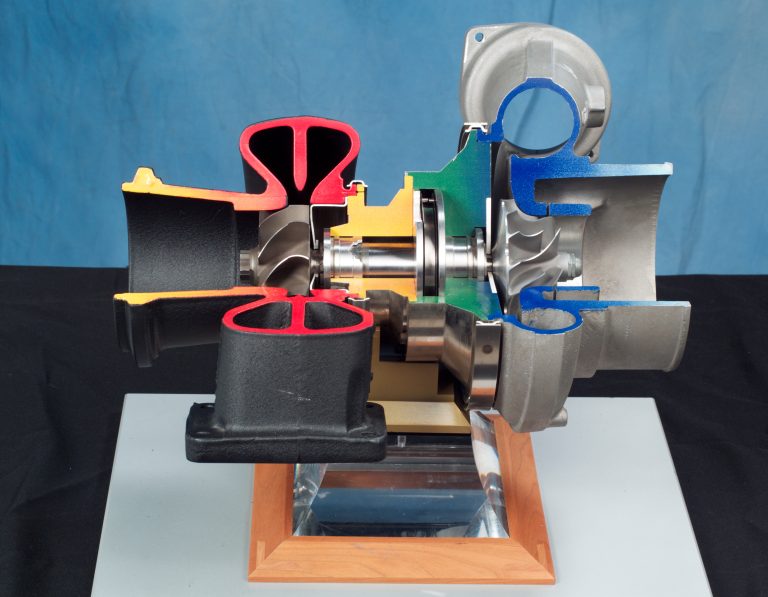
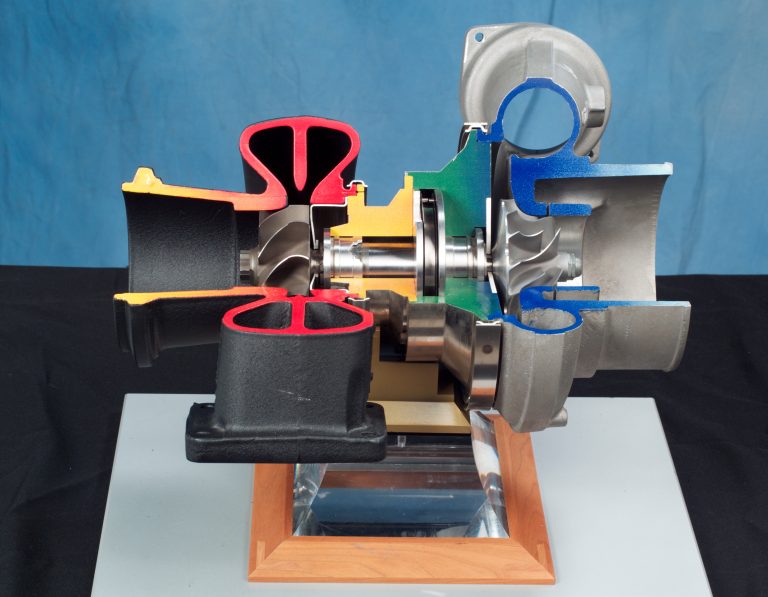
Full-Race has built S2000 turbo manifolds since debuting a Pro-Street T3 design around a GT30R in the early 2000s, and the lineup now spans a Pro-Street T3 single-scroll setup for GT30/GT35-class turbos with a 44mm external wastegate, a forward-mount design compatible with EFR internally wastegated turbos or traditional T3 external-wastegate turbos, and a twin-scroll forward-facing manifold sized for Borgwarner EFR 7064 through EFR 9180 turbos (full-race.com, retrieved August 2026). The Pro-Street T3 manifold is documented by Full-Race as gaining roughly 65 whp and 50 lb-ft over a log-style manifold at the same 10–12 psi — efficiency that matters on a platform where the F20C’s compression ceiling already limits how hard you can push boost.
Best for: builders who want a well-documented manifold with a real efficiency track record and the flexibility to size the turbo to a specific power goal rather than buying a fixed kit.
ScienceofSpeed TS-MAX Twin Scroll Turbocharger System
ScienceofSpeed specializes almost exclusively in S2000 and NSX performance parts, and its TS-MAX twin-scroll system is a complete, purpose-built kit rather than a manifold sold separately from the rest of the hardware (scienceofspeed.com, retrieved August 2026). Twin-scroll manifolds keep exhaust pulses separated longer, improving spool response on an engine that already has to make up for modest displacement and a compression ratio that limits how much boost and timing it can run at low RPM.
Best for: buyers who want a single-source, engineered-as-a-system kit from a shop that works on nothing but S2000s and NSXs, rather than assembling a manifold, turbo, and piping separately.
Straightline Motorsports / PTUNING Complete Kits
Straightline Motorsports and PTUNING both sell complete, bolt-on S2000 turbo systems bundling a hot-side manifold, turbo, wastegate, and piping sized for F20C and F22C applications (straightline-motorsports.com, ptuning.com, retrieved August 2026). These trade some of the customization Full-Race or ScienceofSpeed buyers get for a simpler, single-purchase path to a running turbo car.
Best for: builders who want a complete, ready-to-install kit without sourcing a manifold, turbo, wastegate, and piping separately from multiple vendors.
High Compression Is the Real Limiting Factor, Not the Block
On most turbo-swap platforms, the conversation starts with what breaks: a head gasket, a rod, a liner. On the S2000, the more immediate constraint is that Honda already tuned the F20C to run 11.0:1 compression — and 11.7:1 on JDM-spec cars — specifically to extract naturally aspirated power at a 9,000+ RPM redline (Wikipedia, “Honda F20C engine”; JDMBUYSELL AP1 buyer’s guide, retrieved August 2026). High static compression and boost both raise cylinder pressure and detonation risk, so an engine already at 11:1 has far less headroom before pump-gas octane runs out, which is why F20C/F22C turbo tunes run noticeably more conservative ignition timing and boost curves than a low-compression platform needs at the same power target. That’s also why forged, lower-compression pistons (commonly 8.5:1–9.5:1) are the standard path once a build moves past a mild, stock-compression tune — they don’t fix a weak part, they buy back the compression headroom factory pistons never left for boost.
AP1 vs. AP2: How F20C and F22C Differences Change the Build
The AP1’s F20C (2000–2003) is a 2.0L, 1,997cc engine making 240 hp at 8,300 RPM and 153 lb-ft of torque, with a redline around 9,000 RPM. The AP2’s F22C1 (2004 and later) is a stroked 2.2L, 2,157cc engine making 237 hp at 7,800 RPM and 162 lb-ft of torque at a lower 6,500 RPM, with the redline dropped to roughly 8,000 RPM (Wikipedia, “Honda F20C engine”; JDMBUYSELL AP2 buyer’s guide, retrieved August 2026). Compression moved from 11.0:1 on the USDM F20C to 11.1:1 on the F22C1 — a negligible difference in isolation, but it means the AP2’s extra displacement and midrange torque don’t come with any real compression relief for a turbo build.
What actually changes between the two for a turbo build is powerband strategy, not compression math. The F22C’s longer stroke and lower redline mean more usable midrange torque naturally aspirated, so its boost curve can lean on low-to-mid RPM response rather than needing to hold boost all the way to a 9,000 RPM redline like an F20C build does. Both engines share the same FRM liner material and the same core compression problem, so neither AP1 nor AP2 offers a shortcut around the platform’s limiting factor — the choice comes down to whether you want the F20C’s higher-revving character or the F22C’s broader torque spread as your base for boost.
The FRM Cylinder Liners: A Real, Different Constraint Than a Cracking Block
Both the F20C and F22C use Honda’s Fiber-Reinforced Metal (FRM) cylinder liners rather than cast iron sleeves, a technology Honda developed to save weight versus a traditional iron-lined aluminum block (Wikipedia, “Honda F20C engine”; MotoIQ “Project S2000: Part 27,” retrieved August 2026). This is a genuinely different mechanism than the liner-cracking failure mode covered in our B20 turbo kit guide, and it’s worth being precise about what FRM actually does and doesn’t cause. FRM liners can’t be bored with conventional tooling because the material is harder than what standard boring bars are designed to cut, and honing them correctly requires specialized equipment and experience most general machine shops don’t have; running the wrong forged pistons against FRM can gall the liner within a few thousand miles unless the pistons use a coating designed for FRM compatibility, such as Mahle’s Gold Series pistons built for this exact application (MotoIQ, retrieved August 2026). Because of those limitations, professional engine builders overwhelmingly recommend planning around FRM rather than trying to work past it: keep the factory liners with FRM-compatible pistons for moderate power, or sleeve the block with conventional steel liners for builds aiming well past what FRM and a stock-compatible piston can support.
One claim worth flagging honestly rather than repeating as settled fact: specialty S2000 engine builders, including Paragon Motors, report that aftermarket steel-sleeved FRM blocks have experienced sleeve movement or leaking after relatively short mileage on some high-boost builds, part of why alternatives like NSC (nickel-silicon-carbide) cylinder plating on the factory aluminum bores exist alongside conventional steel sleeving (urgedesigns.com, retrieved August 2026). That’s a builder’s field account from one specialty shop, not a broadly documented failure statistic the way the B20’s liner cracking is, so treat it as worth asking your machinist about rather than a universal rule — but it’s a fair reason to get quotes from a shop with specific FRM/S2000 sleeving experience rather than a generic machine shop.
How Much Power Is Actually Safe on Stock Internals?
Community consensus across S2000 forums generally places a conservatively tuned, stock-compression F20C or F22C in the 350–400 whp range on 91–93 octane pump gas with 8–13 psi of boost and a proper dyno tune (S2KI forum threads on stock-internal power limits, retrieved August 2026). That range lines up with what documented professional builds target before moving to forged internals: a 500 whp build documented by MotoIQ specifically paired a compression drop from 11.0:1 to 9.5:1 with forged pistons and Carrillo rods rather than chasing that number on factory compression (MotoIQ, retrieved August 2026). None of these are engineering guarantees — they’re the range where compression math, fuel octane, and factory rod/piston strength still line up without a bottom-end rebuild, and pushing meaningfully past it on stock internals is where the risk profile changes.
| Spec | F20C (AP1, 2000–2003) | F22C1 (AP2, 2004+) |
|---|---|---|
| Displacement | 2.0L (1,997cc) | 2.2L (2,157cc) |
| Compression (USDM) | 11.0:1 | 11.1:1 |
| Redline | ~9,000–9,150 RPM | ~8,000–8,200 RPM |
| Peak power / torque | 240 hp @ 8,300 RPM / 153 lb-ft @ 7,500 | 237 hp @ 7,800 RPM / 162 lb-ft @ 6,500 |
| Cylinder liners | FRM (fiber-reinforced metal) | FRM (fiber-reinforced metal) |
Fuel System and ECU Tuning Requirements
Stock S2000 injectors and the factory fuel pump are sized for a naturally aspirated engine and run out of headroom quickly under boost; builds targeting the 350–400 whp range commonly upgrade to larger injectors alongside a higher-flow in-tank pump (a Walbro 255lph or larger, E85-rated if running ethanol blends) to avoid running near injector duty-cycle limits, a common cause of a lean, unreliable tune. On the ECU side, Hondata’s FlashPro is the standard, comparatively affordable option for both AP1 and AP2 ECUs and handles fueling, ignition, and boost control for most street-boost builds without replacing the factory computer. Builds pushing the higher end of the stock-internal range, or into forged-piston territory with more aggressive cam and boost strategies, commonly step up to Hondata KPro or a full standalone like AEM Infinity/EMS for more complete control over timing and fueling maps (Evans Tuning S2000 pre-tuning checklist, retrieved August 2026). None of this hardware makes safe power on its own — it only matters paired with a tuner who dyno-tunes the specific combination of compression, injectors, and boost target you’re actually running.
How the S2000 Compares to Other Lightweight Turbo Roadsters
The S2000 and the Mazda Miata are the two most common lightweight, rear-wheel-drive roadster turbo-swap platforms, and they make an instructive comparison because their limiting factors are so different. Our Miata turbo kit guide covers how the NA, NB, NC, and ND generations each have their own factory compression and fueling quirks, but none of Mazda’s four generations start anywhere near the F20C’s 11.0:1-plus compression ratio — which is why an S2000 build needs a more conservative boost and timing strategy at the same power target than a comparable Miata build. If you’re cross-shopping platforms, that compression gap is the biggest factor in how much piston budget a given power goal actually requires.
The same “figure out what actually limits the platform before buying a turbo” approach applies across every chassis we cover, including our B20 turbo kit guide, where block liner strength rather than compression is the deciding factor. Whatever center cartridge you run in the turbo itself, our ball bearing turbo guide covers spool and durability tradeoffs independent of platform.
Frequently Asked Questions
Why is the S2000’s compression ratio such a big deal for turbocharging?
The F20C runs 11.0:1 compression (11.7:1 on JDM cars) and the F22C runs 11.1:1 — both far higher than most turbo-swap platforms’ factory compression. High compression combined with boost raises cylinder pressure and detonation risk faster than on a lower-compression engine, so an S2000 turbo tune has to run more conservative boost and ignition timing at the same power target, or the compression has to come down with forged pistons.
Should I turbo an AP1 (F20C) or an AP2 (F22C)?
Compression is nearly identical between the two (11.0:1 vs 11.1:1), so neither offers a meaningful compression advantage. The real difference is powerband character: the F20C revs to roughly 9,000 RPM with a more peaky delivery, while the F22C’s stroked 2.2L design makes more midrange torque naturally aspirated with a lower, roughly 8,000 RPM redline.
What are FRM cylinder liners, and do they limit boost?
FRM (fiber-reinforced metal) is Honda’s lightweight alternative to cast iron liners, used in both the F20C and F22C. They can’t be bored with standard tooling, require specialized honing, and need FRM-compatible forged pistons if you’re upgrading. They don’t fail like a cracking cast-iron liner, but they do shape how a high-boost build gets built, including whether the block gets sleeved.
How much horsepower can a stock-internals S2000 handle?
Community consensus generally places a conservatively tuned, stock-compression F20C or F22C around 350–400 whp on pump gas with a proper dyno tune. Builds targeting 500 whp and beyond commonly pair a compression drop (forged pistons in the 8.5:1–9.5:1 range) with the turbo upgrade rather than trying to hit that number on factory compression.
Do I need to sleeve the block for a turbo S2000 build?
Not for a moderate, stock-compression build using FRM-compatible pistons. Builders targeting significantly higher power commonly sleeve the block or use an alternative like NSC cylinder plating, though it’s worth getting quotes from a shop with specific FRM/S2000 sleeving experience given reports of sleeve movement on some high-boost steel-sleeved builds.
What ECU should I use to tune a turbo S2000?
Hondata FlashPro is the standard, comparatively affordable option for most street-boost F20C/F22C builds on both AP1 and AP2 ECUs. Higher-power or forged-internal builds commonly move to Hondata KPro or a full standalone like AEM Infinity/EMS for more complete tuning control.
How does an S2000 turbo build compare to a Miata turbo build?
The Miata’s various generations (NA/NB/NC/ND) have their own factory quirks, but none run anywhere near the S2000’s compression ratio. That means an S2000 build generally needs a more conservative boost and timing strategy at a comparable power target, or a compression drop, sooner than a comparable Miata build would.
The Bottom Line
Buy a Full-Race manifold-based setup for the flexibility to size the turbo to a specific power goal, a ScienceofSpeed TS-MAX system for a purpose-engineered kit from an S2000 specialist, or a Straightline/PTUNING complete kit for the simplest single-purchase path to a running boosted car. But size your expectations, boost curve, and piston plan around the F20C’s or F22C’s actual factory compression ratio before you shop for a turbo — that’s the platform’s real limiting factor, not the block, and it’s what separates a conservative, reliable 350–400 whp build on stock internals from one that needs forged pistons and lower compression to hit bigger numbers safely.