
“Miata turbo kit” isn’t one shopping list — it’s at least three, and which one applies to you depends entirely on which generation is parked in your driveway. An NA or NB shares the B6/BP engine family and tops out around 1.8 liters with a factory fuel system sized for roughly 130-140 stock horsepower. An NC moves to a completely different 2.0-liter MZR engine. An ND moves again to the 2.0-liter SkyActiv-G, direct-injected and paired with its own separate aftermarket ecosystem, dominated almost entirely by one shop. A kit built for one generation doesn’t bolt to another, and the manifold, turbo sizing, and even the dominant brand name change every time the platform changes underneath it.
There’s a second thing that makes the Miata a different conversation than most other platforms this site covers: because stock power is so low to begin with, even a mild, “safe” low-boost turbo kit roughly doubles the car’s output. On a platform making 400 stock horsepower, doubling it is an extreme, all-in build. On a Miata making 116-181 hp depending on year and engine, doubling it is what a lot of owners consider a reasonable weekend-warrior first turbo kit — which means the supporting cast (clutch, fuel system, tuning) becomes a much bigger fraction of the real build than it is on a platform where the same turbo kit is a proportionally smaller jump. This guide covers which Miata turbo kits are worth buying by generation, why NA/NB, NC, and ND are functionally different shopping problems, and what has to change in the drivetrain and fuel system once you’ve roughly doubled the power of a car that was never engineered around that number.
Key Takeaways
- Generation decides your kit before anything else: NA/NB (B6/BP, 1.6L/1.8L), NC (2.0L MZR), and ND (2.0L SkyActiv-G) are three separate engine families with three separate turbo kit ecosystems — a kit for one does not fit another.
- A stock NB 1.8 Miata makes roughly 140 hp; Flyin’ Miata’s Stage 1 kit for that chassis is commonly cited around 190 rwhp on a stock short block — a jump that’s proportionally far bigger than the same relative increase on a higher-output platform (retrieved August 2026).
- Flyin’ Miata is the dominant name across nearly every generation, with CARB-legal Stage 1 systems for NA/NB and NC, and an ND-specific turbo system now in active development as of mid-2026 after years of ND owners only having supercharger and non-Flyin’ turbo options.
- The stock ND clutch is commonly cited as the first real limiting factor on a turbo ND build, with owners reporting slip issues once torque climbs past roughly 230 lb-ft even before the engine itself is at its ceiling.
- ECU tuning is not optional on any generation: NA/NB builds commonly move to Megasquirt (MS3) or a standalone like Hydra/Link, while ND builds increasingly use flash-tuning platforms like Versatuner rather than piggyback boxes.
The Kits Worth Buying
Flyin’ Miata Stage 1 Turbo System (NA/NB)
Flyin’ Miata has been the default name in Miata turbocharging for decades, and its Stage 1 system for 1990-2005 NA and NB chassis is the most established, most documented kit on the platform. It pairs a purpose-built cast manifold — redesigned using CFD analysis for meaningfully better flow and reduced weight over earlier versions — with a turbocharger sized to spool quickly on the small 1.6L/1.8L engines rather than chase peak numbers. On a stock NB short block, Stage 1 is commonly cited around 190 rwhp versus a stock baseline near 140 hp, and the system carries a CARB Executive Order, making it one of the only genuinely emissions-legal turbo options for the 1.8L anywhere in the country (retrieved August 2026).
Best for: NA/NB owners who want a well-documented, emissions-legal path to roughly 50 extra horsepower without touching the bottom end.
Flyin’ Miata NC Turbo Kit
Flyin’ Miata’s NC-chassis kit, released as a complete system after years of NA/NB/ND-only offerings, targets the 2.0L MZR engine with a Garrett GT2860RS turbocharger and a choice of turbine housing A/R depending on whether the build favors quick spool or reduced heat soak on track. At roughly 8 psi the kit is commonly cited around 220 rwhp on the stock engine, climbing to roughly 240 rwhp at 11 psi; pricing starts near $4,999 for the complete system (retrieved August 2026). Like the NA/NB Stage 1 kit, it carries CARB certification, which matters in emissions-testing states where a non-certified kit simply isn’t a legal option regardless of how good the hardware is.
Best for: NC owners who want the same documented, emissions-legal approach Flyin’ Miata built its reputation on, applied to the 2.0L MZR engine.
AVO Turboworld / TurboSource ND Turbo Systems
Because Flyin’ Miata’s own ND-specific turbo system was still in development as of mid-2026, most current ND turbo builds run kits from AVO Turboworld or TurboSource instead. AVO’s Stage 2 system for the RHD/LHD ND 2.0L is commonly cited at roughly 210 whp (around 247 crank hp) at 5-6 psi on 91 octane pump gas — already close to a 50% gain over stock. TurboSource’s system has customer-reported results well past that: multiple owners past 300 rwhp/rwtq at 12-15 psi, with a reported top result near 369 rwhp/373 rwtq at 15 psi, though results at that level require supporting fuel, tuning, and drivetrain work well beyond the turbo kit itself (retrieved August 2026).
Best for: ND owners who don’t want to wait for Flyin’ Miata’s ND kit and are willing to work with a smaller support community in exchange for available hardware today.
Why the Generation You Have Changes the Whole Build
NA (1990-97) and NB (1999-2005) Miatas share the B6 (1.6L) and BP (1.8L) engine family, a naturally aspirated, non-direct-injected four-cylinder with a factory fuel system that was never built with forced induction in mind. That’s exactly why Flyin’ Miata’s Stage 1 kits for these chassis are conservative by design — low boost, CARB-legal, engineered to work within what the stock fuel system and stock internals can actually support without immediately requiring a fuel system overhaul.
The NC (2006-15) moved to a completely different 2.0L MZR engine, sharing more with Mazda’s other 2.0L applications of that era than with the earlier B6/BP family. It’s a heavier, more complex engine bay, and Flyin’ Miata’s NC kit reflects that: a different manifold, different turbo sizing, and a different set of supporting parts than either the NA/NB kit or anything built for the ND.
The ND (2016-present) is different again — a 2.0L SkyActiv-G engine with direct injection, a high (13:1) factory compression ratio tuned for naturally aspirated efficiency, and its own separate turbo aftermarket that, as of 2026, is still noticeably less mature than the NA/NB or NC ecosystems specifically because Flyin’ Miata’s own ND-specific kit only became an announced, in-development product partway through the ND’s production run. That gap is why AVO and TurboSource currently fill the space Flyin’ Miata occupies on every other generation.
Why Doubling Power Means More Than It Sounds Like
On most platforms this site covers, a first turbo kit is a meaningful power increase, but it’s rarely a doubling. A stock N54 already makes around 300 hp before a turbo kit is even in the conversation; a stock SBC block is already good for hundreds of horsepower naturally aspirated. The Miata is different because the naturally aspirated baseline is so low to begin with. A stock NB 1.8 making roughly 140 hp jumping to roughly 190 rwhp on the mildest Flyin’ Miata kit available is already a 35-40% increase, and ND and NC owners running slightly more boost are routinely looking at 50% gains or more — all on what the brands themselves market as their entry-level, “safe” kit tier.
That changes what “safe” actually means in practice. A 50% power increase stresses the clutch, the fuel system, and the tune in ways that a 15-20% increase on a higher-output platform simply doesn’t. It’s the reason every reputable Miata turbo kit — regardless of generation or brand — comes with an explicit statement of what supporting mods are assumed, rather than being sold as a standalone bolt-on the way a lot of universal kits are marketed on other platforms.
Generation Comparison at a Glance
| Generation | Engine family | Stock hp (approx.) | Dominant kit brand |
|---|---|---|---|
| NA (1990-97) | B6 (1.6L) / BP (1.8L) | 116-133 | Flyin’ Miata |
| NB (1999-2005) | BP (1.8L) | 140-142 | Flyin’ Miata |
| NC (2006-15) | MZR (2.0L) | 158-167 | Flyin’ Miata |
| ND (2016-present) | SkyActiv-G (2.0L) | 155-181 | AVO / TurboSource (Flyin’ Miata kit in development) |
Note that ND stock output itself split by trim and model year — early ND1 cars with the smaller-bore 2.0 made closer to 155 hp before Mazda’s 2018-19 update brought the engine to 181 hp with a higher factory redline. That matters for turbo shopping because a kit tuned around one ND power baseline isn’t necessarily calibrated the same way for the other, and it’s worth confirming which sub-generation a given ND kit was actually developed on before assuming the advertised numbers carry over directly to your car.
Supporting Mods: Clutch, Fuel System, and Tuning
The clutch is usually the first thing to complain on a turbo Miata, and it’s often the first real limiting factor regardless of generation. ND owners commonly report the stock clutch struggling once torque climbs past roughly 230 lb-ft, which is well within reach of even a mild turbo kit — meaning a clutch upgrade isn’t an eventual nice-to-have on a turbo Miata build, it’s frequently part of the same shopping list as the turbo kit itself. South Bend Clutch and similar vendors sell direct-fit upgraded clutch kits across all four generations specifically because this is such a common, predictable failure point.
Fuel system needs scale with boost and generation. On NA/NB builds, the stock fuel pump and injectors are commonly cited as adequate only up to roughly 7 psi; beyond that, most builders move to a higher-flow pump (a 190 lph TDR-style pump is a common reference point) and larger injectors, since the factory 1.6L injectors run out of headroom around 140-150 hp and 1.8L injectors around 170-180 hp at the wheels. On the ND, the factory direct-injection fuel system has more built-in headroom, commonly cited as capable of supporting somewhere around 300-320 whp on pump gas before it becomes the limiting factor rather than the turbo or the tune.
Tuning follows a similar generational split. NA/NB builds without a factory-flashable ECU commonly move to a full standalone — Megasquirt’s MS3 platform is a frequent recommendation alongside Hydra and Link, paired with a wideband oxygen sensor as close to a requirement as anything gets on a turbo build. ND builds benefit from the factory ECU being flash-tunable through platforms like Versatuner, which is generally simpler to work with than a full standalone swap but still requires a tuner who understands the specific demands of a turbocharged, direct-injected setup rather than the naturally aspirated calibration the factory tune assumes.
Kit Component Quality: What CARB Certification Actually Buys You
Flyin’ Miata’s emphasis on CARB-legal kits across NA/NB and NC generations isn’t just a compliance checkbox — it reflects a level of engineering validation that a lot of cheaper, non-certified kits skip. A CARB Executive Order requires the manufacturer to demonstrate the system doesn’t increase emissions beyond the vehicle’s certified baseline, which in practice means real dyno and emissions testing rather than a manifold and turbo bolted together and shipped. That doesn’t make every non-certified kit bad — the AVO and TurboSource kits filling the current ND gap are reputable, widely used systems — but it does mean buyers in emissions-testing states need to confirm legality before ordering rather than assuming any kit marketed for their car is automatically street-legal where they live.
The same “check what you’re actually buying” logic that applies to flange sizing on a universal turbo kit applies here too: a Miata-specific kit is built around that platform’s actual manifold, oil routing, and ECU integration, which is exactly why a generic universal kit is a much rougher path on a Miata than picking a purpose-built system from Flyin’ Miata, AVO, or TurboSource. The same logic about needing to know your own specific setup before trusting a generic number also runs through our K24 turbo kit guide and B20 turbo kit guide, where the specific engine variant, not just the platform name, decides what’s actually safe.
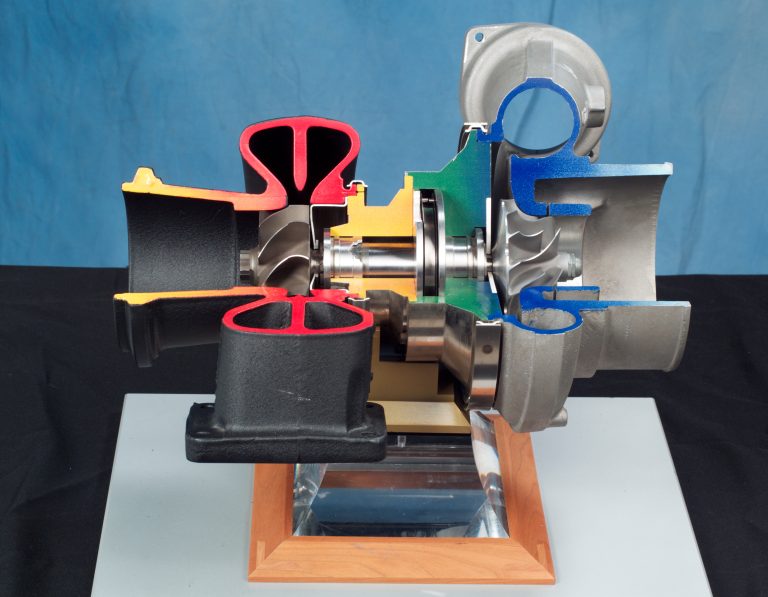
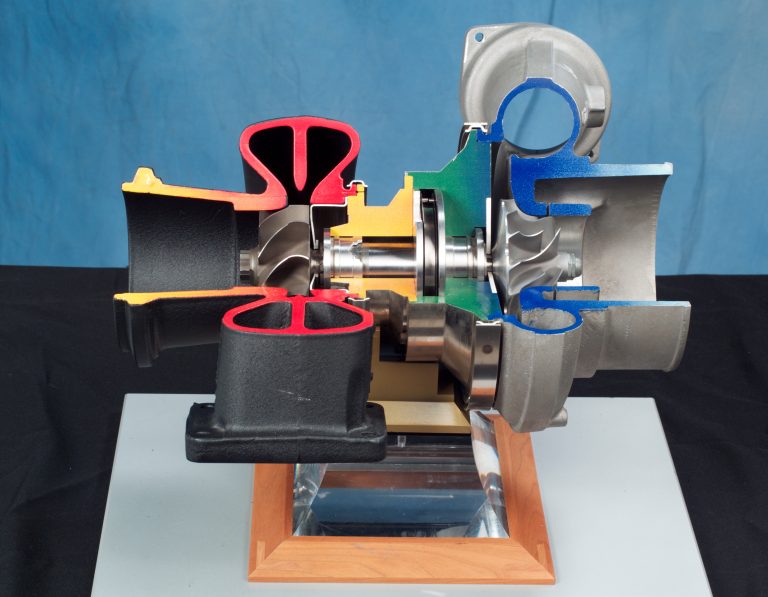
Turbo sizing itself follows the same journal-bearing-versus-ball-bearing tradeoffs that apply on any platform; our ball bearing turbo guide covers spool-up and durability differences independent of which car the turbo ends up bolted to, which is useful background before comparing the specific turbo models Flyin’ Miata, AVO, and TurboSource each spec into their kits.
Frequently Asked Questions
Which Miata generation is easiest to turbocharge?
NA and NB Miatas have the most mature aftermarket and the most documented CARB-legal option in Flyin’ Miata’s Stage 1 kit. NC and ND both have solid options too, but NA/NB simply has the longest track record.
How much horsepower does a Miata turbo kit add?
It varies by generation and boost level, but a common range is 35-50%+ over stock. An NB commonly goes from roughly 140 hp to roughly 190 rwhp on Flyin’ Miata’s Stage 1 kit; ND kits at mild boost commonly show similar or larger relative gains (retrieved August 2026).
Does the ND Miata have a Flyin’ Miata turbo kit yet?
As of mid-2026, Flyin’ Miata’s ND-specific turbo system was confirmed as in active development but had not shipped as a finished product. Most current ND turbo builds use AVO Turboworld or TurboSource kits instead.
Do I need a clutch upgrade for a turbo Miata?
In most cases, yes, and sooner than owners expect. ND owners commonly report clutch slip issues once torque passes roughly 230 lb-ft, a level even a mild turbo kit can reach.
What ECU do I need for a turbo NA or NB Miata?
Builds without a flashable factory ECU commonly move to a standalone system like Megasquirt’s MS3, Hydra, or Link, paired with a wideband oxygen sensor for tuning.
Is the ND Miata’s factory fuel system enough for a turbo kit?
The ND’s direct-injection fuel system is commonly cited as capable of supporting roughly 300-320 whp on pump gas, which covers a wide range of turbo builds before it becomes the limiting factor.
Are Miata turbo kits emissions legal?
Some are. Flyin’ Miata’s Stage 1 kits for NA/NB and its NC kit both carry CARB Executive Orders. Confirm certification status for your specific state before assuming any given kit, including ND options, is street-legal where you live.
The Bottom Line
Buy the Flyin’ Miata Stage 1 kit if you’re on an NA, NB, or NC chassis and want the most documented, emissions-legal path to more power. If you’re on an ND, expect to choose between AVO Turboworld and TurboSource until Flyin’ Miata’s own ND system ships. Whichever generation you’re on, budget for the clutch and fuel system alongside the turbo itself — because a Miata turbo kit isn’t a modest bump the way it is on higher-output platforms, it’s usually close to doubling what the car made stock, and the drivetrain and fueling need to be part of that plan from the start, not an upgrade you get to later.